Linear planks dominated commercial and residential interiors for decades. Now, interior designers and architects are moving beyond standard boards to build energetic, tactile environments.
Geometric modular floors lead this shift. Among all geometric formats, the rhombus tile offers unmatched layout flexibility. A single 60-degree diamond shape lets you create optical cubes, subtle chevron runs, or kinetic starbursts.
TAB Flooring manufactures dimensionally stable Luxury Vinyl Tile (LVT) that turns these complex patterns into practical, commercial-grade installations. Below are the top ten rhombus tile floor designs defining modern geometric spaces for 2026.
1. The 3D Trompe-l'œil Cube
This pattern uses three distinct tones—light, medium, and dark—to build a classic isometric cube illusion. As visitors move across the room, the floor appears to shift between flat planes and three-dimensional blocks.
It performs exceptionally well in boutique hotel foyers, creative agency breakout zones, and dramatic residential entryways. The design creates instant visual weight without requiring complex subfloor structures.
Design Tip: Position the darkest rhombus tile facet toward your primary light source to maintain a convincing shadow effect.
Engineering Factor: Precision is non-negotiable here. Six points meet at a single vertex; even a 0.2 mm cutting variance will ruin the 3D effect.
2. Nordic Biophilic Wood-Tone Rhombus
Scandinavian spaces prioritize natural wood textures, light tones, and clean lines. This concept replaces traditional wood strip flooring with angled rhombus modules featuring authentic oak and walnut grains.
By rotating the grain direction across interlocking diamond tiles, the floor catches ambient light from changing angles throughout the day. You achieve the warmth of real timber paired with the Étanchéité durability of luxury vinyl.
TAB Flooring pairs this design with high-definition Embossed in Register (EIR) surfaces. The texture maps directly to the visible grain, providing tactile authenticity underfoot.
3. Monochrome Matrix
For modern art galleries, high-end fashion boutiques, and minimalist cafes, the black-and-white matrix remains an architectural staple. This layout uses ultra-matte black, cool charcoal, and stark white rhombus units.
The high-contrast palette creates a rhythmic foundation that complements steel fixtures and exposed concrete. Because the pattern carries strong kinetic energy, it directs foot traffic down long corridors naturally.
Surface Finish: Always specify a deep matte or low-gloss polyurethane wear layer to prevent glare under directional spotlights.
Traffic Suitability: Ideal for retail settings when produced with a minimum 0.55 mm (22 mil) wear layer.
4. Modern Stone & Terrazzo Fusion
Terrazzo and natural stone textures continue to surge in hospitality and luxury bathroom design. This pattern blends dense mineral aggregate designs with soft, veined marble motifs across adjacent rhombus modules.
Instead of pouring heavy resin terrazzo on-site, modular LVT tiles give contractors a lightweight, fast-curing alternative. The geometric boundaries prevent the varied stone textures from looking messy or disconnected.
Commercial specifiers frequently choose this layout for executive restrooms, corporate dining areas, and wellness spas where moisture resistance is critical.
5. Gradient Waterfall Transition
Modern open-plan offices and airport lounges rarely rely on rigid partition walls. Designers use Transitions de revêtement de sol to separate functional areas naturally.
The gradient waterfall layout scatters deep-toned tiles into a lighter baseline field. The pattern can start as a solid dark field under collaborative desks, break apart through a dynamic transition zone, and resolve into a light floor in walking paths.
Because every rhombus tile shares identical profile thicknesses across colors, installers create clean, seamless transitions without tripping hazards or metal reducer strips.
6. The Geometric "Rug" Island
Hard flooring throughout an open floor plan can sometimes feel barren. Instead of placing textile rugs that trap dirt and allergens, specifiers build integrated "hard-surface rugs" using contrasting geometric tiles.
Installers set a perimeter of standard rectangular planks, then inlay a concentrated rhombus matrix under dining tables, boardroom desks, or lounge groupings. This anchors furniture visually while maintaining easy maintenance.
TAB Flooring provides color-matched transition accessories and profile-compatible perimeter planks to make sure inset fields stay flush with surrounding floors.
7. Earthy Terracotta & Warm Clay Accents
Color forecasts for 2026 highlight a return to warm, grounded earth tones. Baked terracotta, raw sienna, desert sand, and warm putty tones are replacing sterile cool grays.
A diamond matrix rendered in baked-earth tones brings artisanal warmth to modern bakeries, Mediterranean restaurants, and residential kitchens. It offers the visual charm of handmade Spanish or Moroccan tiles without the cold, brittle characteristics of kiln-fired ceramic.
Acoustic Benefit: Unlike real terracotta, LVT cushions footsteps and dampens ambient chatter in busy commercial dining spaces.
Maintenance Advantage: Requires no topical sealers and resists acidic spills like coffee, wine, and citrus juice.
8. Industrial Concrete-Textured Rhombus
Industrial loft conversions, urban retail spaces, and co-working hubs frequently lean on poured concrete floors. However, solid concrete floors can crack, feel uncomfortable underfoot, and carry sound poorly.
This layout uses industrial gray concrete textures stamped onto angled diamond tiles. Alternating light gray, slate, and screed textures creates an organized, architectural finish that softens industrial architecture.
The geometric layout breaks up large floor plates, giving open floor plans a clear sense of order and structure.
9. Subtle Metallic Accent Patterns
Subtle opulence works best when applied with restraint. In this concept, a predominantly dark stone or slate rhombus floor features occasional modules embedded with faint brass, copper, or oxidized bronze flecks.
These metallic tiles catch light selectively, adding depth to private clubs, boutique jewelers, and executive suites. The metallic details stay flush within the wear layer, preserving clean sightlines across the room.
This approach gives luxury hospitality projects the look of custom brass-inlay stone floors at a fraction of the material and labor cost.
10. Border-Framed Rhombus Layout
Borrowing from classical French parquet flooring, this layout sets geometric fields inside linear plank borders. Wide plank LVT creates a perimeter frame around the room, while the center field features an energetic starburst or tumbling cube pattern.
It suits period renovations, boutique hotel suites, and formal conference rooms that need both classical symmetry and modern durability.
Symmetry: Installers should snap reference lines from the center of the room outward to keep diamond points balanced along the borders.
Subfloor Preparation: A completely flat subfloor is essential so perimeter joints match the center geometric field evenly.
Technical Sourcing: Avoiding Failures in Geometric LVT
Geometric tile projects present distinct mechanical demands. Rectangular planks permit minor installation drift; multi-angle geometric patterns do not. If your supplier supplies inconsistent cuts, gaps will compound across the floor plate.
Extreme Dimensional Stability
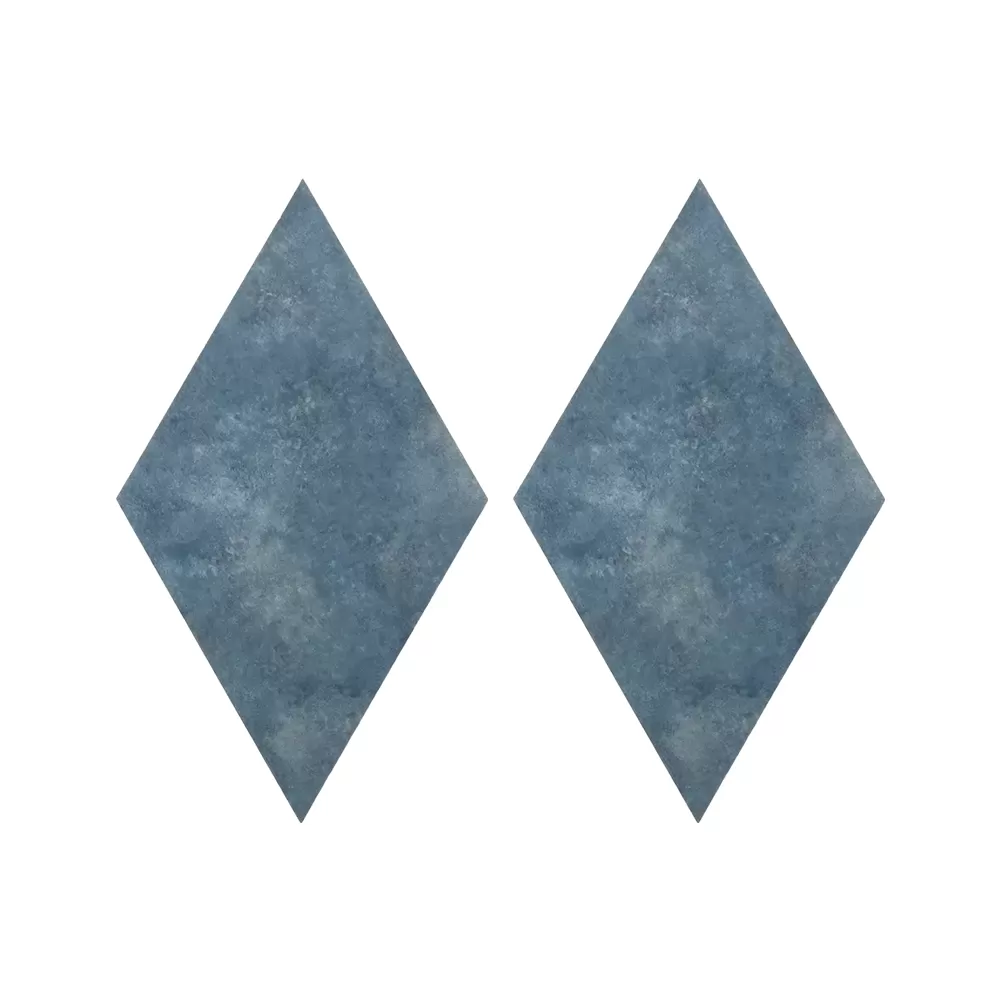
A typical rhombus tile has acute 60-degree tips. Inferior vinyl tiles cup or curl at these sharp points when interior temperatures fluctuate under direct sunlight. TAB Flooring solves this with a specialized construction that includes an integrated 0.15 mm bottom stabilizing layer.
This construction delivers double the dimensional stability of basic LVT. It locks the internal core in balance, keeping diamond tips flat to eliminate lippage and post-installation claims.
Extrusion Efficiency for B2B Margins
Traditional multi-layer hot-press manufacturing struggles with yield losses when cutting acute angles. TAB Flooring uses a continuous LVT extrusion process that cuts core production costs by roughly 5% compared to older methods.
These savings allow Distributeurs de revêtements de sol, OEM brands, and commercial contractors to land competitive bids while protecting healthy gross margins.
Installation Systems Built for Project Demands
Every commercial job site presents unique subfloor constraints. TAB Flooring manufactures geometric tiles across three core formats:
Precision Click: Designed with tight-tolerance profiling for adhesive-free installations, speed, and fast turnover in multi-family units.
Dry-Back (Glue-Down): The standard choice for heavy rolling loads, hospital corridors, and major retail spaces. Ensures a permanent bond to the subfloor.
Loose-Lay: Features an anti-slip backing for rapid installation over raised-access data floors in modern corporate offices.
Frequently Asked Questions
Q1: Why is dimensional stability more critical for a rhombus tile
than standard planks?
A1: Rectangular planks share four 90-degree
corners. In contrast, rhombus shapes feature sharp 60-degree and 120-degree
angles where up to six points meet at one intersection. If tiles shrink or
expand under temperature swings, acute corners curl upward or pull apart. This
leaves noticeable gaps that ruin the floor pattern.
Q2: Can we mix wood, stone, and solid colors in the same geometric
layout?
A2: Yes, provided every tile comes from the same
manufacturer and production platform. TAB Flooring calibrates profile
thicknesses, locking profiles, and bevel depths across wood, stone, and solid
collections so designers can mix surface visuals safely without height
differences.
Q3: What wear layer thickness is recommended for commercial geometric
flooring?
A3: For heavy commercial spaces like retail stores,
hotels, and education facilities, specify a 0.55 mm (22 mil) or 0.70 mm (28 mil)
wear layer with a cross-linked UV ceramic bead coating. For multi-family
residential interiors, a 0.30 mm (12 mil) wear layer provides ample
protection.
Q4: How does extruded LVT improve margin performance for private
label distributors?
A4: Continuous extrusion allows for tighter raw
material control, lower energy use per square meter, and higher consistency than
multi-opening batch presses. These efficiencies lower base manufacturing costs
by roughly 5%, giving private label brands a pricing advantage against legacy
suppliers.
Q5: What subfloor tolerance is required to install dry-back geometric
tiles?
A5: Subfloors must be flat within 3/16 inch over a 10-foot
radius (or 2 mm over 2 meters). Because multi-facet tiles focus visual attention
along their seams, any minor subfloor dip will show through. Always use a
self-leveling underlayment compound on uneven concrete before installation.
Build Your 2026 Geometric Program with TAB Flooring
Geometric designs are expanding fast across global markets. Sourcing reliable modular flooring requires a manufacturing partner with strict die-cutting precision, stable cores, and reliable export fulfillment.
TAB Flooring manufactures and exports certified commercial vinyl flooring to distributors, brand partners, and commercial procurement teams around the world. We offer:
Full OEM and private-label packaging support.
Custom color, EIR texture, and wear layer development.
Comprehensive testing documentation, project warranties, and container logistics.
Contact our technical sales team today. Request your 2026 rhombus tile architect sample box and see our extrusion precision firsthand.