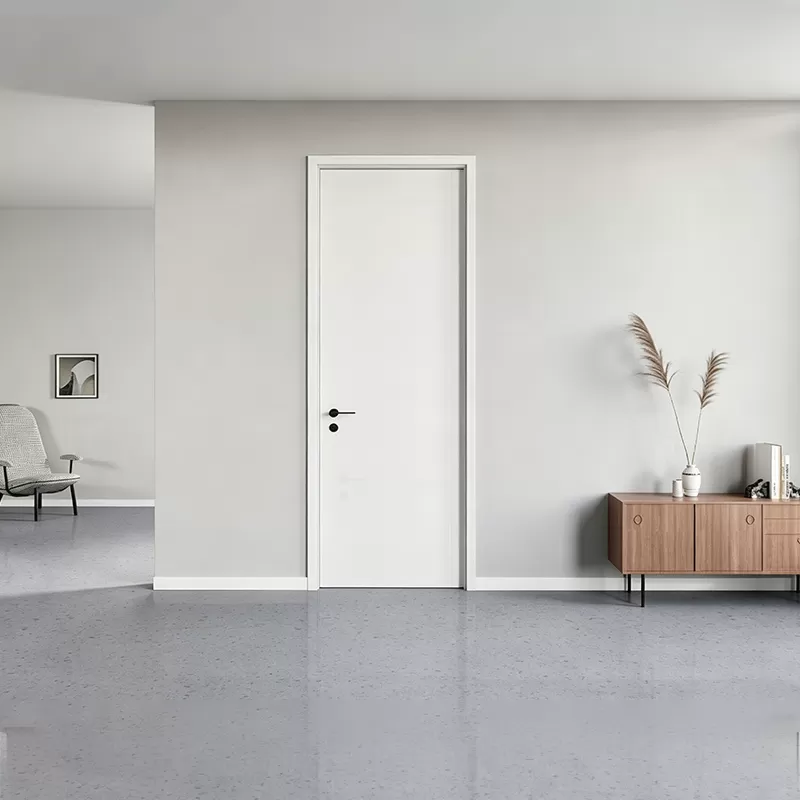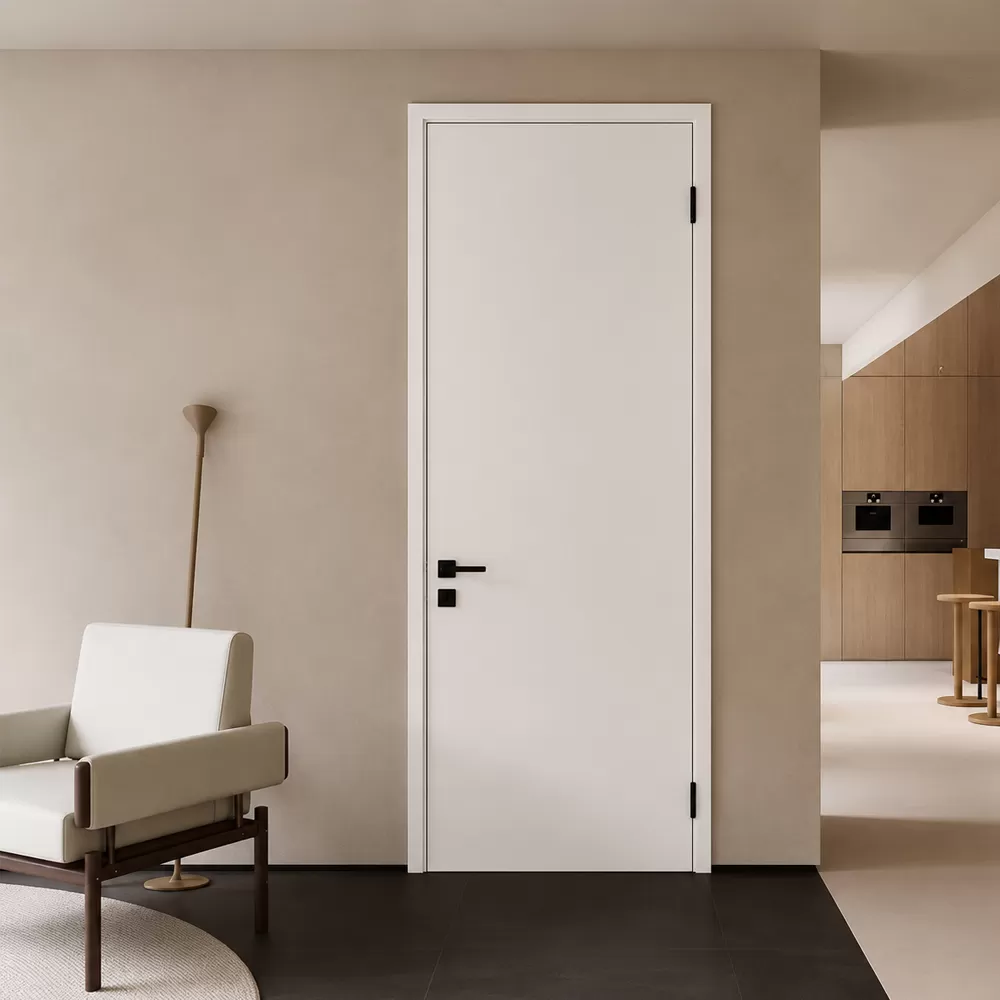
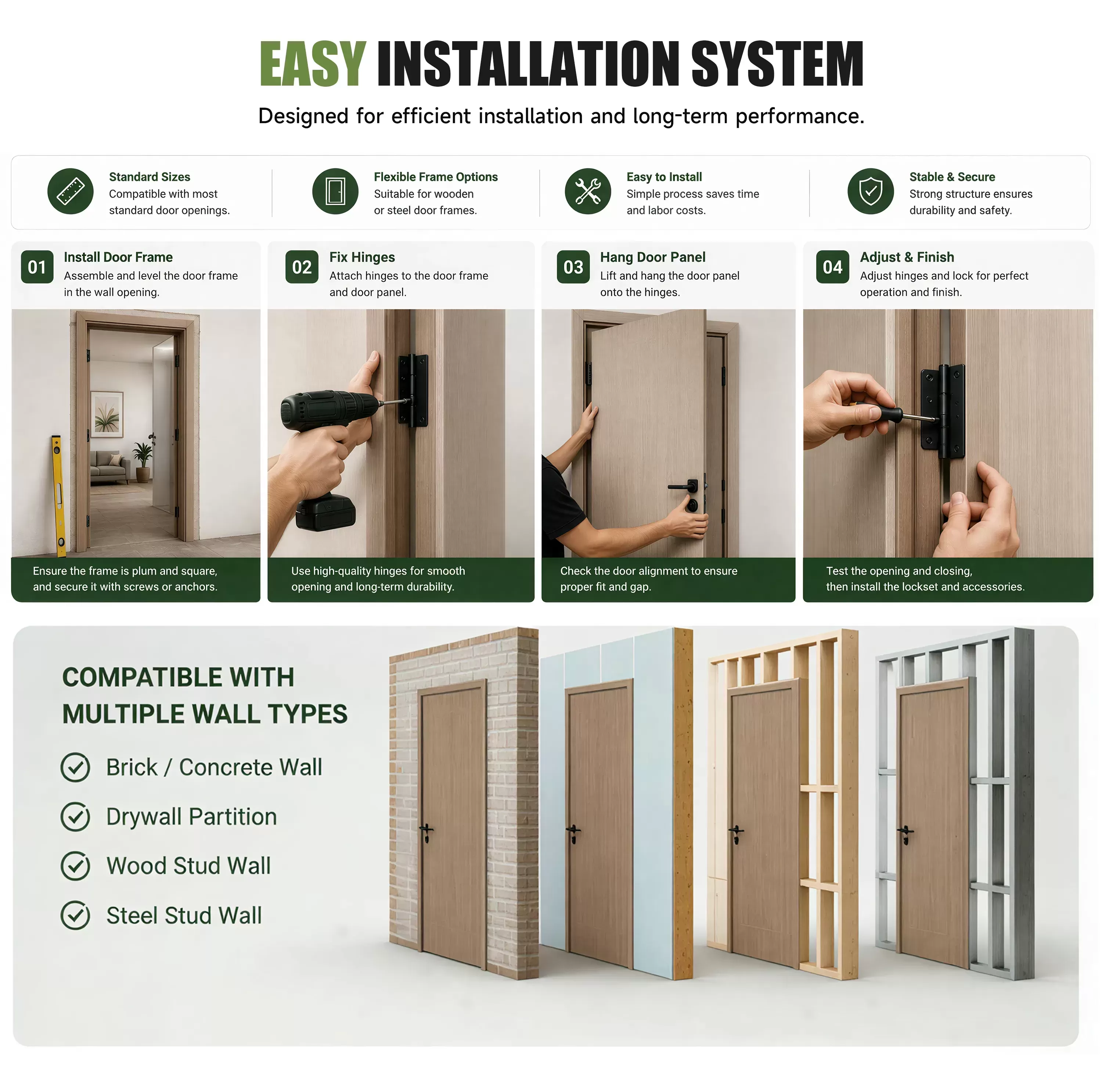
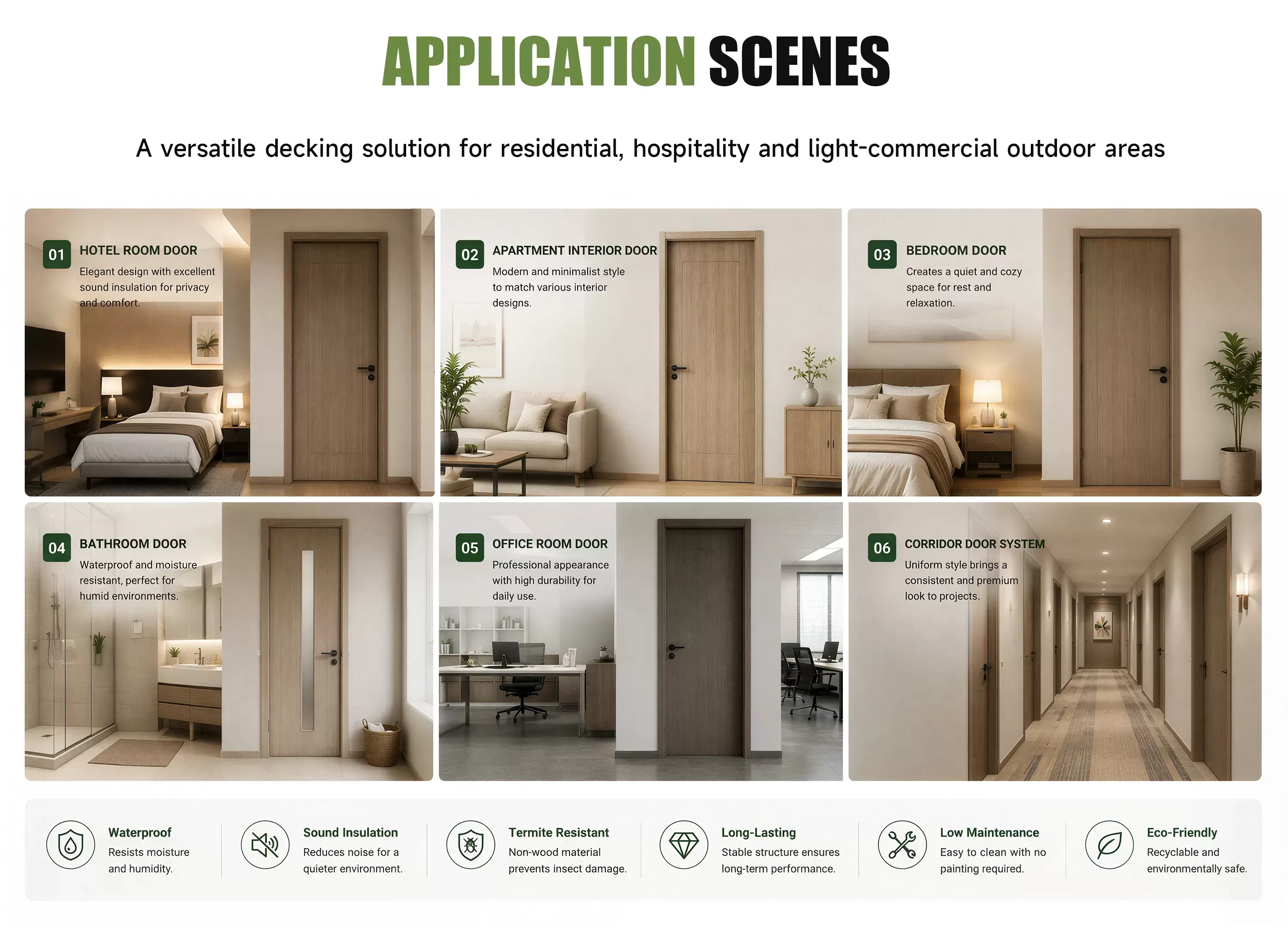
 WPC doors are made from wood–plastic composite (WPC). They’re not solid wood, and not a typical MDF-based composite door either—think of them as a practical, eco-friendly option that blends wood texture with plastic durability.
What is WPC?
WPC = Wood-Plastic Composite, mainly made of:
Wood fiber/powder (often recycled wood resources)
Plastic (commonly PE/PP/PVC, sometimes recycled)
Additives (stabilizers, colorants, coupling agents)
These are heated, mixed, and extruded into profiles used to build the door.
Quick Comparison
vs Solid wood: better moisture resistance and stability, usually lower cost; solid wood feels heavier and more “natural.”vs MDF composite: far stronger in humid areas.
vs PVC doors: more rigid and closer-to-wood feel.
Best use: bathrooms, kitchens, and humid climates—anywhere traditional wooden doors tend to swell or deform
Main Advantages of WPC Doors
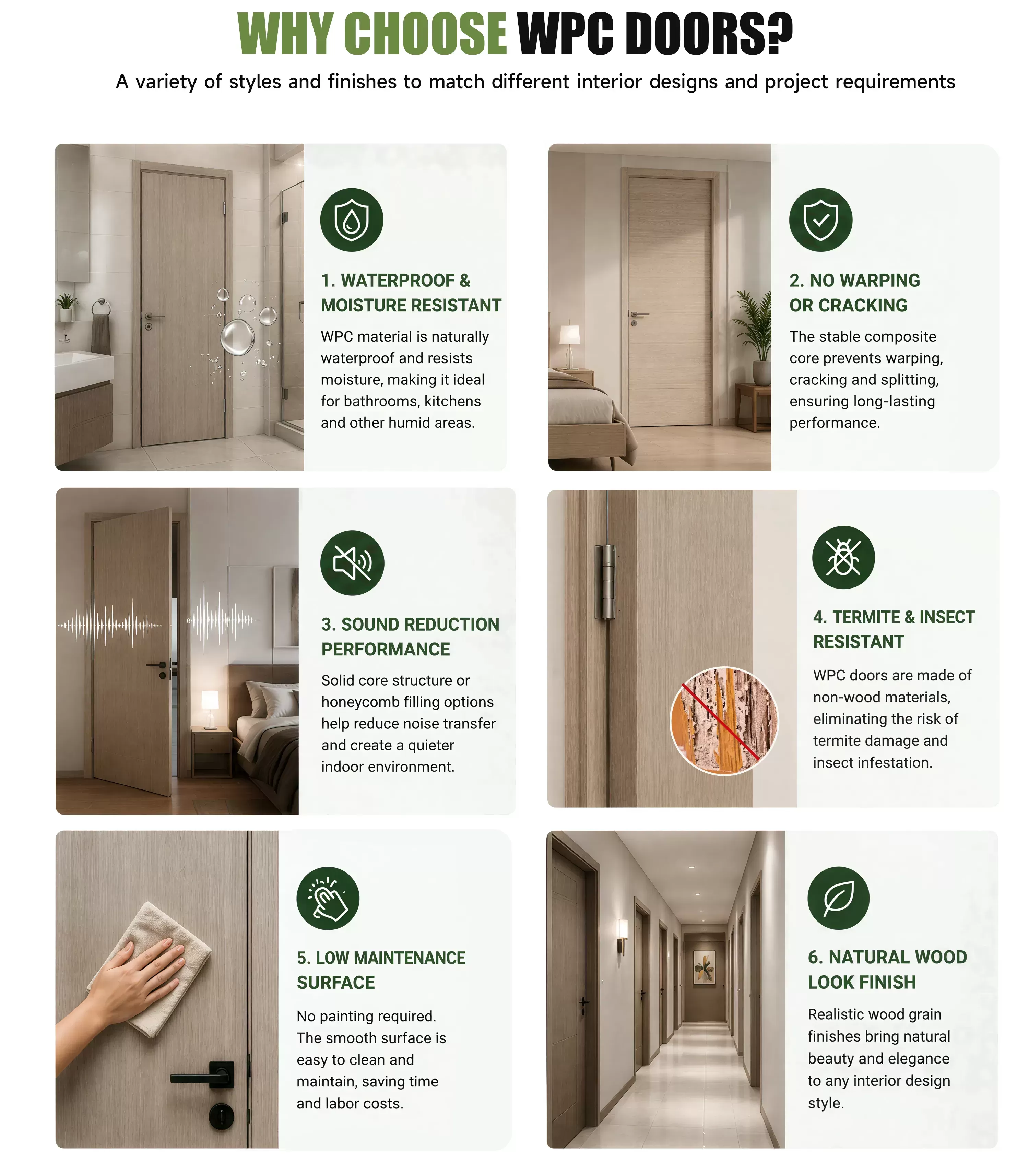
Waterproof & moisture-resistant: absorbs very little water, so it won’t swell, crack, or mold easily—great for bathrooms, kitchens, basements, and humid climates.
Stable: less movement from temperature/humidity changes than many wood-based doors.
Eco-friendly & tough: often uses recycled wood powder and plastics; impact-resistant and durable.
Easy care: wipe-clean surface; no routine painting like solid wood.
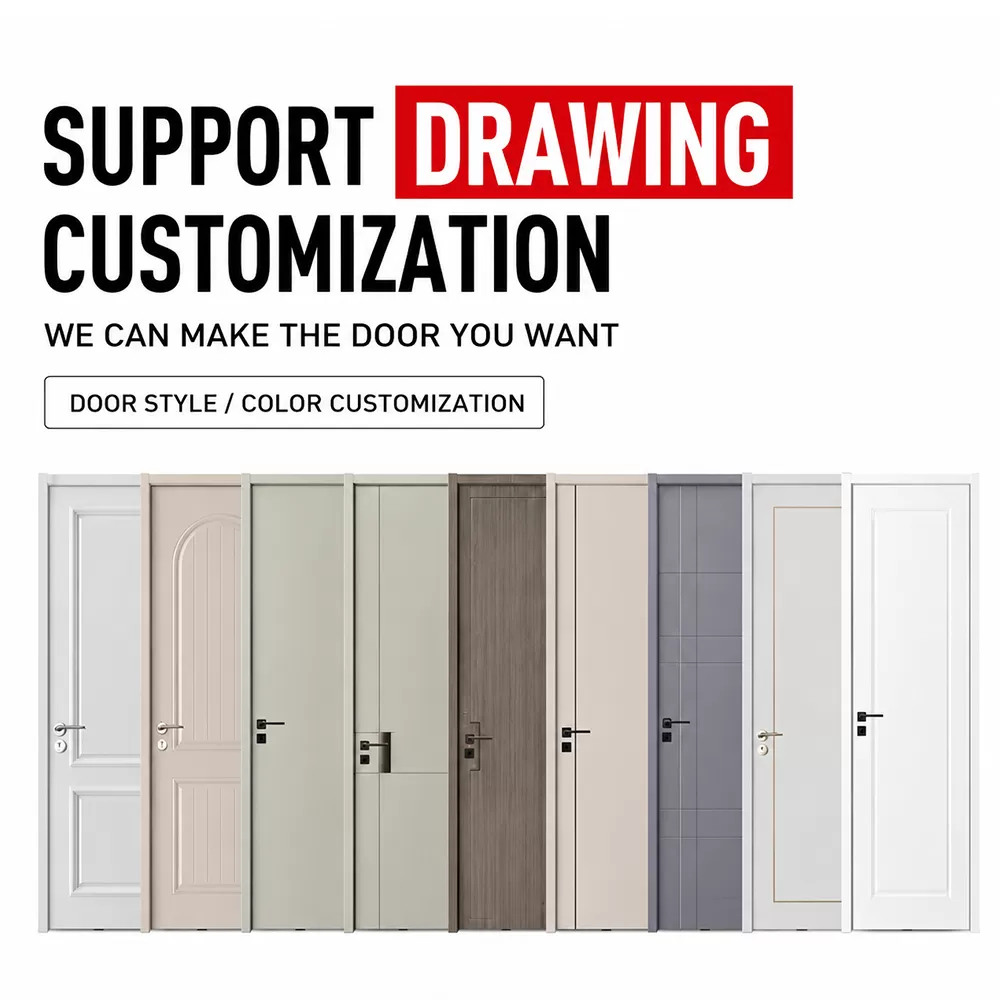
Many finishes: PVC/CPL lamination or printing can match different wood grains and colors.
Good value: typically priced between solid wood and standard composite doors, with strong performance for the cost.
Limits / Notes
Not the same feel as solid wood: touch and “knock” sound are different.
Heat caution: avoid long exposure to high heat or open flames.
SIZE : 2100mm*900mm*40/45mm
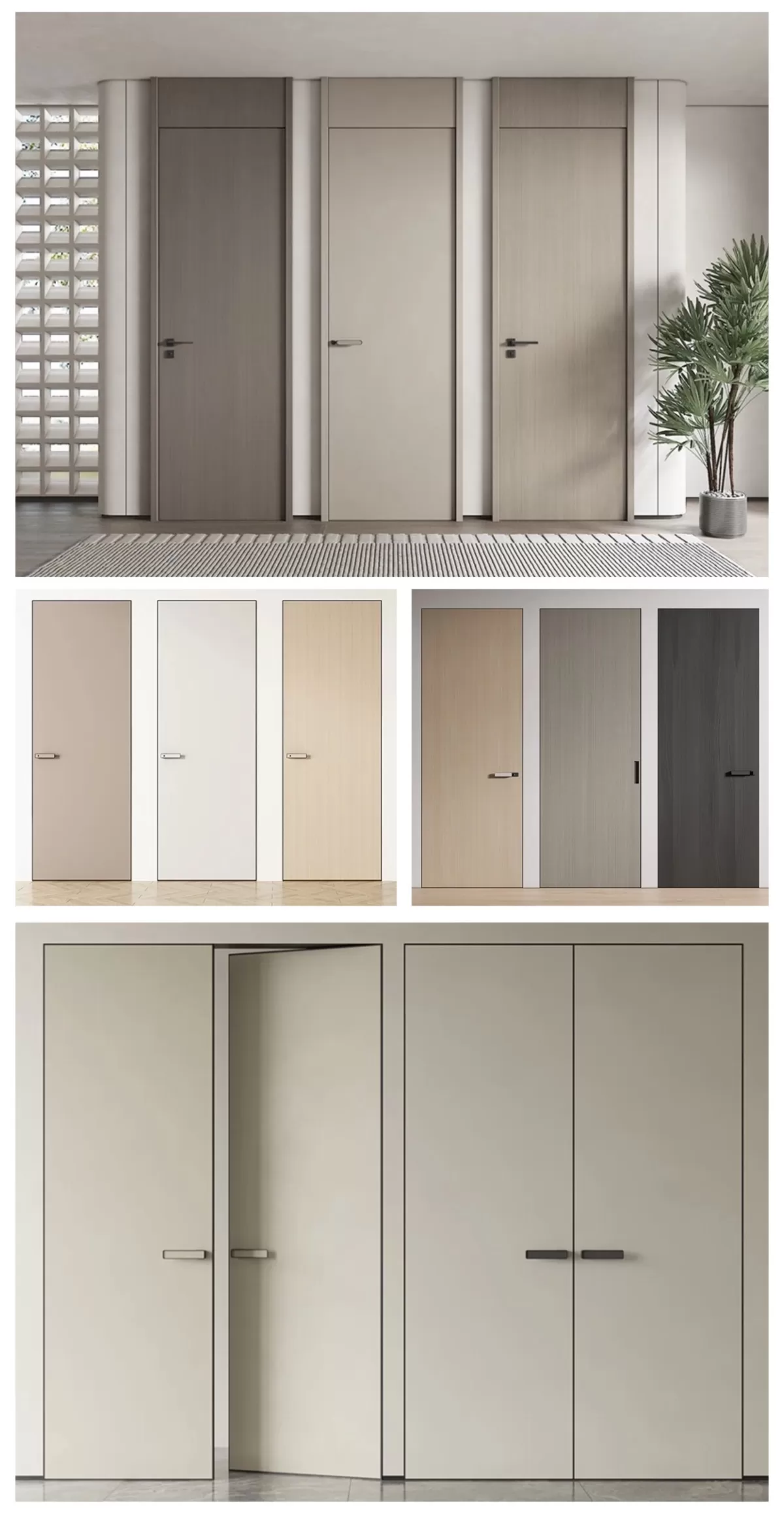
WPC Door Appearance & Design
1) Visual Effects: Realistic, “wood-like” results
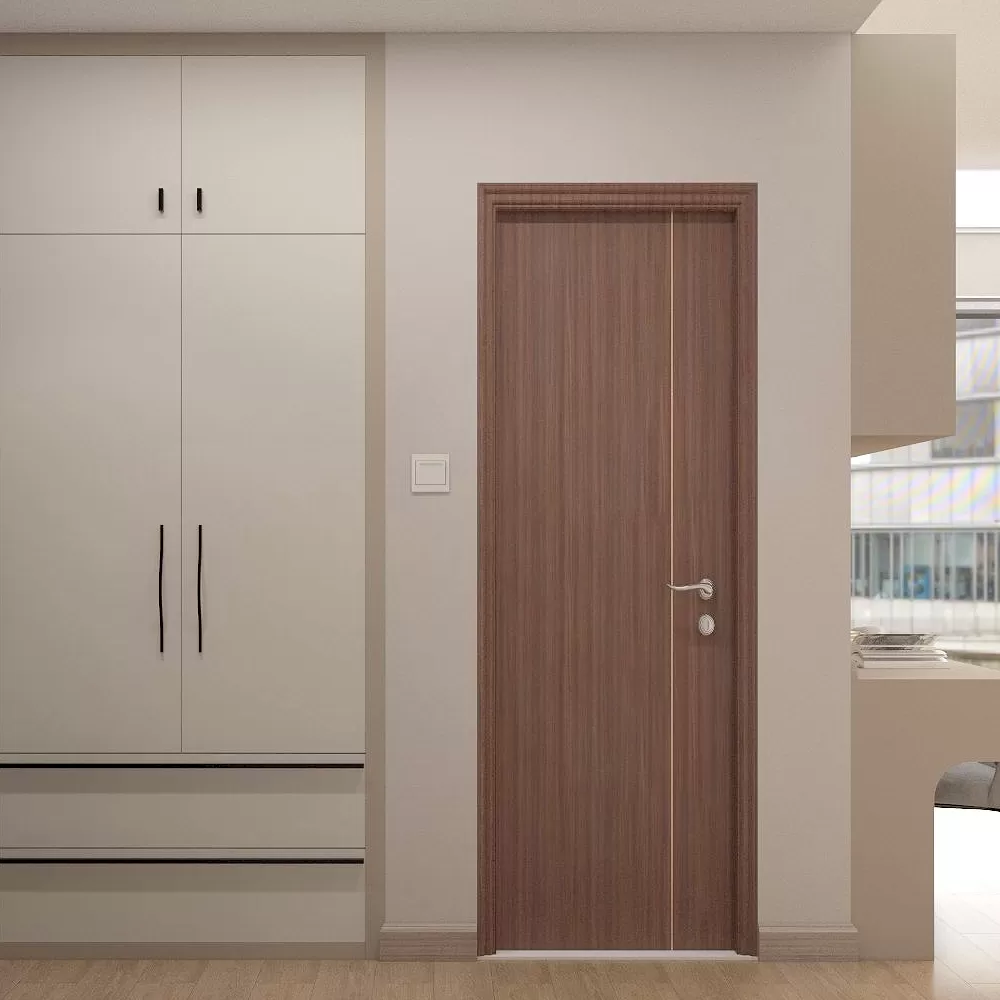
Authentic wood grain: CPL/PVC lamination can replicate oak, walnut, teak, maple, and more, with clear texture and depth.
Wide color range: from white and light grey to dark coffee, black, and modern tones; can also mimic painted-style effects.
Multiple style matches:
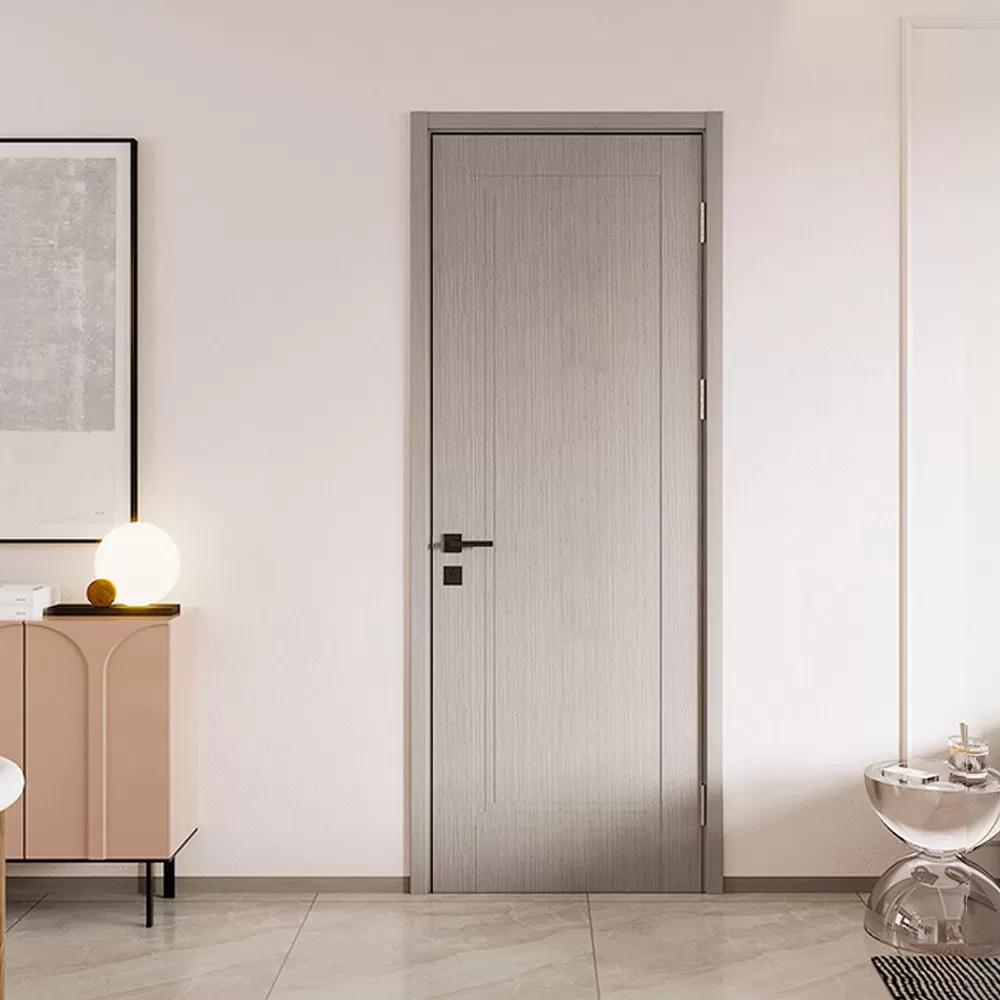
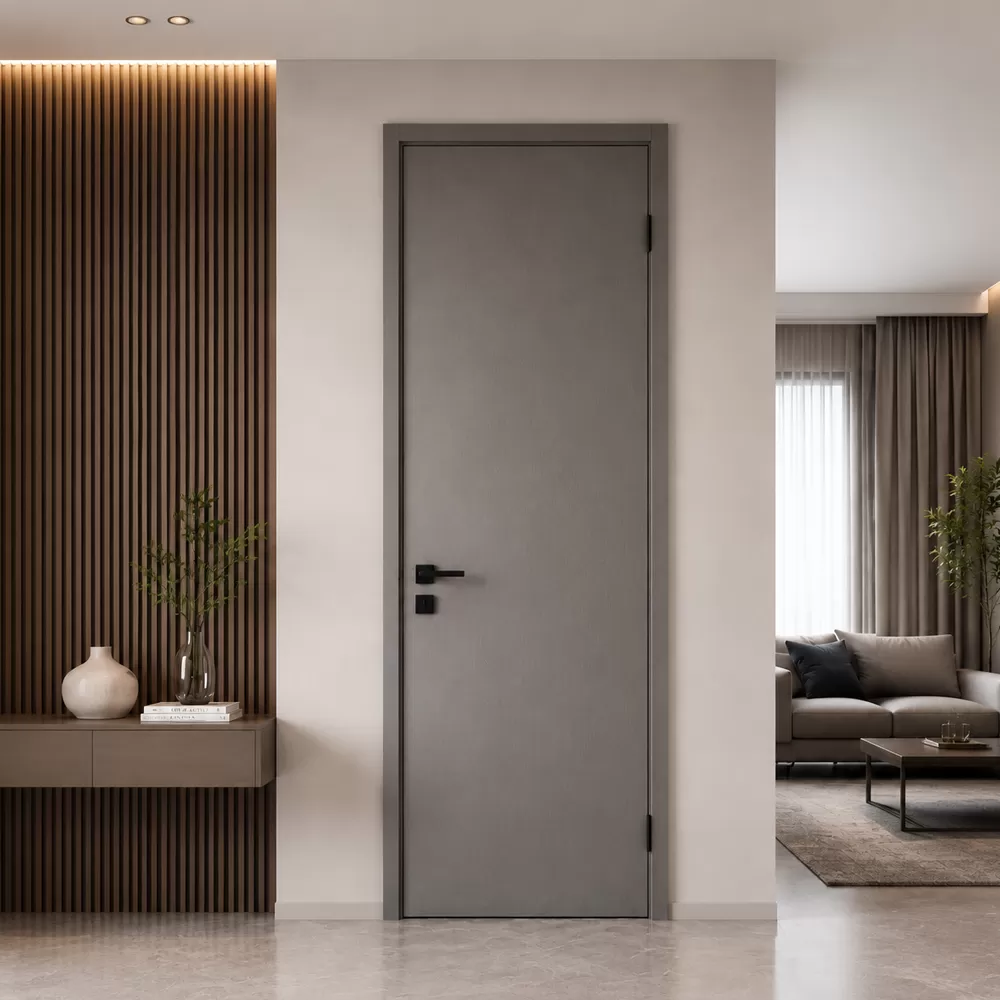
Modern minimal: flat panels with clean lines
Nordic/Japanese: light wood tones with simple grooves
Light-luxury/Neo-classic: subtle profiles and lines with metal accents
Industrial: dark grey/black, cement-like textures
2) Design Options: Flexible formats
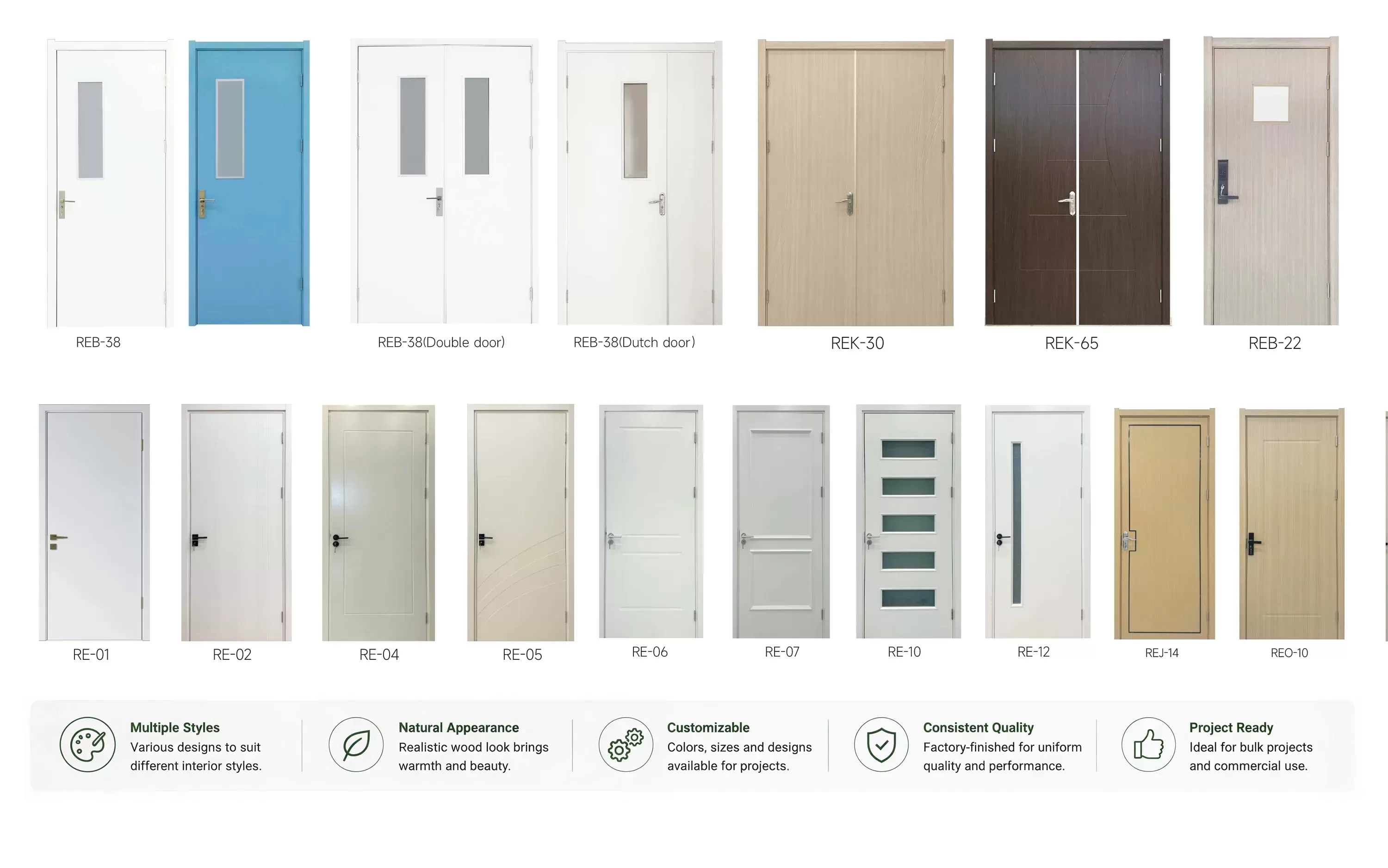
Door types: flat panel or molded designs (frames, geometric grooves).
Integrated sets: matching trims/skirting for a uniform look; suitable for tall doors and hidden-door concepts due to good stability.
Touch & finish: matte, gloss, or soft-touch surfaces.
Materials & Structure of WPC Doors
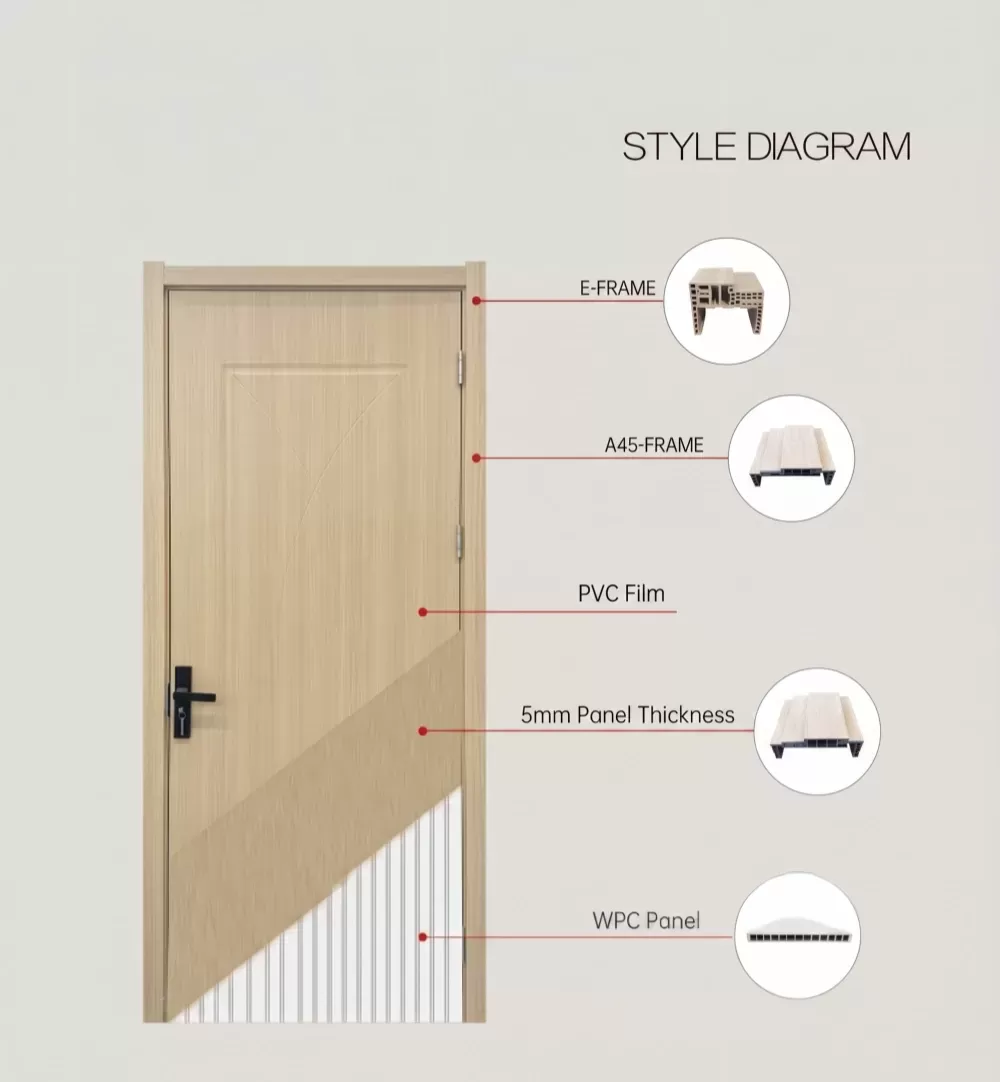
1) Core Material: WPC (Wood–Plastic Composite)
WPC is a hybrid base material:
Wood content (about 30%–70%): wood powder/fiber or bamboo powder, often from processing leftovers and recycled sources.
Plastic content (about 25%–60%): PE/PP/PVC, can be virgin or recycled.
Additives (small amount): coupling agent (key “binder” for strength), plus lubricants/stabilizers/colorants.
Process: mixed under high heat and extruded into profiles/sheets (frames, rails, panels).
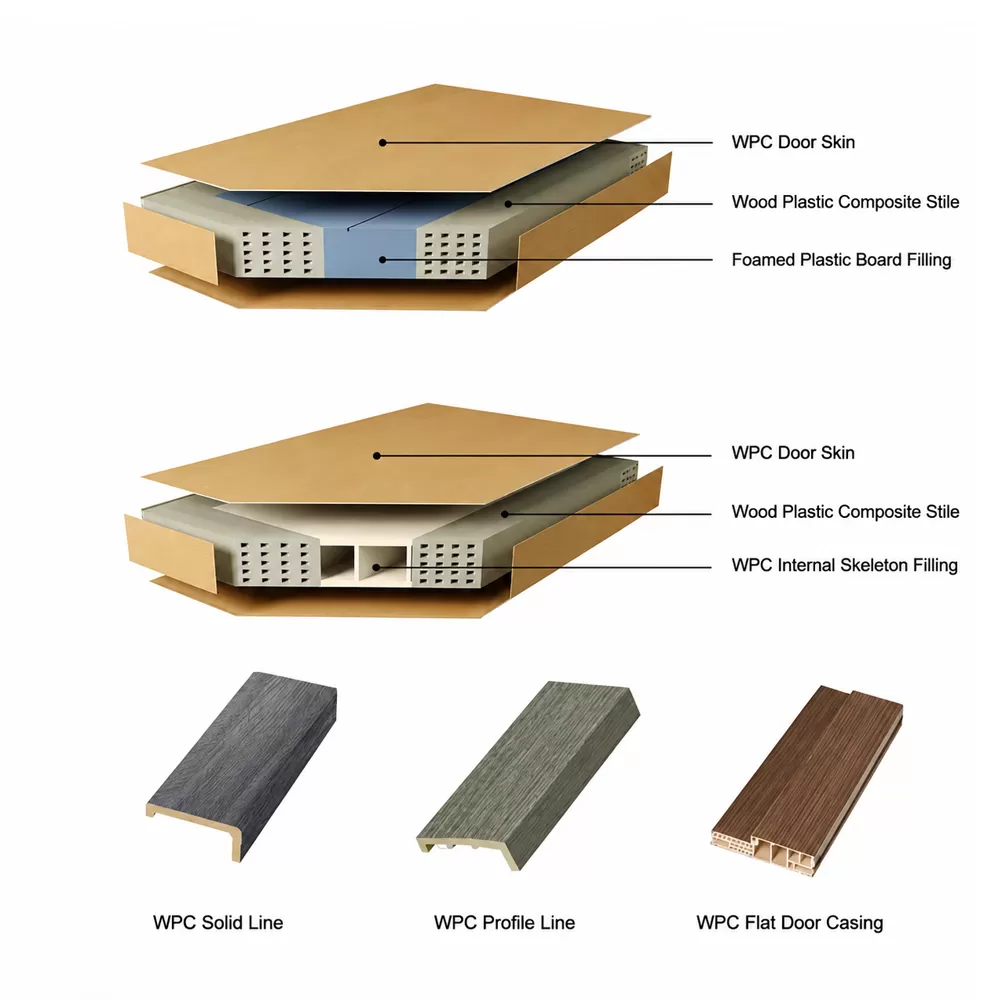
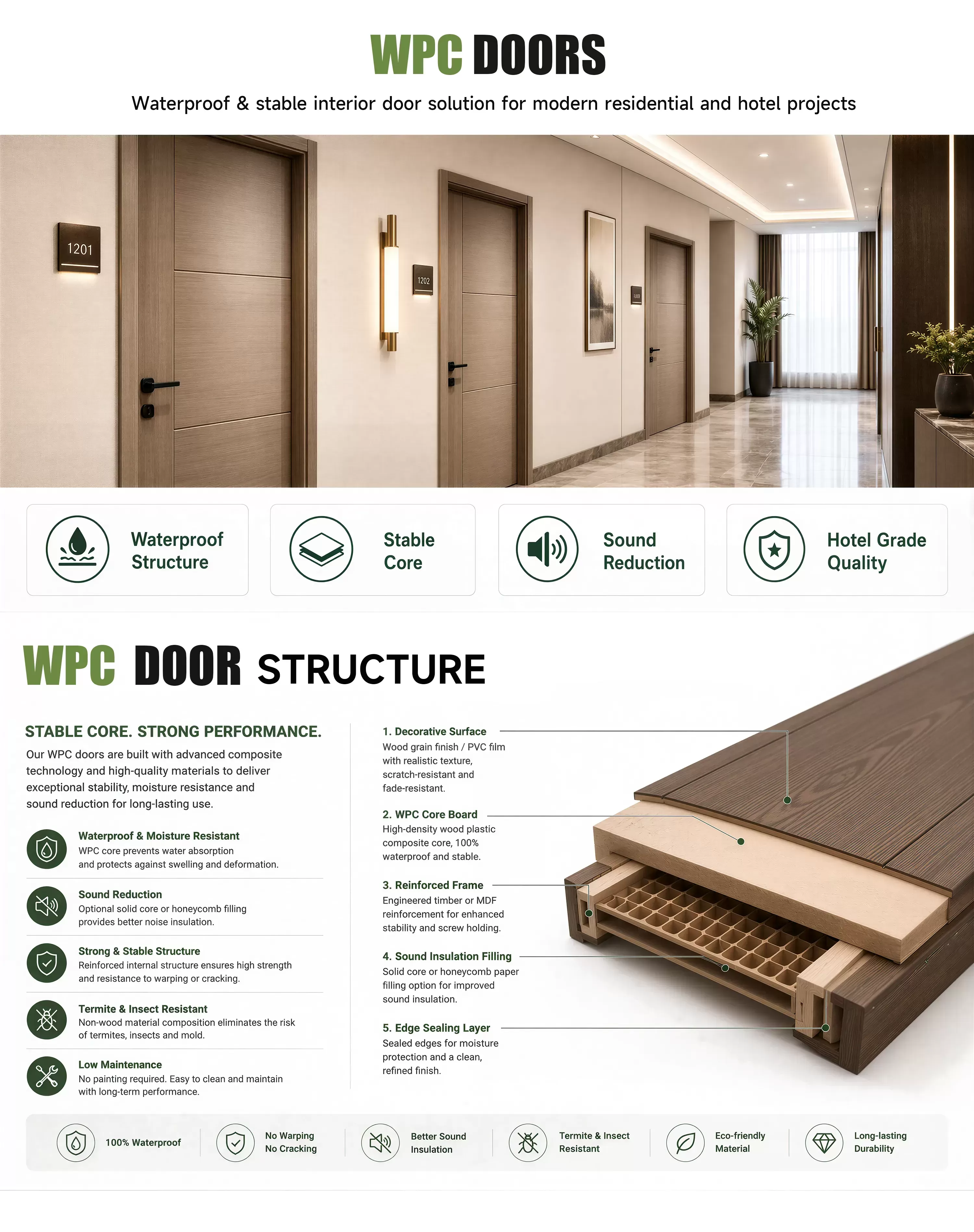
2) Typical “Sandwich” Door Structure (Inside → Outside)
Internal skeleton/fill: WPC keel frame (mainstream), or honeycomb paper/aluminum honeycomb; premium options include solid wood strips/bridge panels (needs good moisture protection).
Core substrate layer: dense WPC sheets (solid or slightly foamed) for waterproof stability.
Surface layer: hot-press PVC/CPL film (CPL is more wear/scratch/UV resistant), or UV coating/paint, or wood veneer.
Edge sealing: matching WPC edge banding via hot-melt/laser for better moisture protection.
WPC Door Applications
WPC doors are best known for being water-resistant, moisture-proof, and dimensionally stable, so they work especially well in humidity-sensitive interiors.
1) Core Applications (Most recommended)
Bathrooms: the top choice. WPC handles steam and occasional splashes without swelling or molding, offering a warmer look than aluminum/glass and better performance than basic plastic doors.
Kitchens: highly recommended. Resists moisture and oil stains, cleans easily, and stays stable through temperature changes.
Balconies / utility balconies: suitable for areas exposed to humidity, rain mist, or strong sunlight.
Basements / villa lower levels: ideal where dampness and limited ventilation can damage standard wood doors.
Humid climates (rainy/coastal regions): even bedrooms or studies benefit from reduced warping risk.
2) Extended Use (Worth considering)
Whole-home matching: for modern or Nordic interiors needing consistent doors, frames, and trims.
In short, WPC doors are a reliable solution wherever “wood doors in wet zones” is a concern.
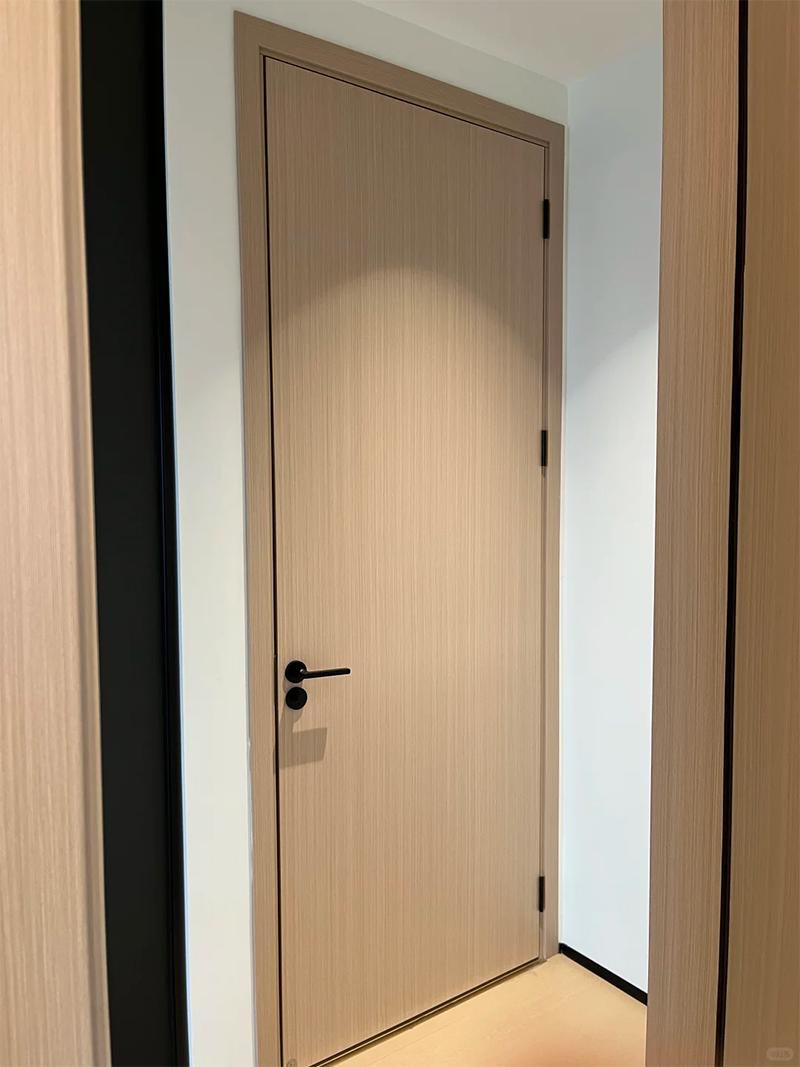
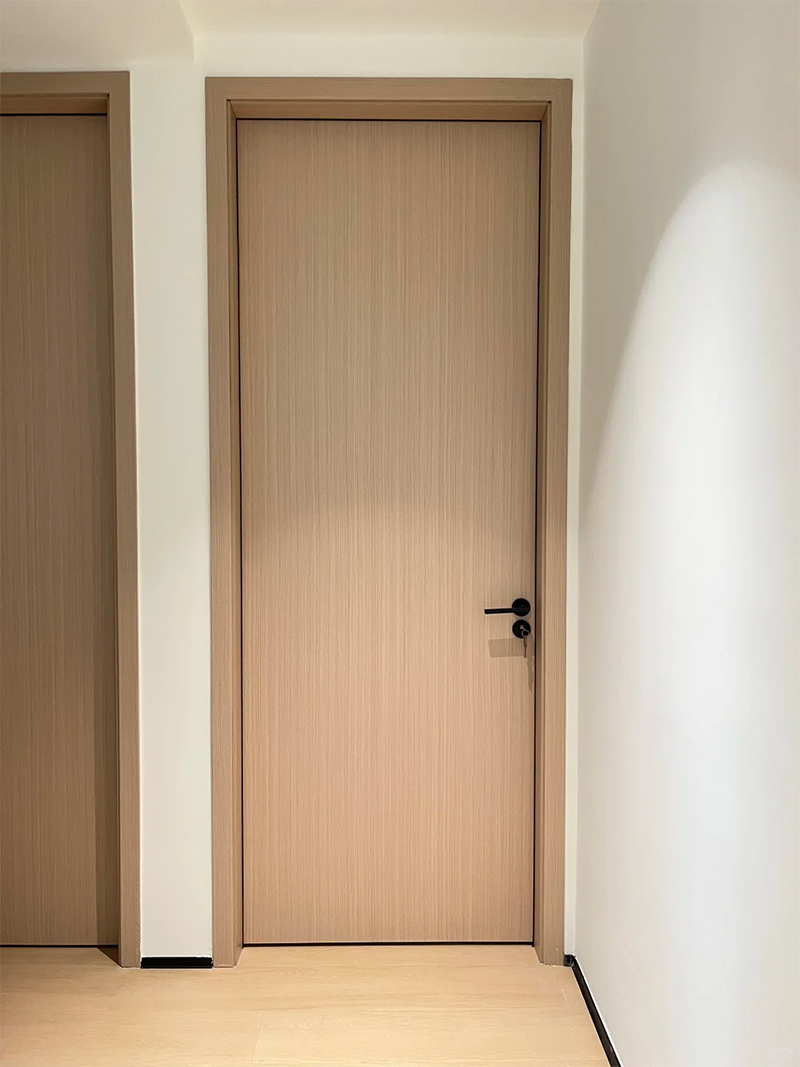
.webp "WPC Doors")
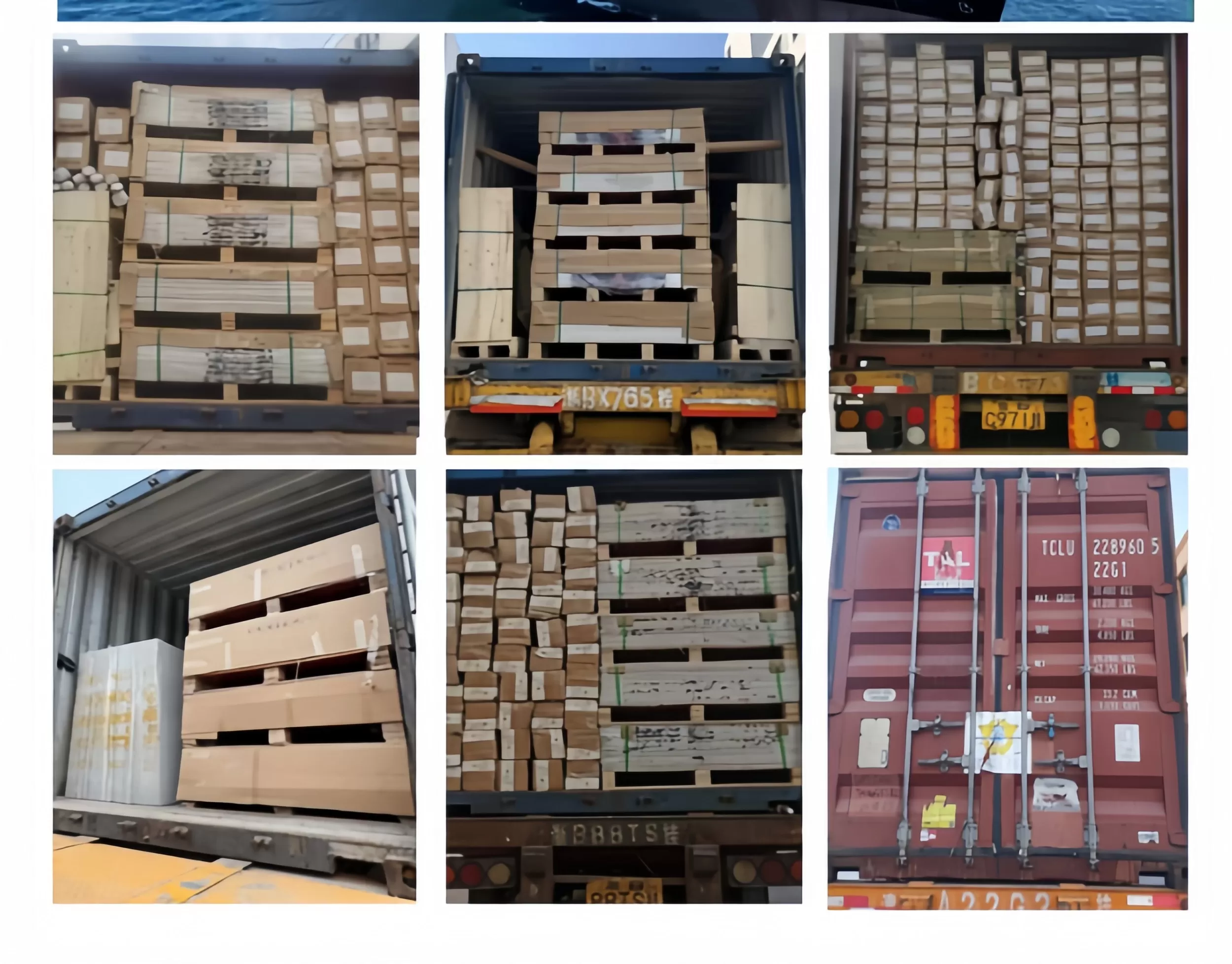
We provide export-standard packing suitable for international shipment. Packing solutions can be aligned with your product positioning and logistics requirements.
● Standard carton packing with palletizing options
● Container loading support and shipment coordination upon request
● OEM carton design available for private label partners
If you need a packing reference (carton size, labels, loading plan), contact us and we will provide a practical proposal.