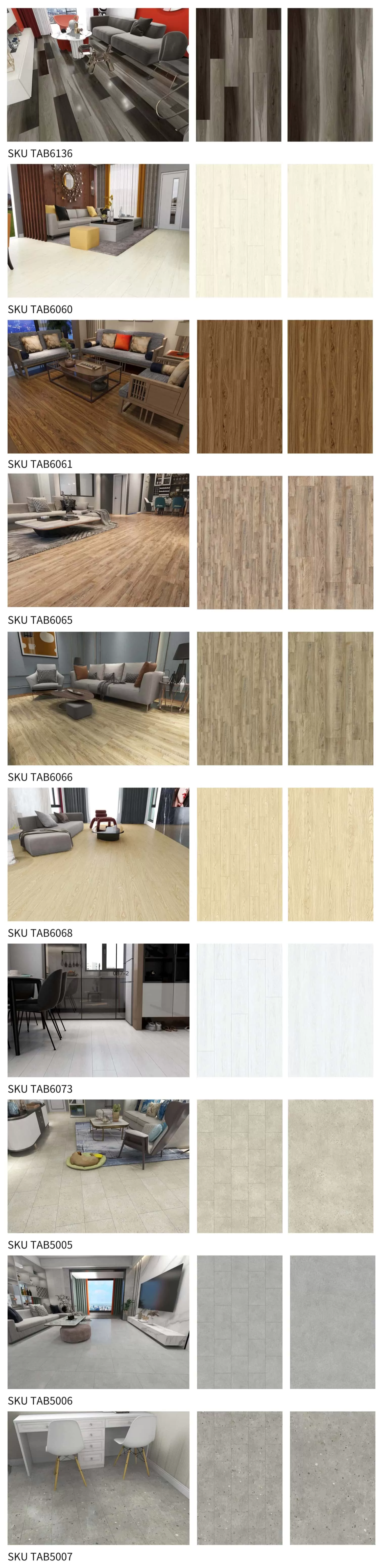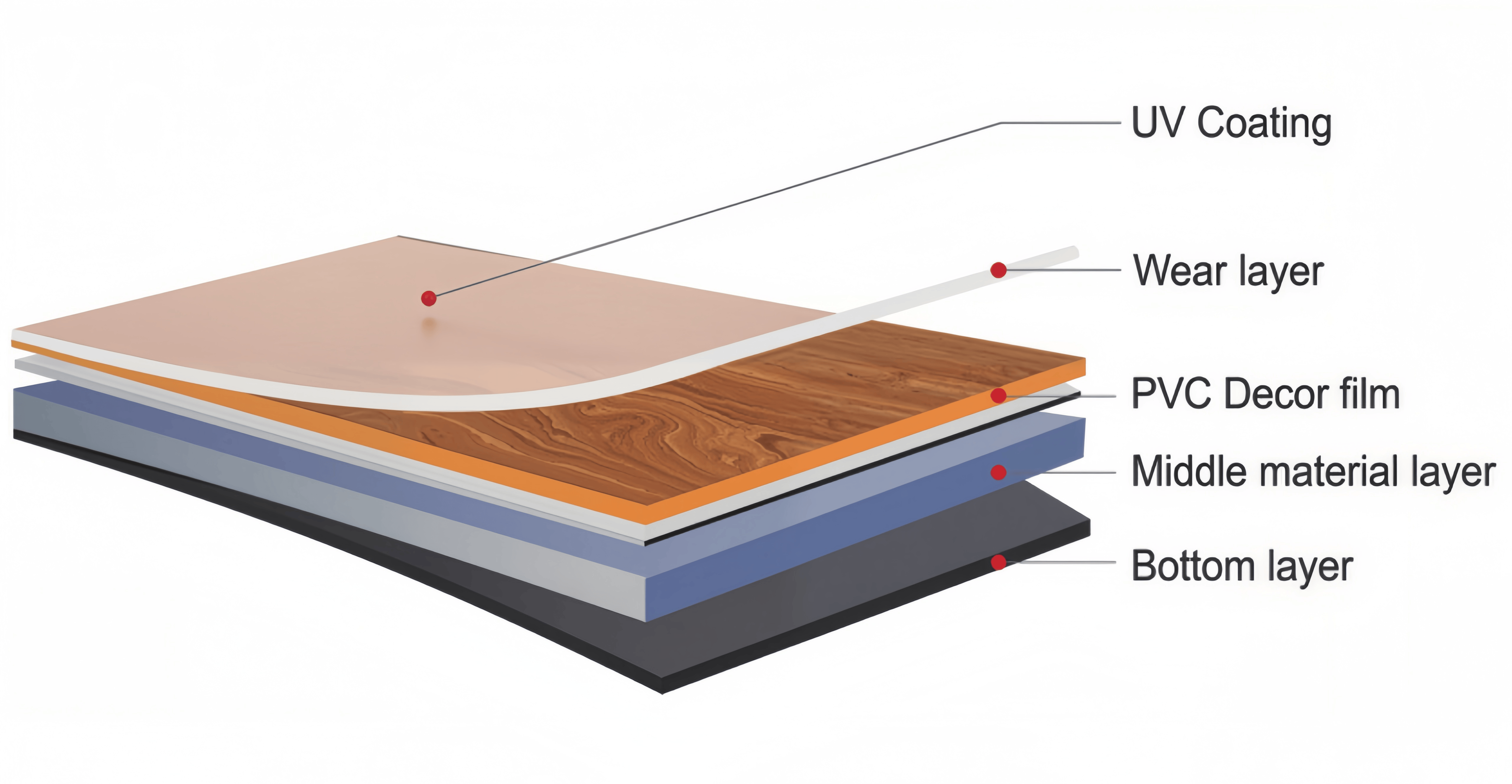
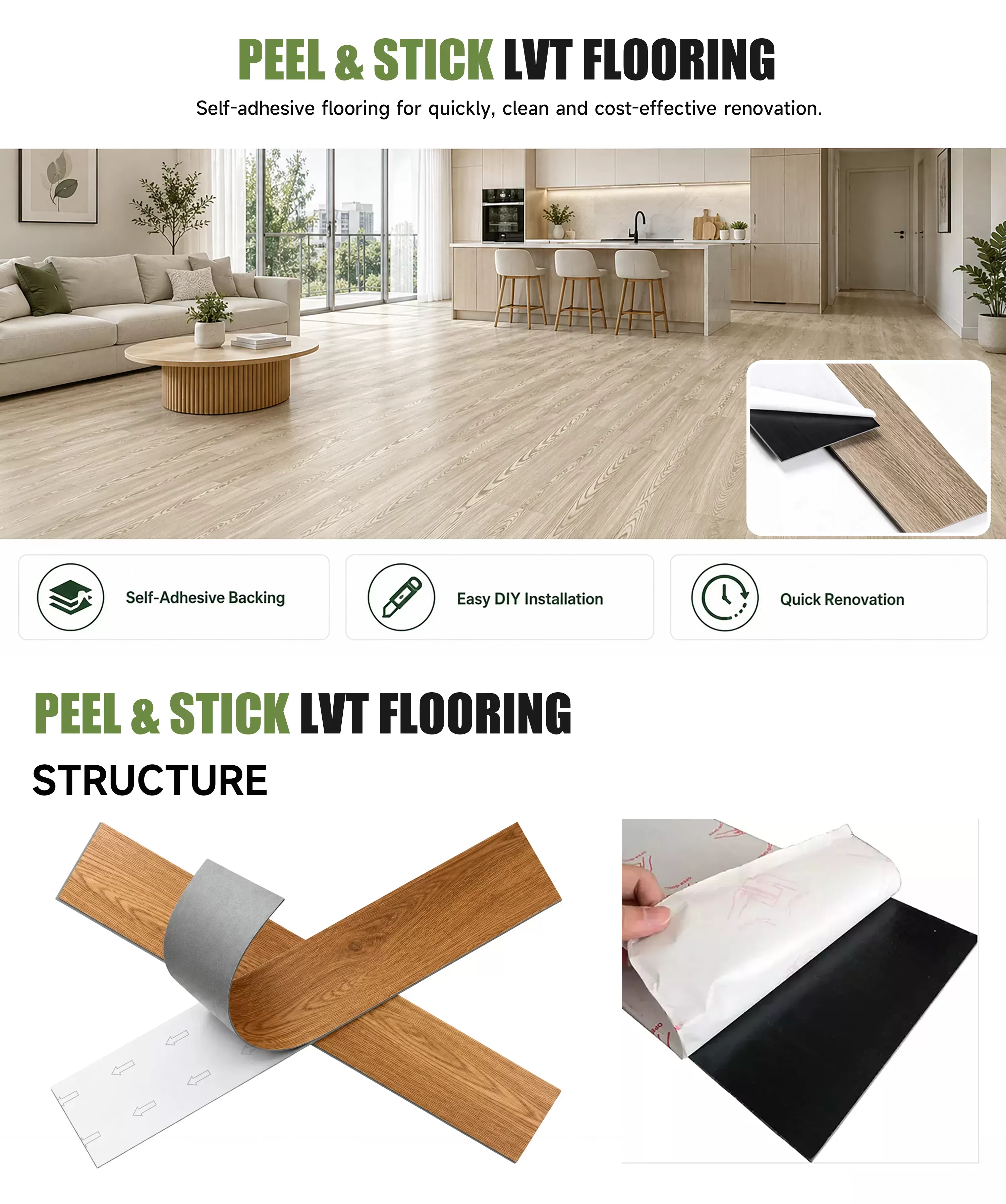
LVT self-adhesive flooring ≠ LVT dry-back flooring. They are two different products, but are often confused.
LVT dry-back flooring: There is no adhesive on the back of the flooring. Specialized flooring adhesive must be purchased separately and applied to the floor by the installer. This is the mainstream method for professional commercial installations.
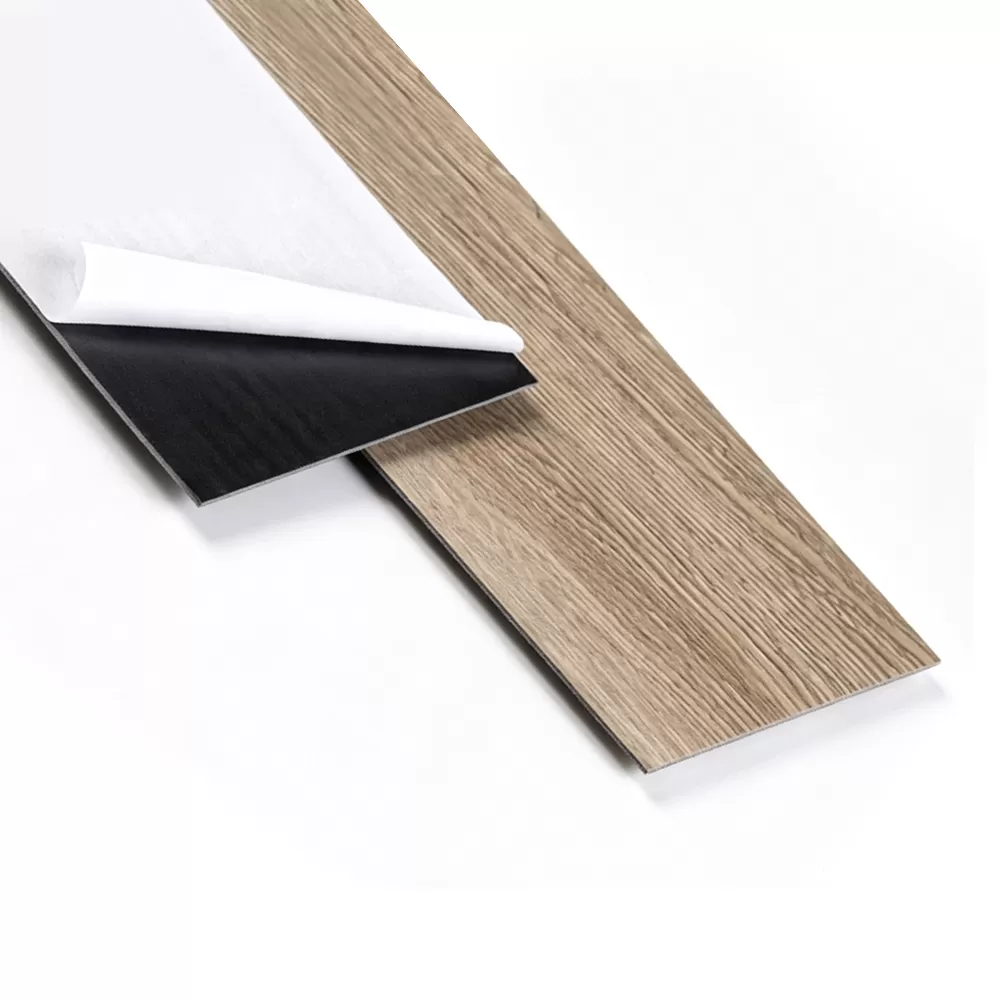
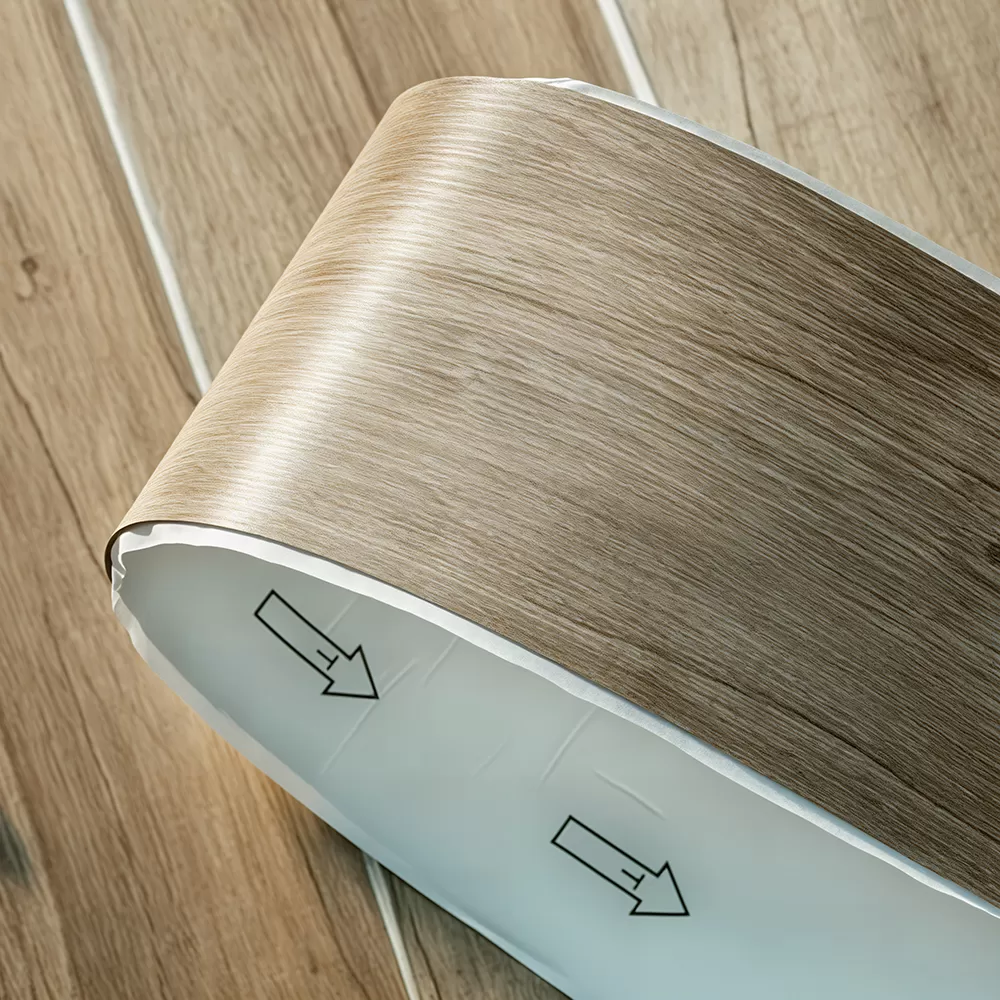
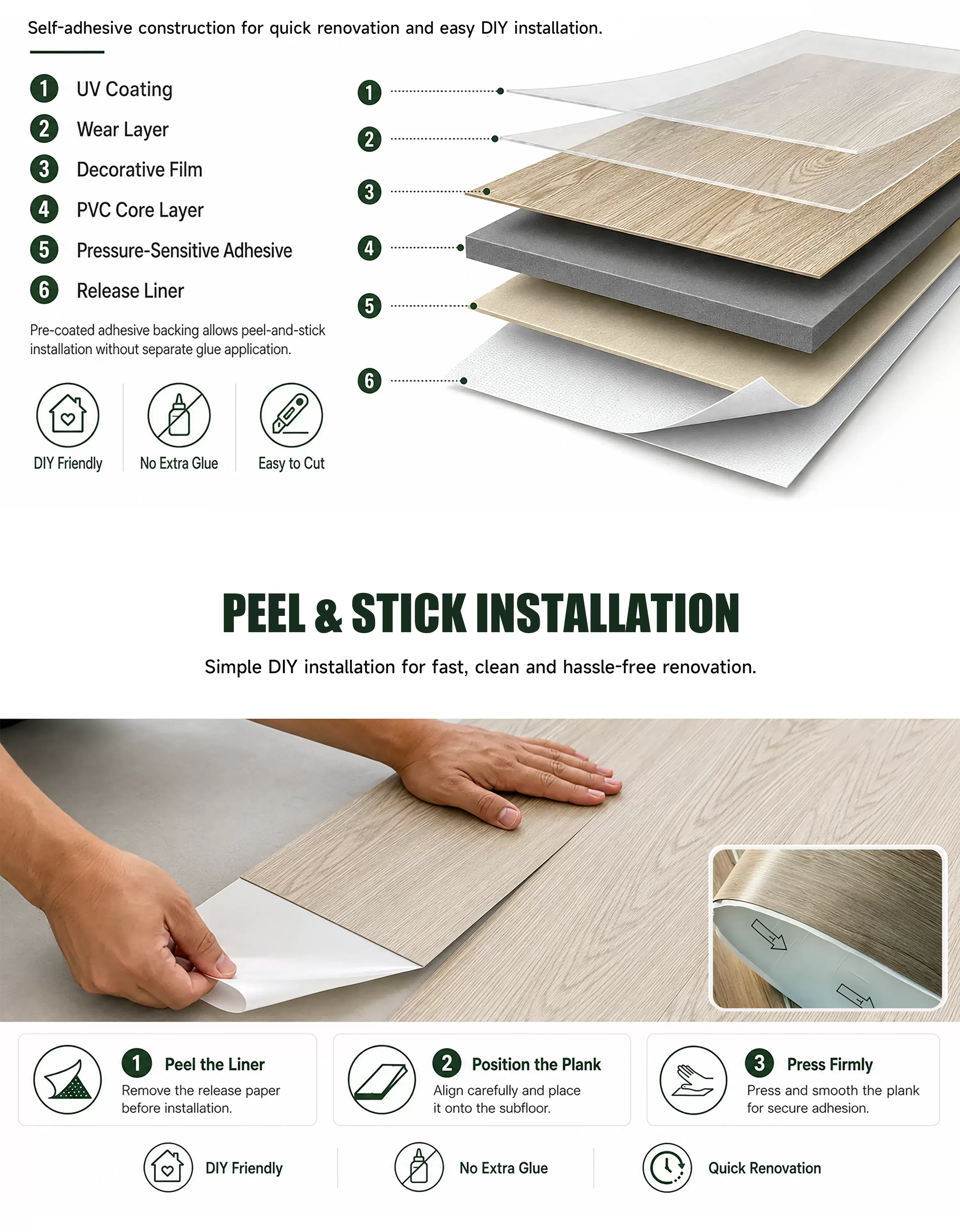
LVT self-adhesive flooring: The flooring is pre-coated with pressure-sensitive adhesive on the back and covered with a release liner. Installation simply requires removing the release liner and attaching it directly to the floor. Its main selling point is ease of installation.
1. Core Advantages (Features and Advantages)
A. Extremely convenient installation, DIY-friendly. The biggest selling point. No need to mix adhesives or use specialized tools (scrapers, etc.), eliminating the most complex and messy steps.
The installation process is simplified to: Clean the floor → Remove the release liner → Align and attach → Press firmly. Ideal for homeowners with strong DIY skills or for quick renovations of small areas.
B. Clean and Flexible
C. No wet adhesive application, clean and odorless site, ready for light use immediately after installation.
Small-scale trial laying and adjustments are possible, and minor adjustments may still be made shortly after application (depending on the adhesive type).
D. Relatively Low Cost
Initial installation cost is low: eliminating the cost of professional adhesives and manual application. The material itself is also typically cheaper than comparable click-lock or dry-back professional LVT.
E. Suitable for Various Flat Substrates
Theoretically, it can be applied to flat tiles, old vinyl floors, and smooth self-leveling cement as a quick renovation cover.
Installation Tips
● Subfloor Preparation: The surface must be clean, dry, and perfectly flat to prevent unevenness from appearing through the tiles.
● Versatile Application: Can be used on various surfaces, including concrete, wood, and existing vinyl.
● Easy Cutting: Planks and tiles can be cut to size with a utility knife.