Commercial architectural design requires a calculated balance between visual appeal, mechanical endurance, and lifecycle economics. Flooring surfaces in high-traffic environments bear the brunt of daily foot traffic, frequent maintenance regimens, and potential moisture exposure. Over the past decade, specifyers, developers, and commercial contractors have increasingly moved away from traditional materials such as solid wood, ceramic tile, or standard laminate in favor of resilient surfaces. Among these, luxury vinyl waterproof flooring has emerged as a standard choice for large-scale developments, hospitality venues, healthcare facilities, and multi-family residential complexes.
Selecting the appropriate flooring goes beyond aesthetic preferences. For B2B buyers and commercial procurement managers, understanding the underlying engineering of resilient planks and tiles is necessary to prevent premature product failure. TAB Flooring manufactures resilient flooring solutions designed to meet rigorous international performance standards, ensuring that large-scale installations maintain structural integrity under demanding operational conditions. By examining the structural layers, moisture mechanics, and performance testing protocols of these surfaces, commercial stakeholders can make informed procurement decisions that protect their capital investments.
The Multi-Layer Engineering of Resilient Flooring Surfaces
To understand why luxury vinyl waterproof flooring performs reliably in high-moisture and heavy-traffic environments, one must look at its composite construction. Unlike natural wood, which is isotropic and responds directly to ambient humidity, resilient vinyl flooring is engineered as a multi-layer system. Each layer serves a specific mechanical purpose, contributing to the overall dimensional stability, wear resistance, and acoustic properties of the finished product.
1. The Polyurethane (PU) Treatment and Wear Layer
The topmost boundary of the plank consists of a clear wear layer, typically reinforced with a cured polyurethane coating containing microscopic ceramic beads or aluminum oxide particles. This layer acts as the primary barrier against abrasive forces, such as rolling loads, dragged furniture, and grit carried by foot traffic. In commercial specifications, the thickness of this wear layer is measured in mils (thousandths of an inch) or millimeters. A standard residential wear layer may measure 6 to 12 mils (0.15mm to 0.30mm), whereas heavy commercial specifications require a minimum of 20 mils (0.50mm) or 28 mils (0.70mm) to ensure long-term resistance to micro-scratching and dulling.
2. The High-Definition Decorative Print Film
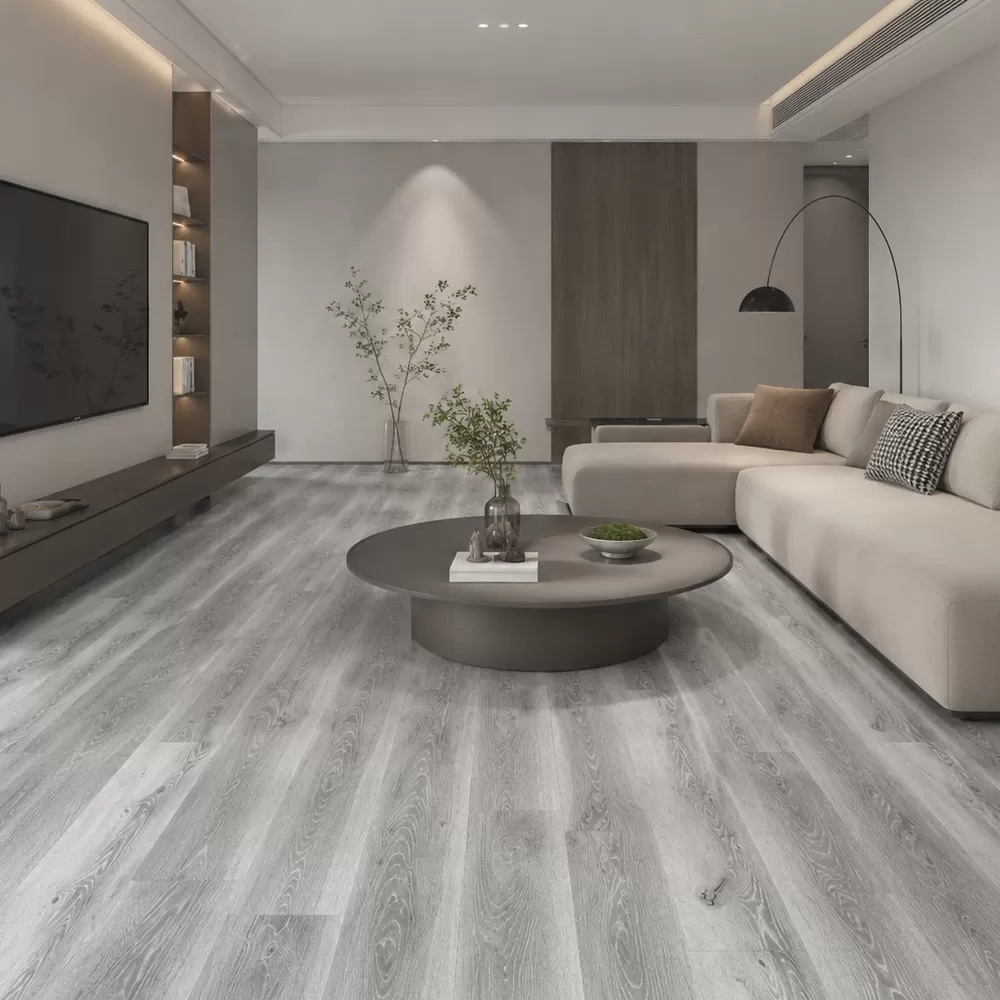
Beneath the wear layer lies the design layer, which determines the visual identity of the flooring. Utilizing advanced rotogravure or direct digital printing technologies, manufacturers can replicate natural timber species, concrete textures, or natural stone patterns with high fidelity. The authenticity of this layer is further enhanced by registered-to-emboss (EIR) technology, which aligns the physical texture of the wear layer with the underlying grain patterns of the print film, providing a tactile experience that mimics natural materials without the associated maintenance liabilities.
3. The Core Material: SPC versus LVT
The primary structural component is the core, which dictates the rigidness, impact resistance, and water-impervious nature of the plank. In the commercial market, two primary core technologies dominate:
Stone Plastic Composite (SPC): Formulated with a high ratio of calcium carbonate (limestone powder) mixed with polyvinyl chloride (PVC) and stabilizers. The typical ratio is approximately 60% to 70% stone to PVC. This dense formulation results in a highly rigid core that is virtually immune to indentation and expansion caused by temperature fluctuations.
Flexible Luxury Vinyl Tile (LVT): Composed of a higher ratio of PVC and plasticizers, offering a more pliable, softer underfoot feel. While flexible LVT provides excellent acoustic dampening, it is more susceptible to subfloor telegraphing and minor dimensional shifts under extreme heat compared to its SPC counterpart.
4. The Underlayment and Acoustic Backing
High-quality resilient flooring often features an integrated underlayment pre-attached to the underside of the plank. Commonly constructed from Cross-Linked Polyethylene (IXPE) or Ethylene-Vinyl Acetate (EVA), this layer serves a dual purpose. It compensates for minor subfloor irregularities and provides necessary acoustic insulation, reducing the transmission of impact sound between building levels—a priority for multi-family residential and hospitality developers.
Solving the Moisture Challenge: How Resilient Vinyl Prevents Structural Failures
Moisture is one of the leading causes of flooring failure in commercial construction. Conventional wood and laminate flooring absorb moisture from both the atmosphere and the subfloor, leading to issues such as cupping, warping, gapping, and mold growth. Standard concrete slabs, even when fully cured, continuously emit moisture vapor. If this vapor cannot escape or if the flooring material is sensitive to moisture, structural degradation is inevitable.
By engineering luxury vinyl waterproof flooring with synthetic polymer binders and inorganic mineral fillers, the material achieves near-zero water absorption. The joints of click-lock installation systems are precision-milled to create tight, water-resistant seals that prevent surface spills from penetrating down to the subfloor. This characteristic is particularly valuable in kitchens, bathrooms, hotel guestrooms, and common corridors where localized spills are frequent.
From an installation perspective, managing subfloor moisture remains an essential step. Even though the vinyl planks themselves will not degrade when exposed to moisture, trapped water beneath the floor can promote alkaline conditions that break down adhesives (in glue-down installations) or encourage microbial growth on the subfloor surface. Consequently, professional installers rely on moisture vapor barriers or underlayments with high water-vapor transmission resistance to ensure the longevity of the entire floor assembly.
Performance Indicators for B2B Flooring Procurement
When sourcing resilient flooring for large-scale commercial tenders, procurement professionals must move past visual aesthetics and focus on verifiable performance metrics. Standardized laboratory testing provides an objective framework for comparing different manufacturing runs and ensuring compliance with local building codes.
Dimensional Stability (ASTM F2199): This test measures the percentage of change in a plank's dimensions after exposure to elevated temperatures. Higher quality SPC cores typically exhibit dimensional variations of less than 0.1%, ensuring that the floor will not buckle or separate near large exterior windows or heating systems.
Residual Indentation (ASTM F1914 / EN ISO 24343-1): Heavy commercial environments frequently feature heavy static loads from equipment, hospital beds, or display shelving. SPC cores, due to their high mineral content, offer superior resistance to static indentation, leaving minimal or no permanent depression after the load is removed.
Acoustic Performance (ASTM E492 / E989): Impact Insulation Class (IIC) and Sound Transmission Class (STC) ratings quantify how effectively a flooring assembly dampens sound. Multi-family developers usually require an IIC rating of 50 or higher, which can be achieved through integrated acoustic underlayments on SPC or LVT planks.
Fire Performance (ASTM E648): Commercial floor finishes must comply with local fire safety codes, typically requiring a Class 1 classification under the Critical Radiant Flux test. This ensures the flooring material does not contribute significantly to flame spread in emergency egress routes.
Indoor Air Quality (VOC Emissions): Since indoor air quality is a primary focus for green building certifications like LEED, sourcing floor surfaces with low Volatile Organic Compound (VOC) emissions is a key consideration. Products certified under recognized standards, such as FloorScore, guarantee that the vinyl does not off-gas harmful chemicals into enclosed interior spaces.
Industrial and Commercial Application Scenarios
The versatility of luxury vinyl waterproof flooring allows it to be deployed across diverse vertical markets, each presenting unique structural demands.
Hospitality and Multi-Family Housing
In hotels and apartment complexes, flooring must offer a welcoming, domestic appearance while enduring high turnover rates and heavy foot traffic. The ease of cleaning and low maintenance requirements of resilient flooring mean that housekeeping staff can maintain surfaces quickly, reducing room downtime. Furthermore, the acoustic backing ensures that impact sound from adjacent rooms is minimized, enhancing guest comfort.
Healthcare Facilities and senior Living
Clinical environments require flooring that supports hygiene and mobility. Because resilient vinyl can be installed with minimal seams or even hot-welded in sheet form, it provides an easy-to-sanitize surface that does not harbor dust mites or bacteria. The compliance of the wear layer with mild chemical disinfectants allows for rigorous sanitation protocols without compromising the floor's aesthetic design or structural integrity.
Large-Scale Retail and Office Spaces
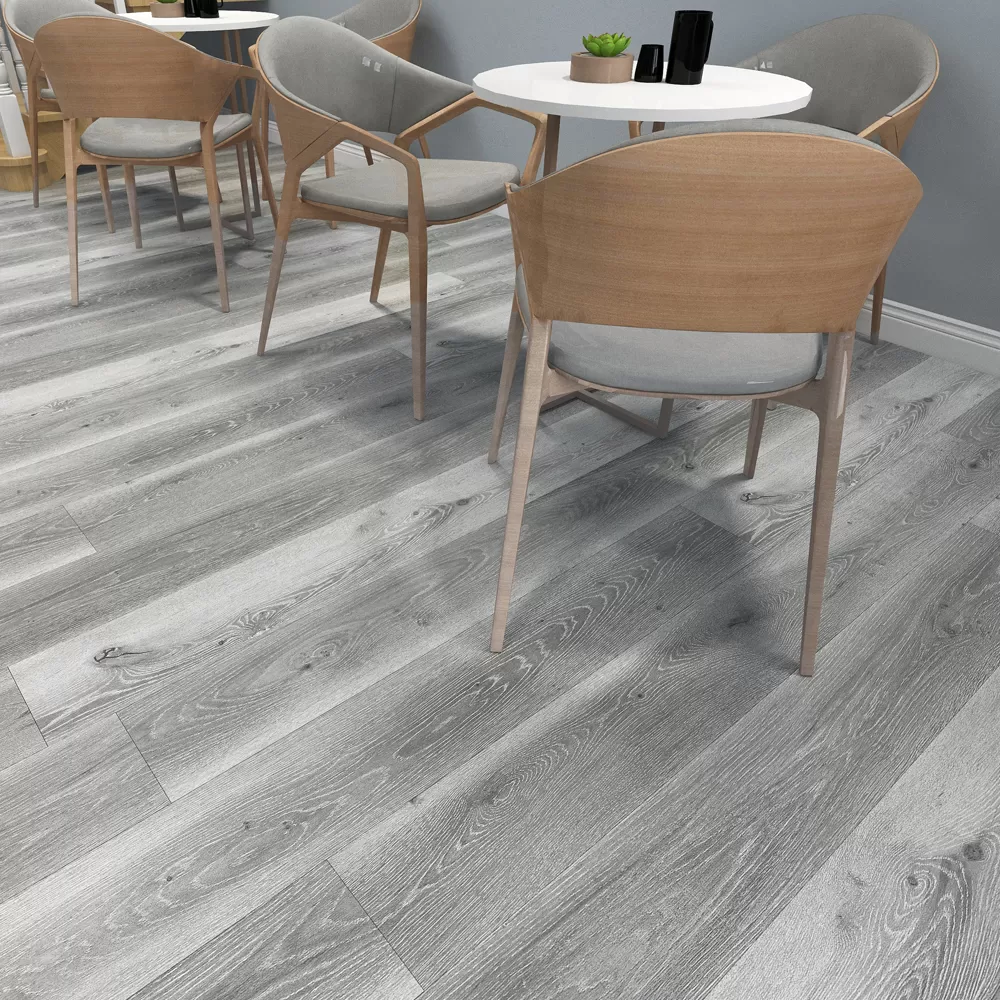
Retail stores and office lobbies experience constant, heavy pedestrian traffic along with the movement of rolling displays and carts. The high compressive strength of SPC cores prevents indentations from high heels and heavy furniture. Additionally, the rapid installation times associated with click-lock profiles allow retail spaces to undergo renovations with minimal disruption to business operations.
Optimizing Installation Efficiency and Reducing Lifecycle Costs
Beyond material costs, labor costs associated with installation represent a significant portion of any flooring budget. Traditional ceramic tile or hardwood installations require specialized, multi-day labor sequences involving adhesive application, grouting, sanding, or curing. In contrast, modern resilient vinyl flooring features glueless click-lock profiles that accelerate project timelines.
These locking mechanisms, such as those engineered by industry-standard licensing bodies, allow for floating installations over existing hard-surface flooring, provided the subfloor is level and structurally sound. This capability bypasses the need for intensive demolition work in remodeling projects, translating directly to cost savings for developers. When evaluating the lifecycle cost of resilient flooring versus natural surfaces, the absence of periodic sanding, waxing, or sealing further minimizes long-term operational costs, offering a lower total cost of ownership over a ten-to-fifteen-year building cycle.
Frequently Asked Questions Regarding Resilient Waterproof Flooring
Q1: What is the main structural difference between LVT and SPC
flooring?
A1: The primary difference lies in the core composition.
LVT utilizes a flexible PVC core with added plasticizers, resulting in a more
pliable and softer plank. SPC utilizes a rigid core composed of calcium
carbonate (limestone) and PVC, providing superior dimensional stability and
impact resistance under heavy static loads.
Q2: Can luxury vinyl waterproof flooring be installed over radiant
heating systems?
A2: Yes, most modern SPC and high-quality LVT
products are approved for installation over hydronic in-floor radiant heating
systems. It is important to ensure the subfloor temperature does not exceed the
manufacturer's specified limit, which is typically 85°F (29°C), to maintain the
dimensional stability of the planks.
Q3: How does the wear layer thickness impact the lifespan of a
commercial installation?
A3: The wear layer thickness directly
determines the floor's resistance to surface abrasions and scratches. For
commercial settings with moderate traffic, a 20 mil (0.50mm) wear layer is
standard. For extreme high-traffic environments like retail corridors or
schools, a 28 mil (0.70mm) wear layer is recommended to extend the product
lifecycle.
Q4: Why is subfloor preparation necessary if the flooring is 100%
waterproof?
A4: While the flooring material itself is unaffected by
water, subfloor imperfections such as high spots, depressions, or structural
cracks can compromise the locking joints over time. Additionally, high moisture
levels in concrete slabs can lead to adhesive failure or mold growth beneath the
floating planks, making proper subfloor levelling and moisture testing
essential.
Q5: What maintenance protocols are recommended for preserving the
finish of vinyl flooring?
A5: Resilient vinyl flooring does not
require polishing, waxing, or sanding. Regular maintenance involves routine
sweeping or dust mopping to remove abrasive dirt and grit, followed by damp
mopping using a pH-neutral cleaner. Abrasive scrubbing pads or harsh chemical
solvents should be avoided to prevent damage to the clear wear layer.
Partner with TAB Flooring for Your Next Project
Selecting the right commercial surface is a detailed process that impacts the long-term functionality and financial viability of a real estate development. As an experienced manufacturing partner in the resilient flooring sector, TAB Flooring is dedicated to supplying high-performance SPC and LVT products tailored to the exact requirements of architects, interior designers, and commercial contractors globally. Our manufacturing processes prioritize structural consistency, certified indoor air safety, and precise locking system engineering to simplify on-site installation.
If you are currently drafting specifications, managing a bill of quantities, or looking for a reliable manufacturing partner to deliver consistent, certified flooring solutions, we invite you to connect with our technical sales division. We can provide physical samples, detailed laboratory test reports, and custom pricing configurations tailored to the scope of your commercial development. Contact our project coordination team today to submit your project specification details or to request a direct B2B inquiry.