
Outdoor spaces are becoming an important part of residential and commercial building design. A garden, patio, terrace, or courtyard is no longer treated as an empty area outside the house. In many projects, it is planned as a functional living space, a private relaxation area, or a landscaped extension of the building.
Because of this change, buyers often need more than one outdoor material. A fence may be required for privacy and boundary definition, while decking may be needed to create a comfortable floor surface. When these two products are selected separately, the final result can look disconnected. When they are planned together, the outdoor space usually feels more complete and visually consistent.
This is why WPC fencing and outdoor decking are often considered together in modern outdoor projects. WPC fencing helps define the edge of the space, while outdoor decking creates a practical surface for walking, seating, dining, and daily use. For importers, distributors, contractors, and building material suppliers, understanding this combination can make product recommendations more practical for project customers.
Why WPC Fencing and Outdoor Decking Work Well Together
A fence and a deck serve different purposes, but they strongly affect each other in the final outdoor design.
The fence becomes the vertical background of the space. It influences privacy, visual balance, and the overall feeling of the garden or courtyard. The decking becomes the horizontal surface people use every day. It affects movement, comfort, layout, and how outdoor furniture or landscape elements are arranged.
When the fence and decking are coordinated in color, texture, and design style, the outdoor area looks more organized. A wood-look fence can create a warm and natural background, while matching or complementary decking can make the ground surface feel connected to the rest of the space.
For B2B buyers, this combination is also useful from a sales perspective. Customers who are sourcing outdoor decking may also need fencing for the same project. Buyers who are looking for garden fence panels may also be planning a patio, terrace, or walkway. Offering both product categories can help suppliers present a more complete outdoor material solution.
The Role of WPC Fencing in Outdoor Design
WPC fencing is commonly used in gardens, villas, courtyards, residential communities, and landscaped outdoor areas. It helps create a clear boundary while also improving the visual appearance of the space.
In outdoor projects, fencing is not only used to separate one area from another. It can also help shape the atmosphere of the entire environment. A clean fence line makes the garden look more structured. A wood-look surface can soften the appearance of the boundary. Dark posts or frame details can add a modern architectural feeling.
For private gardens and villa projects, WPC fencing can help create a more comfortable outdoor area by reducing visual exposure from nearby roads, neighbors, or shared spaces. For landscape projects, it can be used as a background for plants, lighting, paths, and outdoor furniture.
When buyers evaluate WPC fencing, they should not only look at the panel itself. It is also important to consider how the fence will look after installation and how it will work with the surrounding outdoor materials.
The Role of Outdoor Decking in Patios and Courtyards
Outdoor decking helps turn an open ground area into a more usable space. It can be applied in patios, terraces, garden walkways, poolside areas, outdoor seating zones, and courtyard projects.
Compared with a plain hard surface, wood-look outdoor decking can bring a warmer visual effect to the space. It can make an outdoor area feel closer to an interior living environment while still keeping a natural outdoor appearance.
In modern projects, decking is often used together with plants, lighting, exterior walls, glass doors, railings, and garden furniture. The floor surface becomes part of the whole design, not just a basic construction material.
For distributors and project buyers, outdoor decking is easier to recommend when it is shown as part of a complete space. Customers can better understand how the product may look in a real patio, garden, or terrace, instead of only comparing small samples.
How to Match Fence Panels and Decking Boards
When combining WPC fencing and outdoor decking, the goal is not always to make everything look identical. A good outdoor space can use matching colors, complementary tones, or controlled contrast.
The first point to consider is color. Warm wood tones can create a natural and relaxed feeling. Darker details, such as fence posts, frames, railings, or exterior windows, can help create a modern look. If the decking and fencing are too different in tone, the space may feel less coordinated.
The second point is surface texture. Wood-look textures are widely used in outdoor materials because they can bring a natural appearance to gardens and courtyards. Buyers should check whether the fence surface and decking surface work well together in the same project style.
The third point is layout direction. Horizontal fence panels can make the boundary look clean and stable. Decking boards can guide the visual direction of the patio, walkway, or terrace. When both are considered together, the whole space can look more intentional.
The fourth point is the project environment. A small private courtyard may need warmer tones and stronger privacy. A large terrace may need a cleaner and more open design. A residential community may require a consistent material style across multiple outdoor areas.
Suitable Projects for WPC Fencing and Outdoor Decking
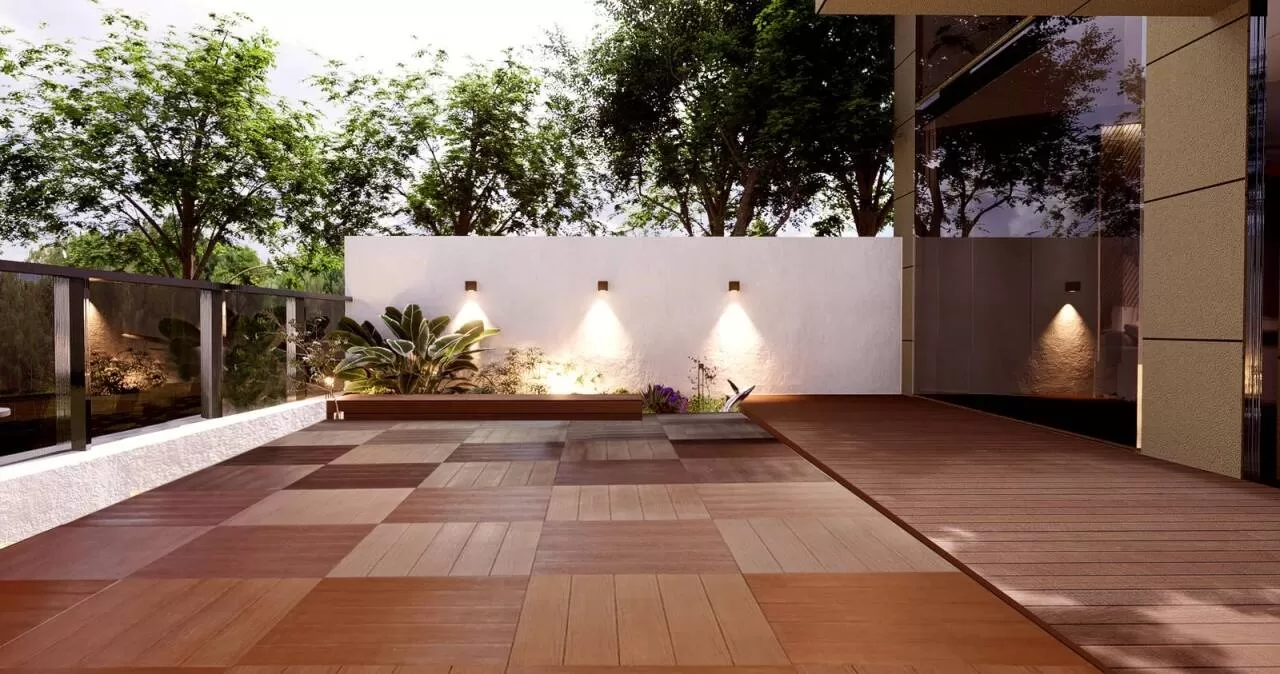
WPC fencing and outdoor decking can be considered for many project types where privacy, outdoor flooring, and visual design are all important.
Villa Gardens
Villa gardens often require both privacy and comfort. WPC fencing can help define the private area, while outdoor decking can create a surface for seating, walking, or outdoor dining. When the two materials are coordinated, the garden can look more complete.
Residential Courtyards
In residential courtyard projects, fencing and decking can help organize the space. The fence defines the boundary, and the decking creates a clean usable area for daily activities. This combination is suitable for both new projects and renovation work.
Patios and Terraces
Patios and terraces often connect the indoor living area with the outdoor environment. Outdoor decking can make the ground surface more comfortable and visually warmer. WPC fencing can add privacy or create a more finished edge around the space.
Landscape Walkways
For garden paths or outdoor walkways, decking can guide movement through the space. Fencing can be used beside the walkway to create structure, separation, or decorative background.
Hospitality and Commercial Outdoor Areas
Hotels, resorts, cafes, and outdoor leisure areas may use fencing and decking to create semi-private zones. A coordinated material selection can help the space feel more organized and suitable for customer use.
What B2B Buyers Should Confirm Before Ordering
Visual design is important, but B2B procurement also needs clear product information. Before placing an order, buyers should confirm the details that affect installation, packaging, project suitability, and customer communication.
For WPC fencing, buyers may need to confirm panel size, post system, accessories, color options, surface finish, packing method, and recommended application areas.
For outdoor decking, buyers may need to confirm board profile, dimensions, surface texture, installation clips, substructure requirements, color options, and packaging details.
If the project has specific performance requirements, buyers should ask the supplier for technical documents or confirmed product data. Details such as outdoor suitability, maintenance requirements, color stability, and installation conditions should be checked before bulk purchasing.
This confirmation process is especially important for importers, distributors, and contractors because they often need to answer questions from downstream customers.
Why This Combination Helps Product Sales
For building material suppliers, WPC fencing and outdoor decking can support each other in sales conversations.
A customer looking for decking may also need matching fence panels for the same garden or terrace. A customer looking for fencing may be planning a larger outdoor renovation and may also need decking or other outdoor flooring products.
By presenting these products together, suppliers can help customers think in terms of a complete outdoor space rather than a single item. This can make product selection easier and improve the overall project presentation.
For showrooms, product catalogs, and online marketing, this combination is also useful. Fence panels and decking boards can be displayed together to show color matching, surface texture, and finished outdoor design effects.
Final Thoughts
WPC fencing and outdoor decking can work together to create outdoor spaces that are more practical, private, and visually coordinated. Fencing defines the boundary and improves the background of the space, while decking creates a usable floor surface for patios, terraces, gardens, and courtyards.
For B2B buyers, the value of this combination is not limited to appearance. It can also help create better product recommendations, broader material packages, and more complete project solutions.
When selecting WPC fencing and outdoor decking, buyers should consider the project environment, color coordination, surface texture, installation requirements, and confirmed product specifications. A well-matched combination can make modern outdoor spaces look more organized and easier to use.