The global demand for resilient flooring continues to reshape commercial and residential construction sectors. According to data from the Resilient Floor Covering Institute (RFCI), vinyl-based products now command a dominant share of the hard-surface flooring market. For B2B buyers, distributors, and real estate developers, sourcing the right flooring luxury vinyl plank (LVP) involves navigating complex manufacturing specifications rather than simply selecting aesthetic patterns. This guide provides a detailed technical analysis of the customization variables that determine product performance in high-traffic environments.
In B2B procurement, failure to align product specifications with structural realities can lead to significant financial liabilities. From telegraphing subfloor imperfections to premature wear-layer delamination, the challenges are often rooted in manufacturing decisions. This article explores these technical variables to help product managers and procurement officers make informed sourcing decisions.
As a global supplier, the brand TAB Flooring focuses on structural integrity and material transparency. Understanding the chemistry and engineering behind these products is essential to ensuring long-term performance under demanding conditions.
Defining the Modern LVT/SPC Architecture
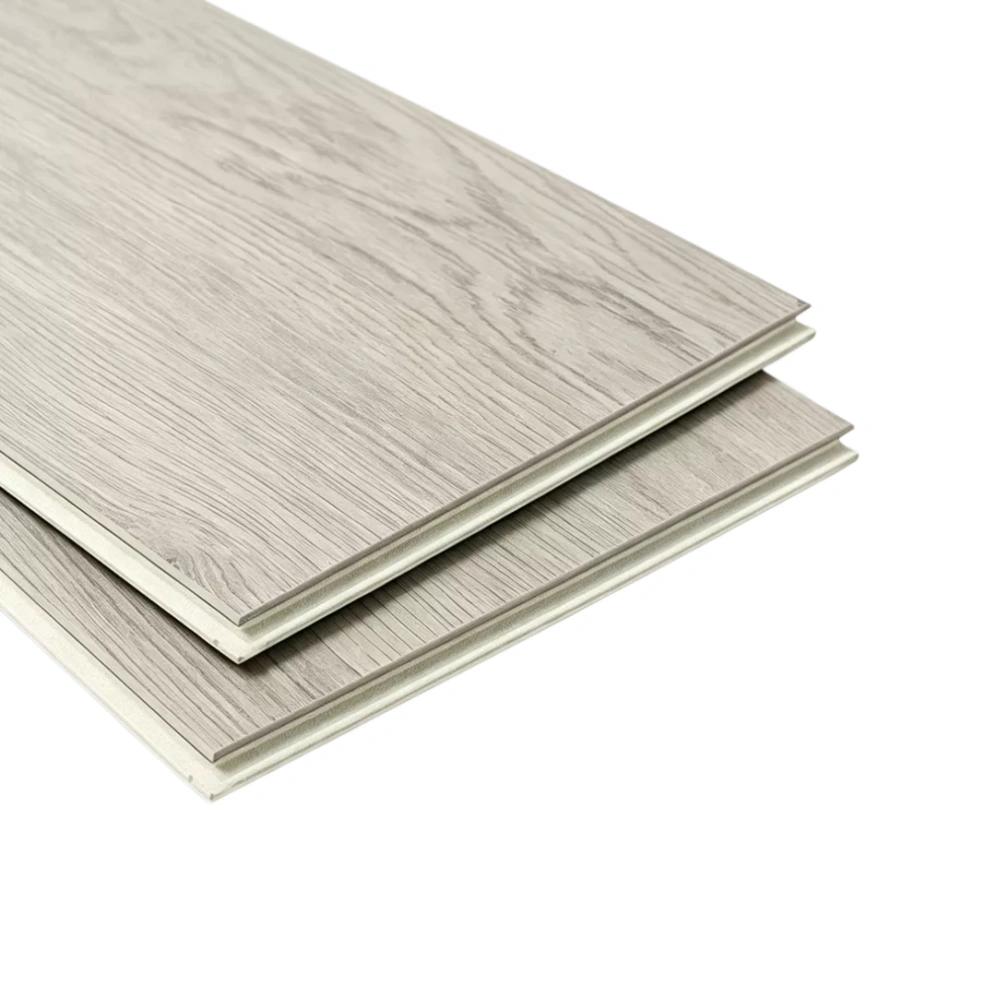
Understanding flooring luxury vinyl plank requires distinguishing between flexible Luxury Vinyl Tiles (LVT) and rigid core variations, such as Stone Plastic Composite (SPC). Traditional LVT utilizes a flexible PVC core, which offers excellent underfoot comfort and sound absorption but requires a highly level subfloor. In contrast, SPC uses a composite core made of calcium carbonate (limestone) and polyvinyl chloride stabilizers, providing superior impact resistance and dimensional stability.
The structural composition of a standard rigid core plank typically consists of four primary layers: the UV topcoat, the wear layer, the high-definition print film, and the composite core. Some configurations also include an integrated acoustic underlayment. Each layer must be engineered to work in harmony, as variations in thermal expansion coefficients between layers can cause structural instability.
For high-traffic commercial projects, specifying the correct layer configuration is critical. TAB Flooring engineered cores utilize synthetic stabilizers to control the contraction and expansion rates under varying temperature ranges. This formulation helps prevent joint failure and maintains the integrity of the locking mechanism over time.
The Counter-Intuitive Truth: Why Overall Thickness Can Be Deceptive
A common misconception in the flooring industry is that a thicker plank automatically equates to a more durable floor. Many procurement teams prioritize overall thickness (e.g., 6mm over 4mm) assuming it guarantees superior wear resistance. However, structural performance depends far more on formulation density and wear-layer quality than on total thickness.
In rigid core products, overall thickness provides structural mass and accommodation for deep click-locking profiles, but it does not dictate wear performance. A 4mm SPC plank with a high-density, virgin-polymer core can outperform a 6mm plank constructed with high recycled-filler content and poor binding agents. Low-quality fillers increase brittleness, making the locking joints susceptible to shearing under heavy loads.
To assess actual durability, technical teams should evaluate the specific gravity of the core and the wear layer thickness (measured in mil or mm). For commercial applications, a wear layer of 20 mil (0.50mm) or higher is standard, regardless of whether the overall plank thickness is 4.5mm or 5.0mm. TAB Flooring focuses on maintaining core densities above 1,900 kg/m³ to ensure reliable load-bearing performance at optimal profiles.
The Core-Shell Equilibrium Matrix
To assist technical buyers in evaluating product integrity, we utilize a framework called the Core-Shell Equilibrium Matrix. This system analyzes how core formulation, wear-layer chemistry, and UV annealing tension interact to determine the plank's dimensional stability under thermal stress.
| Component | Key Metric | Standard Target Value | Impact on Performance |
|---|---|---|---|
| Composite Core | Calcium Carbonate to PVC Ratio | 3:1 to 4:1 Range | Balances impact resistance and minimizes structural brittleness. |
| Wear Layer | Pure PVC Polymer Thickness | ≥ 0.50 mm (20 mil) | Determines resistance to abrasive wear and micro-scratching. |
| UV Coating | Ceramic Bead Density | Double-cure, Al₂O₃ infused | Controls gloss levels and prevents UV-induced yellowing. |
| Acoustic Backing | IXPE / EVA Density | 90 kg/m³ (thickness 1.0 - 1.5mm) | Improves Sound Transmission Class (STC) and Impact Insulation Class (IIC) ratings. |
When these three layers are unbalanced—for instance, if a rigid core is paired with a heavy, unannealed wear layer—the differential tension can cause the plank to curl upwards (cupping) or downwards (doming). This balance is particularly critical when installing flooring luxury vinyl plank near floor-to-ceiling windows, where direct sunlight can cause rapid temperature changes.
TAB Flooring balances these components by ensuring both the top coat and the backing material maintain equalized tension. This balance helps keep the planks flat and secure during transport, storage, and long-term installation.
Key Customization Parameters for B2B Importers
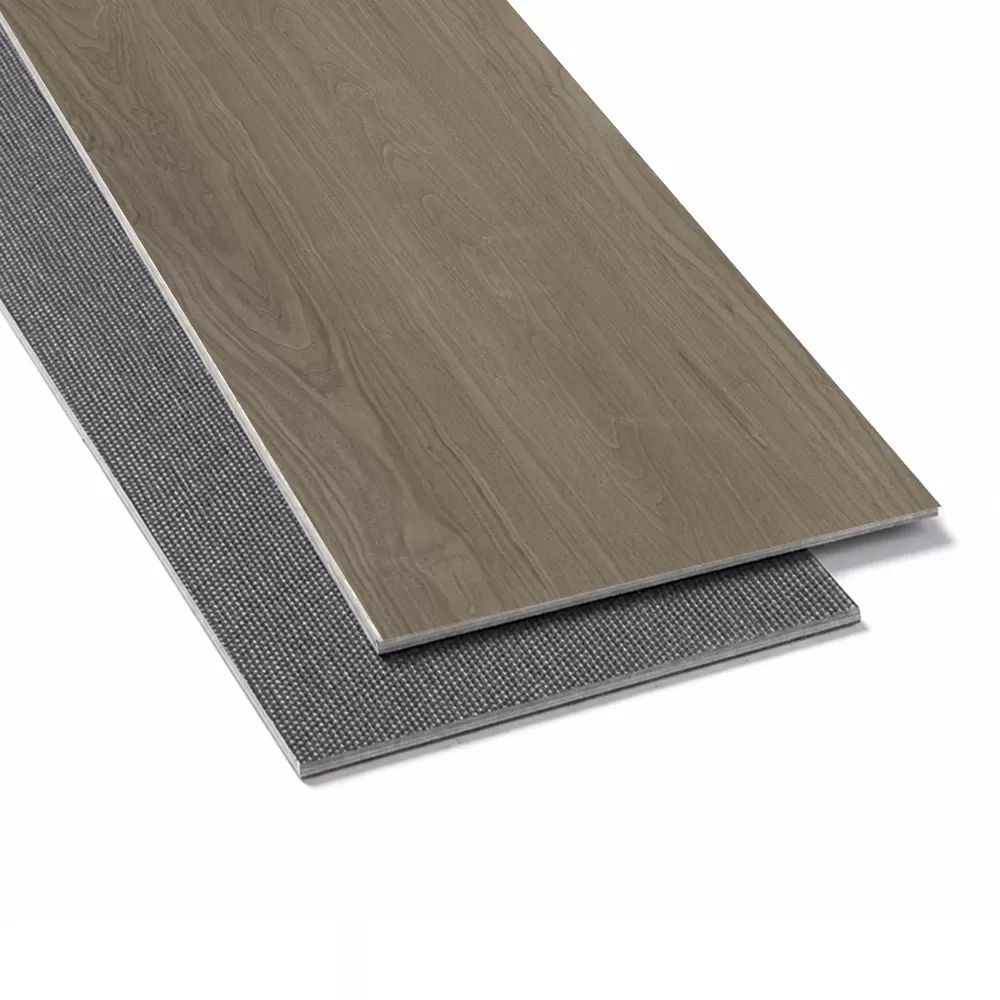
When specifying flooring luxury vinyl plank for commercial distribution, several key parameters can be customized to balance performance, aesthetics, and cost:
Embossing Textures: Options range from standard wood grain to Embossed-in-Register (EIR). EIR aligns the physical texture of the plank with the underlying print film image, creating a realistic look that mimics natural hardwood.
Bevel Configurations: Micro-bevels, painted bevels, and pressed bevels define the transitions between planks. Deep painted bevels enhance visual depth but require precise milling to prevent dirt accumulation in high-traffic commercial spaces.
Locking Systems: The mechanical locking profile (such as Uniclic, Valinge, or Drop-Lock systems) determines both installation speed and seam strength. Strong locking profiles are essential for maintaining tight joints under rolling loads.
For large-scale commercial projects, customization should also consider indoor air quality certifications. Utilizing 100% virgin polymer raw materials ensures that the finished planks easily comply with strict VOC emission standards, including FloorScore and GREENGUARD Gold certifications.
B2B Sourcing Specification Checklist
Use this technical template to verify key parameters with your manufacturing partner before signing off on production runs:
Core Density: Ensure SPC core density is verified between 1,900kg/m³ via ASTM D792 testing.
Wear Layer Composition: Confirm 100% virgin PVC wear layer with no recycled content to prevent cloudy finishes.
Dimensional Stability: Request ASTM F2199 test reports showing thermal expansion of less than 0.08% under 80°C exposure for 6 hours.
Locking System Tolerance: Verify profile milling tolerance is held within ±0.05mm to ensure seamless click-lock integration.
Acoustic Underlayment: Match the backing density to the subfloor type (IXPE is generally preferred over EVA for moisture resistance).
Common Challenges and Solutions in B2B Applications
A frequent issue encountered by commercial flooring contractors is "telegraphing." This occurs when subfloor irregularities, such as trowel marks, minor cracks, or high spots, become visible on the surface of the installed floor. While rigid core SPC is highly resistant to this issue, flexible LVT remains susceptible if subfloor preparation is inadequate.
Another common challenge is joint separation under rolling loads (e.g., hospital beds or heavy retail carts). This is often caused by micro-variations in the locking profile during high-speed extrusion. TAB Flooring addresses this by utilizing high-precision profiling equipment and conducting regular calibration checks during manufacturing to ensure consistent joint strength.
Finally, plasticizer migration can occur when low-grade adhesives or backing materials react with the PVC core, leading to surface discoloration. This risk can be minimized by utilizing glue-free mechanical locking systems or specifying high-stability, non-reactive polyurethane adhesives during installation.
Frequently Asked Questions
1. How does thermal expansion affect SPC versus flexible LVT?
Flexible LVT contains a higher ratio of plasticizers to PVC resin, making it more pliable and susceptible to thermal expansion and contraction. Consequently, it requires strict climate control during and after installation. SPC, due to its high stone-powder content, has a lower coefficient of thermal expansion, allowing it to maintain dimensional stability over a wider temperature range.
2. Can flooring luxury vinyl plank be installed over radiant heating systems?
Yes, but the system must be properly engineered. The heating element should be embedded within the subfloor, and the surface temperature must not exceed 27°C (80°F). It is also important to choose a high-density SPC core with a suitable thermal resistance rating (R-value) to ensure efficient heat transfer without damaging the locking joints.
3. Why do some SPC planks feel brittle and snap easily during installation?
This brittleness is typically caused by an excessive calcium carbonate to PVC resin ratio (often exceeding 4.5:1) or the use of low-grade recycled plastic. While increasing the stone powder content reduces raw material costs, it makes the locking tongues brittle and prone to breaking during installation. Maintaining a balanced resin-to-filler ratio is essential for structural durability.
Sourcing high-performing flooring luxury vinyl plank requires a careful balance of chemistry, precision manufacturing, and clear product specifications. By focusing on core density, wear-layer quality, and proper layer tension rather than just overall thickness, B2B buyers can procure flooring that delivers reliable performance in demanding environments.
For your next project, consider partner manufacturers who prioritize technical transparency and strict quality control. Reach out to the team at TAB Flooring to receive detailed technical datasheets, certified test reports, and tailored samples designed for your specific application needs.