In the global construction and interior design sectors, the demand for durable, cost-effective, and aesthetically versatile surfacing materials continues to grow. Among the various resilient options, luxury vinyl plank flooring has established itself as a primary solution for both high-traffic commercial spaces and multi-family residential developments. Sourcing professionals, importers, and commercial contractors must evaluate these products beyond surface aesthetics, focusing on polymer chemistry, extrusion standards, and structural integrity.
As a specialized manufacturer, TAB Flooring focuses on delivering high-performance vinyl flooring solutions that meet rigorous international standards. Understanding the engineering details of these products ensures that large-scale projects avoid common installation issues and perform well over their intended lifespans. This analysis provides a detailed breakdown of the structural, environmental, and mechanical factors that define high-quality resilient flooring.
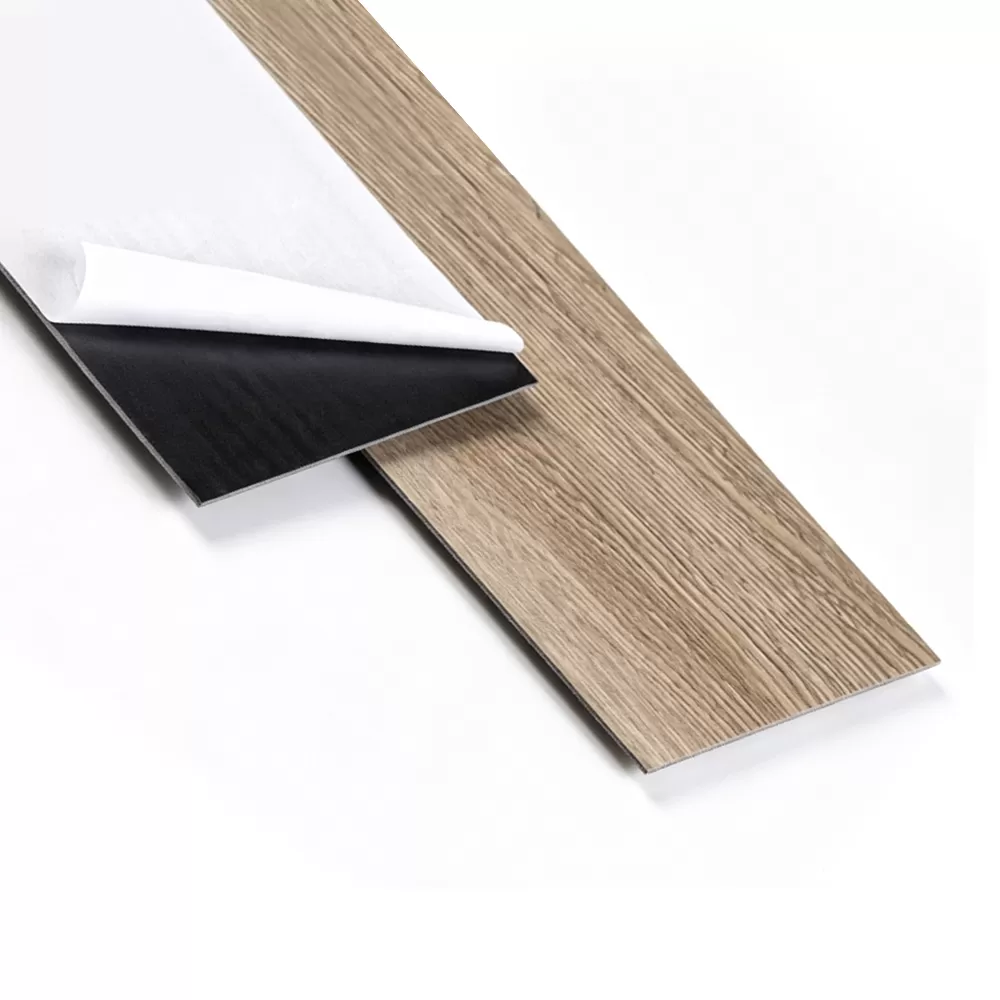
Sourcing Luxury Vinyl Plank Flooring: Composition and Core Options
To make informed procurement decisions, it is necessary to distinguish between flexible Luxury Vinyl Tiles (LVT) and Rigid Core options, such as Stone Plastic Composite (SPC). Each offers specific mechanical properties suited for different installation environments.
Flexible LVT (Dry Back and Loose Lay)
Flexible LVT relies on a higher plasticizer content to achieve pliability. This flexibility allows the material to conform to subfloors, but it requires a highly level substrate to prevent surface irregularities from showing through.
Composition: Primarily polyvinyl chloride (PVC) resin, plasticizers, calcium carbonate, and stabilizers.
Installation Method: Typically glue-down or loose-lay, offering high acoustic dampening properties within the material itself.
Application: Best suited for areas where subfloor preparation can be meticulously managed and where acoustic performance underfoot is a priority.
SPC (Stone Plastic Composite)
SPC represents a significant advancement in dimensional stability. By utilizing a high ratio of calcium carbonate (limestone) to PVC resin (typically 3:1 or 4:1), manufacturers create a rigid core that resists temperature-induced expansion and contraction.
Core Density: Generally ranges between 1900 and 2100 kg/m³, providing high indentation resistance.
Click-Lock Integration: The rigid core allows for precise profiling of click-locking joints, enabling glueless floating installations.
Application: Ideal for commercial spaces subject to temperature variations and high foot traffic, such as retail centers and office buildings.
Engineering Specifications and Quality Standards
Evaluating commercial-grade flooring requires looking closely at measurable performance metrics. For B2B buyers, understanding these test methods is key to mitigating risk and ensuring long-term durability.
Wear Layer Thickness and Abrasion Resistance
The longevity of the floor depends on the wear layer, a clear PVC coating applied over the printed design film.
Commercial Specification: For heavy commercial traffic, a wear layer of 0.55mm (22 mil) or 0.70mm (28 mil) is standard. Residential or light commercial projects often utilize 0.30mm (12 mil) layers.
UV Coating: Modern production lines apply a polyurethane coating reinforced with ceramic beads or metal oxide particles. This treatment enhances scratch resistance and gloss retention.
Wear Group Rating: Look for products certified under EN 660-2, achieving Wear Group T (the highest level of abrasion resistance).
Dimensional Stability and Heat Resistance
Vinyl polymers naturally react to temperature fluctuations. Rigid core flooring minimizes this movement through careful raw material formulation.
ASTM F2199 Testing: This standard measures dimensional stability after exposure to heat. Premium formulations demonstrate linear expansion of less than 0.08% across both width and length.
Plasticizer Quality: Utilizing virgin PVC resin instead of recycled scrap ensures a lower volatile organic compound (VOC) profile and more predictable physical properties under heat exposure.
Acoustic Performance and Impact Insulation
Acoustic comfort is a priority in multi-family residential, hospitality, and healthcare environments.
IIC and STC Ratings: Concrete subfloors offer poor sound insulation. Adding an integrated underlayment, such as Cross-Linked Polyethylene (IXPE) or cork, can raise the Impact Insulation Class (IIC) rating of a flooring assembly to above 60 dB, complying with strict building codes.
Sourcing and Customization Parameters for Importers
When selecting luxury vinyl plank flooring for high-moisture zones or high-traffic areas, customization of the backing, wear layer, and locking system becomes necessary to align with project budgets and regional building codes.
Sourcing partners such as TAB Flooring offer customizable wear layer thicknesses, acoustic backings, and embossing patterns to meet specific architectural demands. Here are the primary variables to configure during the quotation phase:
Core Thickness: Typically ranges from 3.2mm to 6.0mm for SPC, and 2.0mm to 3.0mm for dry back LVT.
Underlayment Options: IXPE (typically 1.0mm to 1.5mm) provides superior moisture resistance, while cork offers natural antimicrobial properties and excellent sound absorption.
Surface Texturing: Options include smooth, wood grain embossed, and Embossing in Register (EIR), which aligns the physical texture of the wear layer with the underlying wood grain print.
Bevel Profiles: Square edge (seamless appearance), micro-bevel (subtle plank definition), or painted bevel (deep plank definition resembling traditional hardwood).
Addressing Common Field Failures in B2B Projects
Project delays and post-installation claims represent significant financial liabilities. Understanding the root causes of these issues helps ensure a smooth deployment.
For instance, installing luxury vinyl plank flooring over an unlevel subfloor can lead to joint separation. To avoid this, strict compliance with subfloor tolerance guidelines is necessary:
Subfloor Flatness: Subfloor deviations should not exceed 3mm over a 3-meter radius. Excessive unevenness stresses click-lock joints, leading to progressive breakage under heavy foot traffic.
Subfloor Moisture: High moisture vapor emission rates (MVER) from concrete slabs can break down adhesives in glue-down LVT or cause mold growth under floating planks. Calcium chloride tests (ASTM F1869) should be performed prior to installation.
Acclimation Neglect: Even rigid materials benefit from acclimation. Storing the cartons in the installation space for 48 hours helps equalize the materials to the building's operating temperature and relative humidity.
Supply Chain Integration and Procurement Best Practices
Choosing a manufacturing partner requires looking beyond unit cost. Importers must evaluate production capacity, quality control protocols, and supply chain transparency.
By selecting luxury vinyl plank flooring manufactured under strict quality controls, distributors can avoid costly claims. Through rigorous factory auditing, TAB Flooring ensures consistent polymer blending, precise click profiling, and compliant VOC emissions. Partnering with manufacturers who hold international certifications—such as FloorScore, CE, and ISO 9001—helps guarantee compliance with global environmental and safety standards.
Frequently Asked Questions
Q1: What is the primary difference between SPC and dry-back LVT flooring?
A1: SPC features a rigid stone-plastic composite core, offering superior indentation resistance and dimensional stability, which allows for floating click-lock installation over minor subfloor imperfections. Dry-back LVT is flexible, thinner, and must be glued down directly to a completely flat, prepared subfloor, making it highly durable for heavy commercial wear but more labor-intensive to install.
Q2: How does wear layer thickness correlate to the expected lifespan of the flooring?
A2: The wear layer directly protects the print design film. A 0.3mm (12 mil) wear layer is suitable for residential use and typically lasts 10 to 15 years under normal conditions. A 0.55mm (22 mil) or 0.7mm (28 mil) wear layer is designed for high-traffic commercial environments, offering superior scratch and scuff resistance with a lifespan exceeding 20 years when properly maintained.
Q3: Why is virgin PVC resin preferred over recycled PVC in resilient flooring production?
A3: Virgin PVC contains no heavy metals or hazardous phthalates, ensuring low VOC emissions and compliance with indoor air quality certifications like FloorScore. Physically, virgin PVC offers more consistent polymer chain length, leading to better structural stability, less warping, and stronger click-lock joints compared to products made with post-industrial recycled content.
Q4: Can rigid core flooring be installed over radiant heating systems?
A4: Yes, most rigid core vinyl floors are compatible with hydronic in-floor heating systems. The heating system must be embedded in the subfloor, and the surface temperature of the floor should not exceed 27°C (80°F). It is important to consult the manufacturer's specific guidelines to ensure correct thermal performance and adhesive compatibility if glue is used.
Q5: What acoustic ratings should be specified for multi-family residential projects?
A5: For multi-family housing, building codes often require an Impact Insulation Class (IIC) and Sound Transmission Class (STC) rating of at least 50 dB. Specifying vinyl planks with an integrated 1.0mm or 1.5mm IXPE underlayment can help projects achieve IIC ratings of 60 dB or higher, significantly reducing footstep noise transmission between floors.
Partner with an Industry Specialist for Your Next Project
Selecting the right flooring specification involves balancing performance requirements, aesthetic goals, and cost structures. By understanding the core material science and manufacturing standards of resilient flooring, B2B buyers can confidently specify products that deliver long-term value. For detailed technical data sheets, custom color matching, or project-specific quotation requests, contact our engineering team today to initiate an inquiry and secure consistent quality for your supply chain.