Every interior project hinges on the relationship between vertical planes and the ground plane. Doors define the vertical thresholds of a room, while flooring provides the visual anchor. When clients specify modern painted interior doors, they commit to clean lines, solid pigmentation, and architectural discipline. Pairing these surfaces with off-the-shelf flooring often leads to clashing undertones and cheapened aesthetics.
Custom luxury vinyl tile (LVT) solves this challenge. By controlling plank tone, grain texture, and gloss values, designers build cohesive, intentional spaces. At TAB Flooring, we engineer custom LVT collections tailored to commercial developers, architects, and high-end residential builders who need exact aesthetic alignment. If you are currently specifying finishes for an upcoming project, contact our team to request custom sample swatches tailored to your palette.
Why Custom LVT Complements Modern Painted Doors
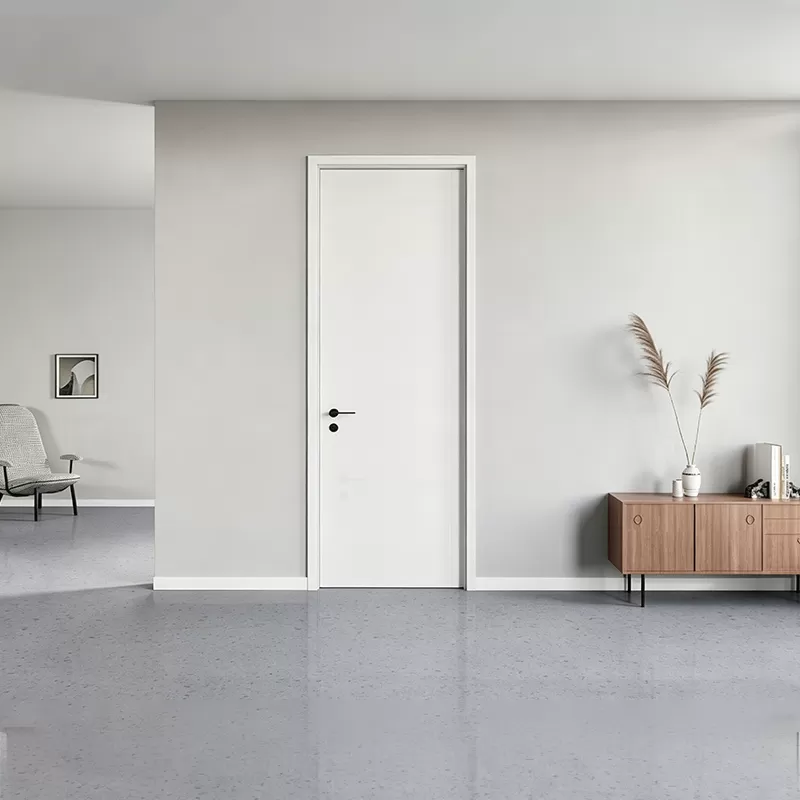
Modern painted doors differ significantly from traditional stained wood doors. They feature smooth, monolithic coats of lacquer or conversion varnish. Because the natural grain is concealed, the door acts as a field of pure color. This clean surface demands thoughtful contrast from the flooring below it.
Custom LVT provides tactile balance against these smooth planes. Using advanced embossed-in-register (EIR) technology, custom vinyl mimics the authentic physical textures of wire-brushed oak, honed limestone, or poured concrete. The tactile depth of the floor keeps the flat surface of the door from looking sterile.
Custom manufacturing also eliminates the frustration of near-miss color pairings. Rather than settling for a stock plank that almost matches your door paint, custom LVT lets you formulate wear layers, core densities, and print films that correspond directly with architectural color systems like Pantone or RAL standards.
Core Color-Matching Guide: 4 Door Palettes & Custom LVT Solutions
Color coordination requires balance. You can pursue harmonious monochrome or bold contrast. Both approaches work, provided you control undertones and finish sheen.
1. Crisp White & Off-White Doors
White painted doors remain a staple in minimalist, Scandinavian, and contemporary spaces. However, bright white paint reflects light aggressively, which can expose yellow or pink casts in standard flooring.
- The Organic Neutral Look: Pair pure white doors with light, custom white oak LVT. Select planks featuring desaturated champagne or raw timber tones with ultra-matte topcoats. This creates an airy Japandi aesthetic that softens stark walls.
- The Grounded Contrast: If your project requires dramatic visual weight, specify deep walnut or charcoal slate LVT. The white doors stand out as crisp architectural portals against the rich, dark floor plane.
- Specification Note: Keep off-white doors (such as cream or alabaster) away from cool, blue-gray flooring. The combination makes the doors look aged or dirty.
2. Moody Black & Charcoal Doors
Charcoal and black doors anchor corridors and open-plan layouts. They project authority and contemporary sophistication. The challenge lies in preventing the surrounding room from feeling like a cave.
- Industrial Softness: Pair matte black doors with light-to-medium concrete-look LVT tiles. The light gray surface prevents light absorption while highlighting the architectural geometry of the door frame.
- Warm Modernism: Honey-toned European oak planks balance cold black accents. The golden undertones inject warmth, making the space inviting rather than clinical.
- What to Avoid: Steer clear of dark, muddy brown wood tones. A dark brown floor paired with a charcoal door looks like an accidental near-match rather than an intentional design choice.
3. Greige & Warm Taupe Doors
Greige has replaced cool gray as the luxury baseline. Warm, mushroom-toned, and taupe modern painted interior doors deliver a quiet luxury ambiance. These subtle hues require careful pairing because their undertones shift throughout the day.
For these doors, implement a tone-on-tone interior strategy. Tone-on-tone design relies on subtle variations within the same color family to create depth without visual noise. TAB Flooring works closely with specifiers to dial in custom LVT base colors that match the exact warm-gray pigment curves found in premium architectural paints, such as those cataloged by Sherwin-Williams.
- Micro-Cement LVT: Large-format LVT tiles with a soft, warm plaster appearance unify the vertical and horizontal planes into a continuous envelope.
- Bleached Oak Grain: Planks with subtle beige graining and minimal knotting keep the greige doors feeling contemporary and refined.
4. Bold Accent Doors (Deep Green, Navy, Terracotta)
Modern commercial spaces, boutique hotels, and residential suites increasingly use painted doors as statement accents. Forest greens, deep navies, and earthy terracotta paints serve as primary focal points.
- Neutral Terrazzo LVT: A custom terrazzo-patterned vinyl floor containing subtle flecks that echo the door color ties the room together cleanly.
- Pale Ash Planks: Pale, straight-grained ash floors provide a quiet, neutral platform. This lets a bold accent door command visual attention without competing elements.
- Monochromatic Depth: For avant-garde hospitality interiors, specify LVT two shades lighter or darker than the accent door to create an enveloping color-drenched environment.
Technical Nuances: Managing Undertones and Sheen Levels
Successful floor and door color coordination extends beyond basic hue selection. You must analyze the microscopic light-reflection characteristics of both surfaces.
Every paint color contains hidden undertones. A door that appears neutral gray may carry green, violet, or blue pigment bases. Similarly, vinyl print films carry distinct undertones. Place a physical paint draw-down card directly against the custom LVT wear layer under different lighting conditions. Warm residential LEDs (2700K) highlight red and yellow bases, while commercial fixtures (4000K) pull blue and green undertones forward.
Gloss levels also dictate how colors read in real-world environments. Most modern painted interior doors feature satin, eggshell, or dead-matte finishes. If you place a high-gloss floor beneath a matte door, the floor bounces light up onto the door, washing out the paint pigment.
Specifying a low-gloss, matte polyurethane wear layer on your custom LVT prevents glare. It ensures the floor and the door absorb and diffuse ambient light at similar rates, yielding a unified look across the entire room.
3 Common Pitfalls to Avoid in Door and Floor Coordination
Review these common specification errors before finalizing your finish schedule:
- Forcing Exact Wood-to-Paint Matches: Do not try to make wood-grained LVT match the flat color of a painted door precisely. The clash between realistic printed grain and flat lacquer creates visual dissonance. Embrace material difference: let the door be pure color, and let the floor celebrate texture.
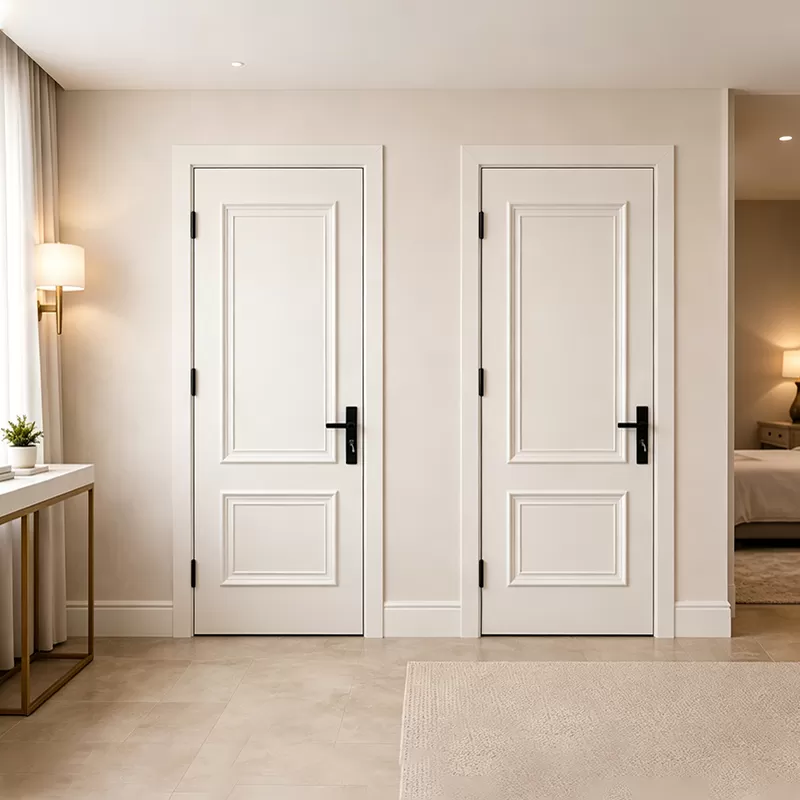
- Neglecting the Baseboard Transition: The baseboard acts as the visual mediator between the door casing and the floor plane. If you pair a dark door with light LVT, decide whether the trim matches the door (monolithic framing) or the floor (perimeter anchoring). Leaving the baseboard as an unconsidered third color ruins the composition.
- Ignoring Metamerism: Metamerism occurs when two materials appear to match under one light source but clash under another. Review custom LVT samples and paint swatches under natural morning light, direct afternoon sun, and nighttime artificial light before signing off on production. Leading industry resources like Architectural Digest frequently highlight how changing daylight alters contemporary interior color perception.
Frequently Asked Questions (FAQ)
Q1: Should modern painted interior doors be lighter or darker than
custom LVT flooring?
A1: There is no rigid rule, but balance is
critical. Lighter doors over darker floors create a grounded, traditional
foundation with modern lines. Darker doors over lighter floors establish an
architectural, graphic frame that highlights door hardware and ceiling height.
The only risky option is selecting nearly identical medium tones without
textural contrast.
Q2: Can custom LVT reproduce concrete and stone finishes to pair with
painted doors?
A2: Yes. High-performance custom LVT can mimic poured
concrete, travertine, slate, and terrazzo. These mineral looks provide a
striking, brutalist, or industrial contrast against smooth, satin-painted
doors.
Q3: What wear layer finish works best with matte painted interior
doors?
A3: Ultra-matte UV-cured polyurethane coatings perform best.
These finishes eliminate artificial plastic glare, mimic natural hand-rubbed oil
wood finishes, and complement the muted surface of matte and eggshell door
coatings.
Q4: How do I handle door casing colors when mixing custom wood-look
LVT and colored doors?
A4: In modern design, paint the door casing
the exact same color and sheen as the door slab. This creates a clean, frameless
architectural portal that meets the custom LVT plank cleanly without introducing
distracting trim lines.
Q5: What is the typical lead time for custom color-matched LVT
flooring runs?
A5: Custom LVT requires lab sample matching, physical
sign-offs, and production runs. Lead times generally range from 6 to 12 weeks
depending on embossing requirements, total square footage, and project delivery
schedules.
Build Your Palette with TAB Flooring
Modern painted interior doors define the structural lines of your design, while flooring provides the sensory warmth underfoot. Specifying custom LVT allows you to bridge color palettes, balance gloss levels, and create interior harmony that standard catalog products cannot replicate.
At TAB Flooring, we collaborate with commercial developers, interior designers, and architects to engineer durable, custom resilient flooring that hits exact design specifications. Do not compromise your palette with off-the-shelf options. Submit your project requirements to TAB Flooring today, and let our product specialists assemble a tailored custom sample box for your next project.