High-end residential and commercial builds often start with architectural millwork. Millwork teams focus heavily on the finish, heft, and balance of doors. When developers install custom painted solid wood doors, they expect the finished room to communicate solid craftsmanship and luxury.
Yet, a common design failure happens right at floor level. Premium doors frequently look out of place when paired with flat, artificial-looking vinyl flooring. The crisp, clean paint finish of a wood door exposes cheap faux prints instantly.
Luxury vinyl tile (LVT) solves this issue, but only if you specify the right surface relief. At TAB Flooring, we work with project managers, procurement directors, and interior architects to engineer custom LVT texture solutions that match high-end interior millwork. If you are sourcing materials for an upcoming build, contact our commercial specification team to order tailored architectural sample books.
Why Painted Solid Wood Doors Demand High-End Floor Textures
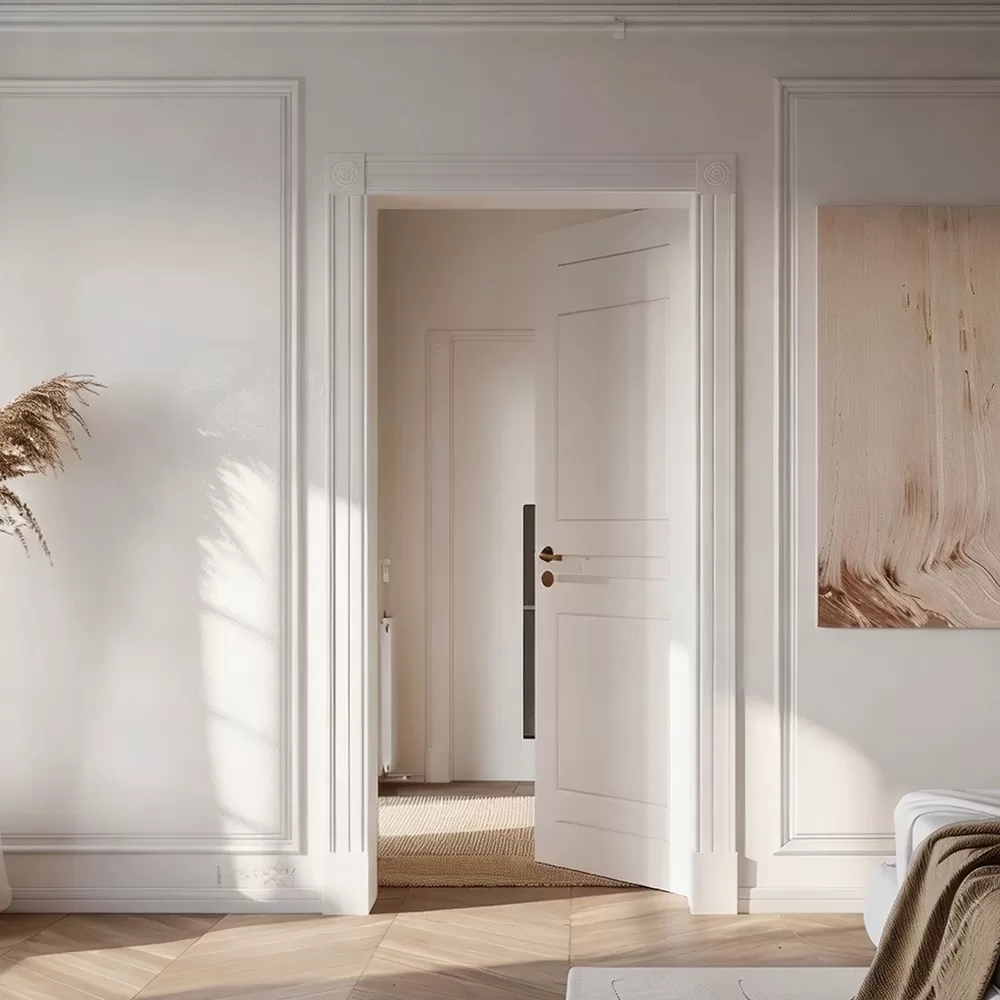
A solid wood door carries significant visual and physical weight. Unlike hollow-core alternatives, painted solid wood doors have a substantial frame, precise bevels, and a smooth, opaque painted surface. This distinct combination sets clear expectations for every adjoining material.
The flooring underneath must match that tactile quality. When an occupant grips a heavy, lacquered door handle and looks down, the floor texture needs to deliver equivalent depth. If the floor is smooth, glossy plastic, the space feels disjointed.
Light interaction plays an equally critical role. Paint finishes reflect light across a spectrum ranging from dead matte to high-sheen satin. Modern LVT uses mechanical embossing to sculpt how daylight bounces across planks. The micro-grooves, pore structures, and ticking in your flooring determine whether the room feels cohesive or disconnected.
According to surface performance guidelines from the Resilient Floor Covering Institute (RFCI), realistic mechanical textures also enhance durability and slip resistance, making precise surface selection a structural as well as visual priority.
Custom LVT Textures for White Painted Solid Wood Doors
White doors remain an industry baseline across modern farmhouses, transitional estates, and minimalist apartments. White painted wood doors offer crisp lines, but they run the risk of looking clinical if the surrounding finishes lack warmth.
1. Embossed-in-Register (EIR) Natural Oak Texture
Embossed-in-Register (EIR) is the gold standard for realistic wood visuals. In this manufacturing process, the steel embossing plate aligns directly with the digital print film beneath it. If the image shows a wood cathedral or knot, you feel that exact knot beneath your fingers.
Pairing white painted solid wood doors with an EIR honey or natural white oak texture creates balance. The natural warmth of the grain breaks up the stark, sterile nature of bright white paint. For coastal or modern Scandinavian designs, a fine-wire-brushed EIR texture adds tactile richness without visual clutter.
2. Subtle Marble & Terrazzo Texture
If your project calls for stone looks instead of wood, consider large-format LVT tiles with soft mineral textures. Slate or high-contrast marble can fight against clean white millwork. Instead, choose a honed, low-sheen marble or fine terrazzo texture.
The soft pits and cool, smooth feel of honed stone finishes complement white doors in entryways, master baths, and commercial lobbies. This pairing expands small floor plans by maintaining continuous light reflection across the floor and door casings.
3. Chevron & Herringbone Wood LVT
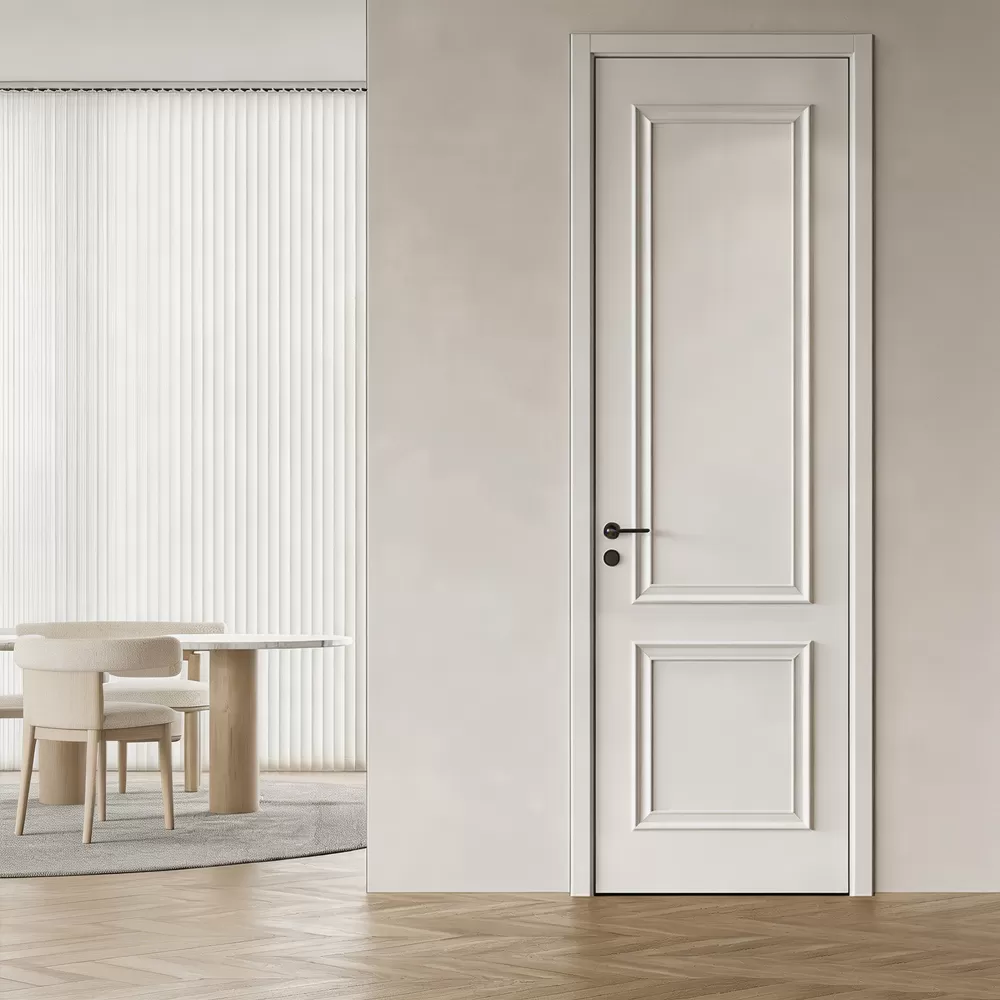
Simple, flat-panel shaker white painted solid wood doors sometimes leave a room feeling flat. When the door has zero ornamental detail, the floor should provide structured movement.
Herringbone and chevron LVT patterns introduce clean geometry. A subtle, dry-sawn wood texture applied across angled blocks creates rhythm. Because white paint recedes visually, the directional texture of patterned planks guides foot traffic naturally through interior corridors.
Custom LVT Textures for Dark Painted Solid Wood Doors
Design trends have shifted toward bold millwork. Specifiers increasingly pick dark painted solid wood doors finished in charcoal, rich navy, deep forest green, or jet black. These doors anchor rooms and demand intentional flooring textures.
1. Slate and Industrial Concrete Finishes
Dark painted solid wood doors look striking when paired with deep stone or troweled concrete finishes. This combination forms the backbone of modern industrial and contemporary Italian architecture.
Look for a custom LVT texture featuring cleft slate impressions or the mottled, porous feel of poured concrete. When morning or evening light grazes across dark surfaces, these textural variations produce rich shadows. TAB Flooring manufactures custom heavy-commercial LVT tiles with deep relief that stand up to the moody aesthetic of dark architectural woodwork.
2. Bleached and Ash Woodgrains
Contrast is an effective design tool. Instead of matching dark tones to dark floors, use the "dark door, pale floor" rule. Pairing black or deep espresso painted solid wood doors with bleached white ash or light Nordic oak LVT produces crisp, clean lines.
For this contrast to succeed, avoid heavy, rustic hand-scrapes. Rustic textures create unnecessary visual noise against sharp, dark paint lines. Choose a smooth, micro-ticked custom LVT texture that feels clean and modern underfoot.
3. Smoked Oak and Deep Walnut Textures
For executive suites, boutique hotel libraries, or traditional residential libraries, a tone-on-tone approach creates timeless luxury. Dark painted solid wood doors pair seamlessly with smoked oak or dark walnut LVT.
Ensure the texture stays ultra-matte. Glossy dark floors combined with dark painted wood doors look oily and show footprint smudges. A dry, deep-grain brushed surface softens the look and absorbs excess glare. This technique produces an understated, layered aesthetic without overwhelming the floor plan.
3 Technical Criteria When Sourcing Custom LVT for Painted Doors
Interior aesthetics are only half the battle. When procuring materials for large-scale developments, project managers must review technical specifications to ensure long-term performance.
- Sheen Coordination: Doors with a 10% matte lacquer look cheap next to high-gloss vinyl floors. Keep the gloss levels of your LVT under 8 gloss units when pairing with matte or eggshell painted solid wood doors.
- Embossing Depth vs. Maintenance: Deep hand-scraped and rough-sawn textures hide minor wear, but they trap dust in commercial environments. For hospitality and multifamily projects, an EIR depth between 0.2mm and 0.35mm provides authentic realism while maintaining easy cleaning cycles.
- Jobsite Stability and Tolerances: Commercial contractors working on complex jobsites—frequently running temporary power like a 10kw gasoline generator during early interior trim phases—need dimensionally stable floorboards that resist expansion under direct solar load through door thresholds.
- Baseboard and Trim Transitions: Never let a vinyl floor butt against a painted door frame without a clean transition. Plan your baseboards, plinth blocks, and perimeter expansion gaps early. The texture on your LVT should sit flush against door jambs without requiring unsightly quarter-round moldings.
Design guidelines from Architectural Digest emphasize that seamless threshold details distinguish custom architectural projects from generic builder-grade interiors.
Frequently Asked Questions (FAQ)
Q1: What is the best custom LVT texture to hide footprints near dark
painted solid wood doors?
A1: A low-gloss, ultra-matte EIR
(Embossed-in-Register) wire-brushed texture is ideal. High-gloss finishes show
oils and dust instantly, particularly near dark doors that draw direct sunlight.
A textured, dry-brushed finish scatters light, masking footprints and day-to-day
scuffs effectively.
Q2: Can I use stone-look LVT with traditional five-panel white
painted wood doors?
A2: Yes. Honed limestone or light travertine
textures work well with traditional white doors. Make sure the LVT features
micro-beveled edges rather than wide, dark grout lines to preserve a classic,
elegant appearance.
Q3: How does LVT texture affect acoustic performance in homes with
heavy painted solid wood doors?
A3: The surface texture itself does
not change acoustics, but the overall product build does. Solid core doors block
airborne sound between rooms. To stop sound transfer through the floor, select
an LVT product with an integrated IXPE or acoustic rubber underlayment rated at
STC/IIC 60 or higher.
Q4: Why does my sample LVT plank look different next to my installed
painted solid wood doors?
A4: Lighting angles alter how surface
embossing looks. Overhead showroom lighting flattens floor textures, whereas
natural light entering through windows highlights the ridges and pores of the
floor. Always test LVT samples on the actual jobsite flat against the painted
door frame under morning and afternoon light.
Q5: Can TAB Flooring match custom LVT textures to architectural
millwork specifications?
A5: Yes. We work directly with developers,
architects, and distributors to develop bespoke wear layers, gloss levels, and
EIR texture plates that align with specific interior door lines and trim
packages for large projects.
Source Custom LVT for Your Next Commercial or Residential Project
Flooring and millwork should never compete. When chosen with care, your custom LVT texture acts as the canvas that highlights the craftsmanship of your painted solid wood doors. Whether your project features minimalist white pocket doors or bold, dark pivot entries, selecting the correct grain, sheen, and depth completes the room.
TAB Flooring manufactures high-performance luxury vinyl tile, SPC rigid core, and custom commercial surfaces tailored to modern architectural standards. We provide strict quality control, custom color-matching services, and competitive factory-direct pricing for commercial distributors and developers worldwide.
Ready to review options for your next project? Send an inquiry to TAB Flooring today to request our commercial texture decks, discuss custom embossing options, or speak with an architectural flooring specialist.