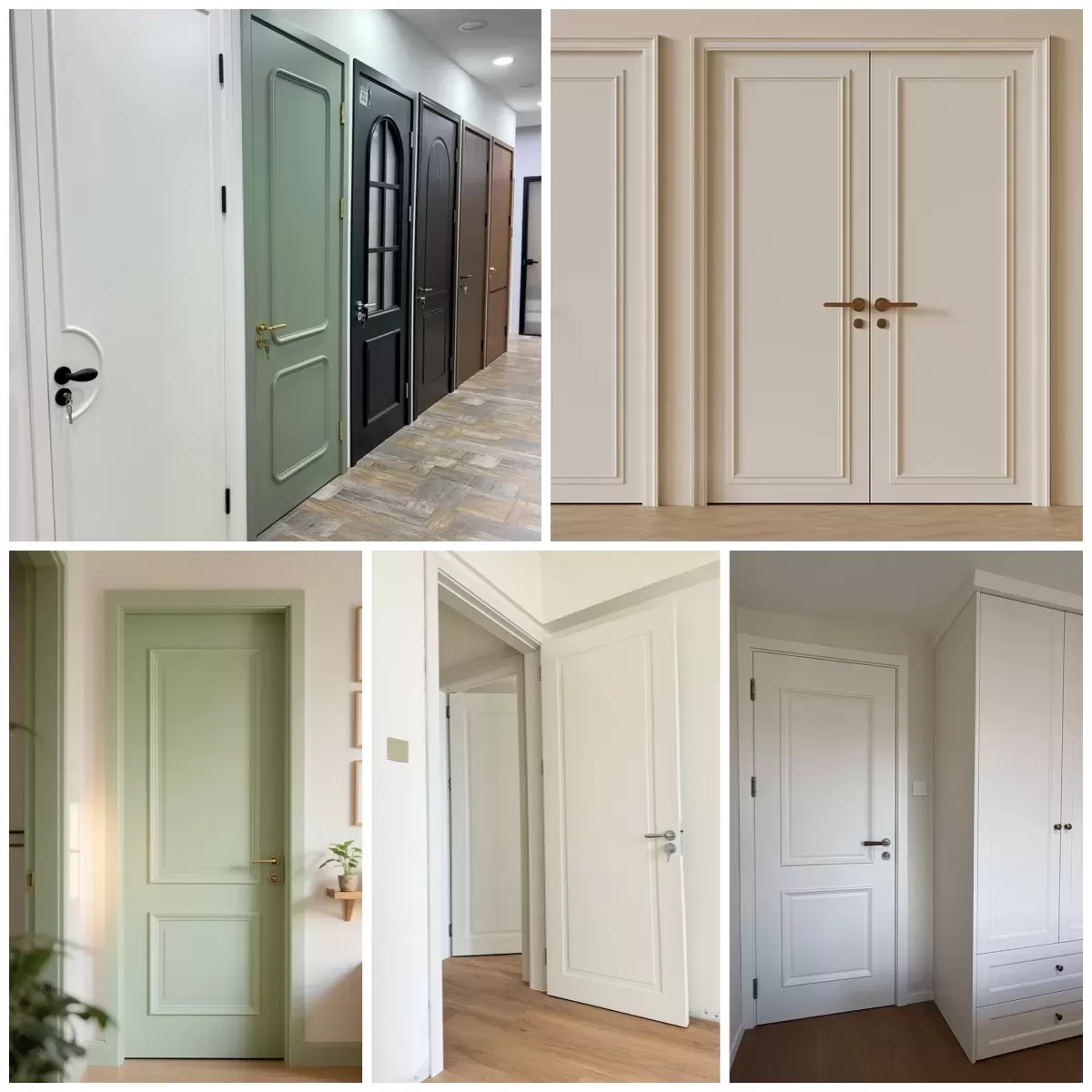
Architectural millwork in commercial real estate, multi-family developments, and high-end hospitality demands a precise balance between structural longevity and understated aesthetics. Among the various millwork profiles specified across contemporary builds, painted shaker doors remain an industry benchmark. The five-piece recessed panel configuration offers clean sightlines that integrate across modern, transitional, and classic design languages. Delivering thousands of door leaves across phased developments without finish defects, substrate telegraphing, or seam separation requires deep technical comprehension of substrate properties, coating chemistry, and joinery methods.
Large-scale interior fit-outs increasingly coordinate vertical millwork with horizontal finishes to ensure cohesive aesthetic value and simplified supply chain execution. When engineering interior spaces, project planners often align cabinet front specifications with resilient interior surfaces from established manufacturers such as TAB Flooring. Achieving architectural harmony requires an uncompromising assessment of core materials, industrial surface applications, and manufacturing tolerances across every batch of painted cabinetry.
Substrate Engineering: Solid Timber Versus Moisture-Resistant MDF
The foundation of any painted cabinet front determines its long-term resistance to environmental fluctuations. Natural timber expands and contracts perpendicular to its grain in response to ambient relative humidity. In solid wood shaker assemblies, the cross-grain movement between the horizontal rails and vertical stiles inevitably stresses the paint film applied over the structural intersections.
Solid hardwood stiles and rails—commonly sourced in hard maple, yellow birch, or European beech—exhibit exceptional screw-holding capacity and tensile strength. Hardwoods resist denting under heavy commercial use, making them viable for institutional applications. Natural wood contains localized density variations, medullary rays, and hygroscopic tendencies. When relative humidity swings beyond seasonal baselines, the differential dimensional shift between the stile and rail creates hairline fissures in the cured paint film at the joints. These fractures do not necessarily denote structural failure, yet they compromise the visual acceptance of high-end finishes.
High-density, moisture-resistant medium-density fiberboard (MR-MDF) serves as an alternative substrate for high-specification painted shaker doors. Engineered with synthetic resins and refined wood fibers compressed under intense thermal pressure (typically exceeding 750 to 800 kg/m³), premium MR-MDF exhibits isotropic properties. Because it possesses no natural grain direction, it expands and contracts uniformly in all dimensions at vastly lower rates than solid timber. The absence of natural voids and knots ensures an ultra-smooth face for direct priming, eliminating the grain raise common to open-pore timber species.
Modern architectural millwork frequently implements a hybrid specification to leverage the strengths of both materials. This construction incorporates kiln-dried, defect-free solid hardwood outer frames for structural rigidity and hinge-screw anchoring, enclosing an engineered MR-MDF center panel. The center panel floats within an internal groove, seated on elastomeric barrel spacers or continuous silicone expansion splines. This hybrid design allows the center panel to expand slightly under humid conditions without exerting hydraulic pressure on the surrounding frame, mitigating paint bridging and premature micro-cracking.
Industrial Coating Chemistries and Application Methodologies
The visual quality and chemical durability of a painted cabinet front depend entirely on the industrial coating system applied during fabrication. Field-painted installations fail to deliver the film thickness uniformity, dust-free cure environments, and cross-link density required for commercial longevity. Commercial fabricators utilize automated, climate-controlled flat-line finishing systems or pressurized spray booths employing electrostatic delivery.
Coating Systems: Conversion Varnish vs. Two-Component Polyurethane vs. UV Curable
- Two-Component (2K) Catalyzed Polyurethane: Widely regarded as the premier system for high-end European and North American projects. The chemical reaction between hydroxyl-functional acrylic resins and aliphatic polyisocyanate hardeners yields an exceptionally dense polymer network. Two-component polyurethane coatings exhibit outstanding elasticity, allowing the dry film to accommodate micro-movements of the wood substrate without fracturing. They provide superior resistance to yellowing from ultraviolet exposure, household chemicals, oils, and continuous surface abrasion.
- Acid-Catalyzed Conversion Varnish (CV): A staple of North American commercial millwork. Conversion varnishes cure via acid catalysis, yielding an exceptionally hard, fast-drying surface. While highly resistant to moisture and standard cleaning agents, cured CV films are more brittle than 2K polyurethanes. Excessive dry film thickness (DFT exceeding 4 to 5 mils) leads to stress fractures along the internal profiles of shaker panels over extended thermal cycles.
- Waterborne UV-Cured Acrylics: Engineered for high-throughput flat-line manufacturing. These coatings rely on photoinitiators that cross-link instantly when exposed to precise ultraviolet spectrums. Waterborne UV systems emit minimal volatile organic compounds (VOCs), aligning with LEED and WELL building standards. While center panels can be coated via automated roll coaters, the five-piece geometry of painted shaker doors requires multi-axis robotic reciprocating spray heads to ensure uniform build inside the internal 90-degree step-downs.
Surface Preparation, Primer Application, and Film Thickness Management
Achieving an automotive-grade finish on architectural millwork requires calibrated mechanical preparation. Substrates pass through wide-belt sanders equipped with progressively finer silicon carbide abrasives, concluding at 220 to 320 grit before primer introduction. Automated de-nibbing machines equipped with specialized fluted sanding strips clean inside profile corners where sanding dust naturally accumulates.
High-solids isolator primers seal the raw edges of machined MDF and end-grain wood fibers, preventing selective absorption of subsequent paint layers. Following the isolator, two to three coats of pigment-rich surfacer build the overall foundation. Each primer layer undergoes automated inter-coat sanding to knock down raised fibers and imperfections. The total dry film thickness generally settles between 100 and 150 microns, distributed across two primer coats and two topcoats. This specific thickness yields sufficient body to resist moisture intrusion while avoiding the brittleness associated with over-applied industrial finishes.
Joinery Architecture and Edge Geometry
The structural life of five-piece shaker fronts depends on joint configuration and internal edge milling. While standard shaker configurations feature a 90-degree internal angle drop down to the flat panel, sharp internal geometries concentrate mechanical and finish stress.
A true 90-degree internal corner challenges coating fluid dynamics. Surface tension pulls liquid paint away from razor-sharp outer edges toward the flat surfaces, leaving the sharp edge with a sub-optimal dry film build. Simultaneously, excess paint puddles in the sharp interior corners, drying slowly and remaining prone to solvent entrapment. Advanced production profiles incorporate a micro-bevel—typically an edge radius between 0.5mm and 1.5mm (R0.5 to R1.5) on both the interior frame corners and external panel perimeters. This subtle relief allows liquid finishes to coat evenly across all surfaces, avoiding thin coverage on edges and paint pooling in recesses.
In structural joinery, manufacturers utilize two primary methods for framing:
- Cope-and-Stick Joinery: The ends of the horizontal rails are profiled (coped) to match the negative contour of the inside edge of the vertical stiles (sticking). Secured with high-solids polyvinyl acetate (PVAc) or polyurethane reactive (PUR) adhesives, cope-and-stick joints provide substantial surface bonding area and high shear resistance.
- Mortise-and-Tenon (or Double Dowel) Joinery: Traditional mortise-and-tenon or precision multiple-dowel systems offer superior rotational resistance and joint stability. In high-traffic commercial environments, dowelled frames prevent the rail from dropping over years of hinge cycling, preserving alignment across adjacent cabinet doors.
- Single-Piece Monolithic Routed MDF: While technically a simulation of the classic five-piece construction, single-piece shaker doors are precision-carved from a single sheet of homogeneous MR-MDF using dedicated CNC router bits. Because there are no distinct rails, stiles, or physical seams, this design eliminates the possibility of joint separation or seam lines appearing through the finish. Monolithic routing provides extreme reliability for large-scale multi-family developments, albeit with slightly softened internal corners due to router bit tooling radii.
Commercial Fit-Out Alignment: Millwork and Resilient Surfacing
Commercial interior environments rely on the calculated synchronization of vertical cabinetry and horizontal flooring. Specifiers must harmonize the durability, maintenance regimes, and life cycles of casework faces with their selected floor coverings. A durable multi-family interior pairs moisture-resistant casework with high-performance SPC (Stone Plastic Composite) or commercial-grade LVT (Luxury Vinyl Tile).
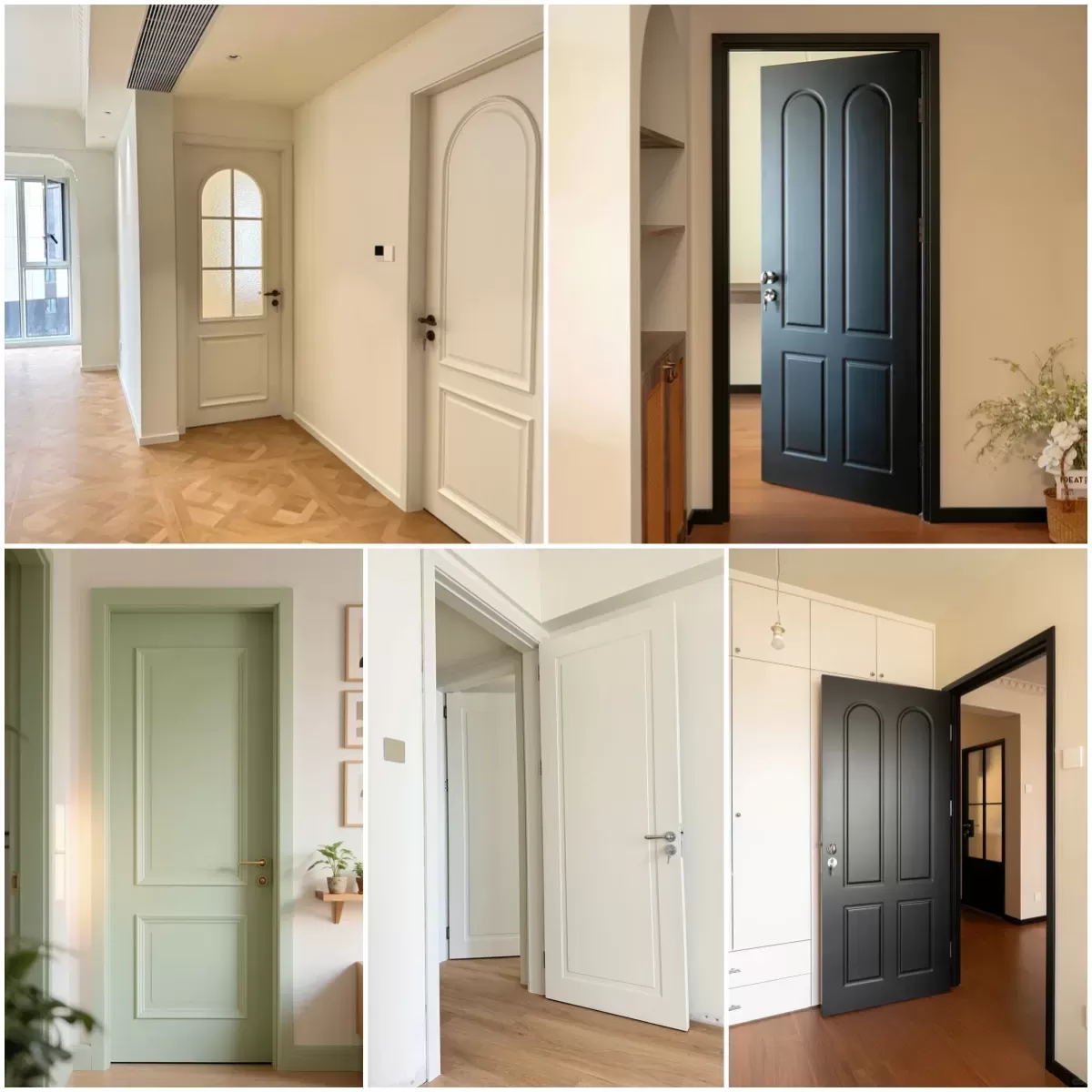
Color consistency between cabinetry finishes and architectural surfaces demands strict spectrophotometric verification under calibrated illuminants (such as D65 and F11). When selecting painted shaker doors in neutral tones—such as warm whites, deep charcoals, or architectural greys—the light reflectance value (LRV) and undertone must align with the wear layers and wood-grain decors of surrounding flooring systems. Premium suppliers like TAB Flooring emphasize the value of holistic surface coordination, ensuring that flooring wear profiles and millwork finishes endure daily commercial cleaning protocols without chemical degradation.
Baseboards, toe kicks, and cabinet side panels serve as physical transitions between flooring substrates and vertical doors. Cabinetry stiles must maintain precise vertical clearances above finished floor heights to prevent moisture absorption during commercial wet-cleaning procedures. Maintaining a 5mm to 10mm clearance between the underside of the door face and the finished flooring protects the lower edge of the painted profile from mop impact and mechanical abrasion.
Procurement Specifications and Factory Quality Control
Procuring millwork for high-volume residential or commercial developments demands detailed architectural specifications that surpass basic visual descriptions. Sourcing documents must define quantitative performance benchmarks to ensure delivery consistency across long manufacturing phases.
B2B specifications should explicitly outline testing parameters based on international testing criteria:
- Cross-Hatch Adhesion: Evaluated via ASTM D3359 Method B or ISO 2409. The cured finish must achieve a 4B to 5B rating, confirming that the coating bonds securely to the wood or MDF substrate without delamination along the lattice cuts.
- Chemical and Stain Resistance: Compliant with ANSI/KCMA A161.1 or SEFA 8 standards. The painted surface must withstand prolonged direct contact with vinegar, household bleach, coffee, vegetable oils, and common household cleaners without discoloration, blistering, or softening of the protective topcoat.
- Scratch and Impact Hardness: Measured through pencil hardness testing (minimum requirement of 2H to 3H) and ball-impact indentation tests that monitor cracking around localized deformation zones.
- Color Consistency Tolerances: Formulated using the CIE L*a*b* color space. Batch-to-batch color drift must remain within a Delta E (ΔE) value of less than 0.8, ensuring that cabinet components produced in separate manufacturing cycles can be installed side-by-side without visible chromatic variance.
Factory audits must examine climate controls within the raw material staging warehouses. Lumber and MDF core stock must acclimate to an equilibrium moisture content of 6% to 8% before dimensioning. Processing raw materials with elevated moisture content results in moisture release after factory crating, which triggers localized panel shrinkage, joint displacement, and structural warping before arriving on the job site.
Frequently Asked Questions (FAQ)
What is the optimal substrate for painted shaker doors in humid commercial environments?
High-density, moisture-resistant MDF (MR-MDF) is the preferred substrate for humid environments. Unlike solid timber, which displays distinct directional swelling, MR-MDF features an isotropic structure that responds uniformly to ambient moisture fluctuations. It prevents the development of hairline fractures at joint seams, preserving the continuity of the cured paint surface.
How do 2K polyurethane finishes compare to water-based paints on commercial cabinet doors?
Two-component (2K) polyurethane coatings cross-link chemically to create an extremely durable, non-porous finish characterized by high scratch resistance, chemical tolerance, and flexibility. Standard water-based architectural paints cure via physical coalescence, leaving them more prone to moisture absorption, abrasion wear, and staining over extended service lifecycles.
Why are micro-bevels specified on the inner edges of shaker profiles?
Sharp, 90-degree internal edges draw liquid coatings away from the corner via surface tension, leading to thin film coverage that wears through prematurely. Concurrently, excess paint can pool in deep square corners, leading to solvent entrapment and long-term finish crazing. A micro-bevel (R0.5 to R1.5) ensures uniform coating distribution across all edges and recesses.
Can one-piece routed MDF shaker doors match the quality of traditional five-piece assemblies?
High-precision, single-piece routed MDF shaker panels eliminate joint failure points, as there are no seams to shift or telegraph through the paint film over time. While traditional five-piece assemblies offer crisp inside corners prized in classical joinery, monolithic routed doors offer greater structural reliability and dimensional stability in heavy-use commercial and multi-family settings.
How should cabinet clearances be detailed relative to finished commercial flooring?
Cabinet design details should establish a minimum clearance of 5mm to 10mm between the bottom edge of cabinet doors and finished flooring surfaces. This gap protects the lower painted edges from mechanical strikes by floor-cleaning equipment and prevents prolonged contact with standing moisture, ensuring performance alongside durable surfaces like those from TAB Flooring.
Specification Consultation and Commercial Inquiries
Engineering robust, visually refined millwork packages requires coordinated planning across substrates, industrial coatings, and job-site installation parameters. Project success hinges on comprehensive documentation, precise submittal reviews, and consistent production execution. Contact our technical advisory team to submit project drawings, request custom sample blocks, or obtain detailed material specification sheets for your upcoming multi-family or commercial fit-out projects.