Interior procurement is shifting rapidly toward integrated surface packages. For years, architects and general contractors struggled with fragmented material sourcing. Door manufacturers worked in isolation, flooring mills produced their own palettes, and fit-out crews resolved mismatched undertones on site.
That disjointed approach no longer works for modern commercial and high-end residential developments. As expectations rise for 2026 handovers, design teams demand total color cohesion across vertical and horizontal planes. TAB Flooring bridges this gap through coordinated OEM manufacturing, aligning custom painted panel doors with resilient luxury vinyl tile (LVT) flooring.
Planning a multi-family or hospitality fit-out for 2026? Submit your architectural schedules today to receive custom-matched door and floor finish samples within five business days.
Why Painted Panel Doors Anchor Modern Interior Schemes
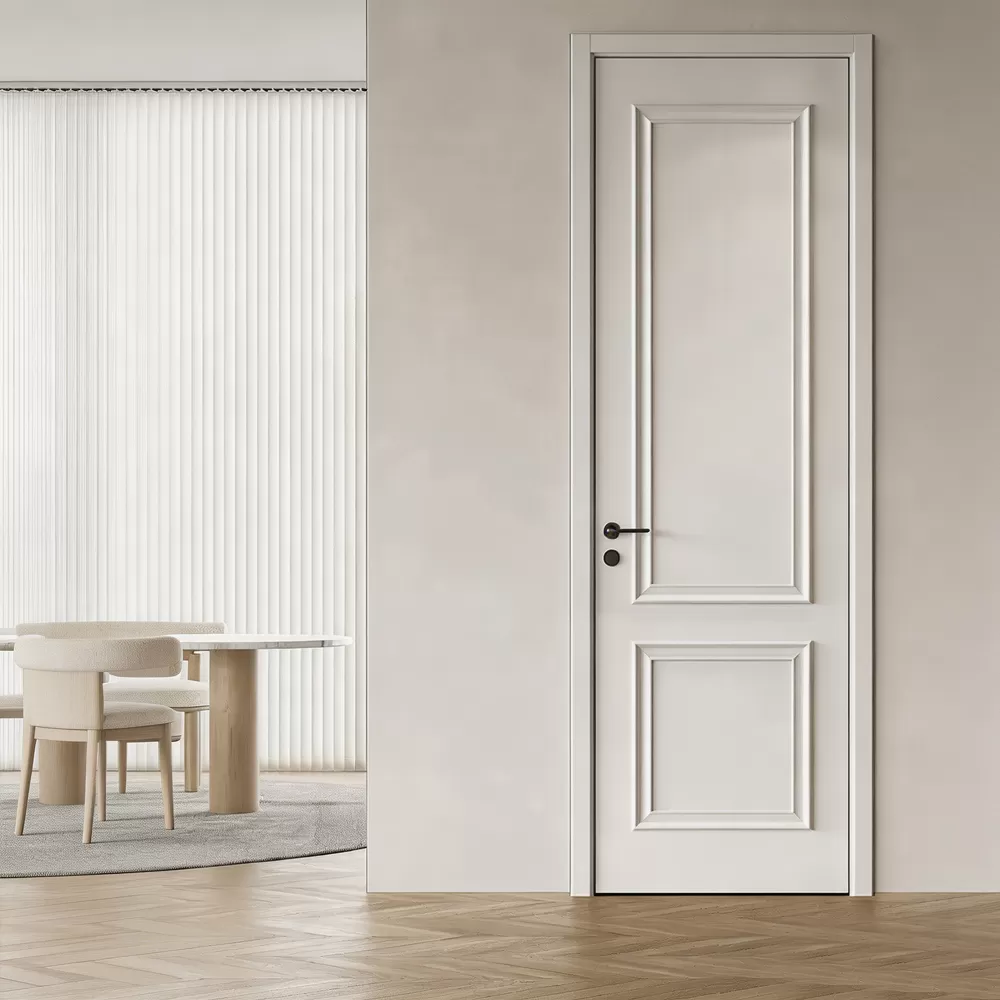
Drywall paint colors rotate every few years, but interior doors represent a permanent architectural investment. Among all interior door categories, painted panel doors provide the highest degree of structural stability, aesthetic versatility, and precise color control for specifiers.
From Classic Shaker to Modern Slim Profiles
Panel doors define the spatial geometry of a corridor or living suite. While traditional five-panel and raised-panel profiles continue to dominate suburban residential developments, urban hospitality and boutique multi-family projects favor cleaner geometry.
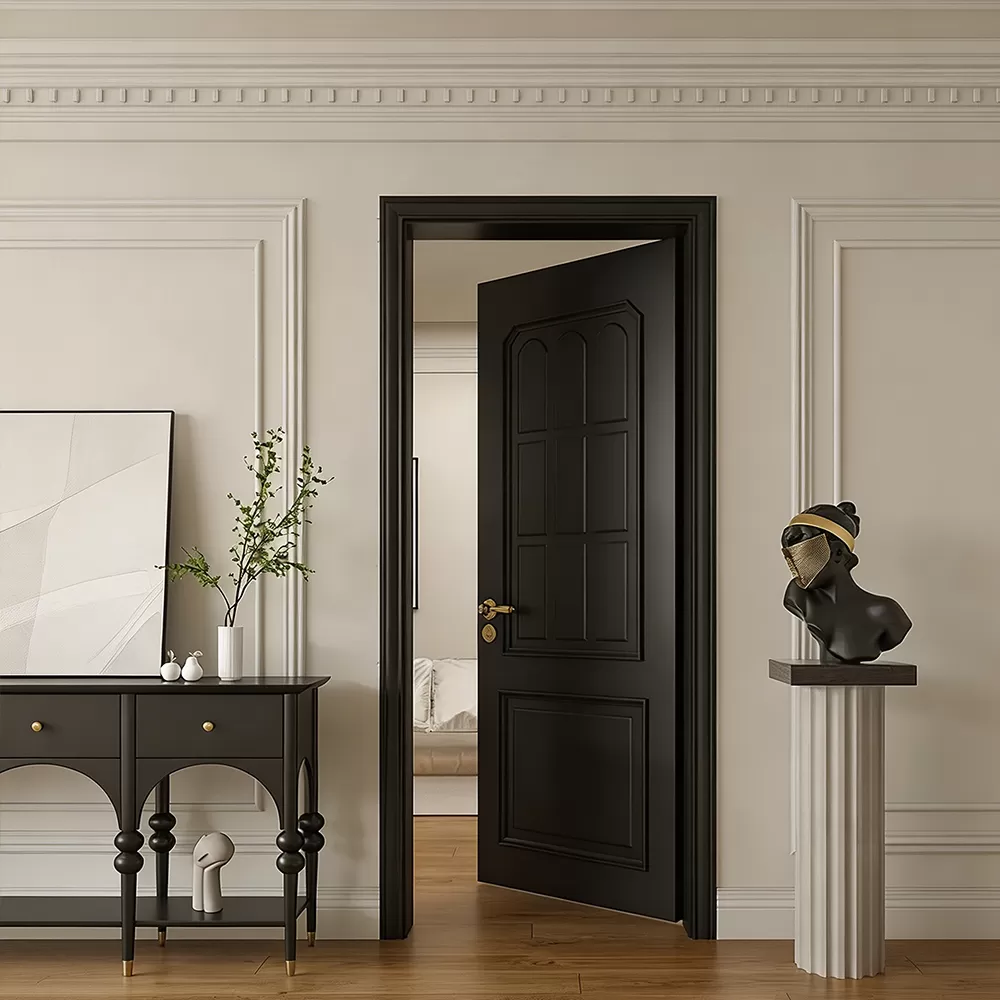
The "Slim Shaker" profile—featuring narrow 12mm to 15mm stiles and rails—has become the premier choice for modern developments. This profile provides depth without accumulating dust. Factory-machined painted panel doors offer crisp shadow lines that flat slab doors cannot replicate, adding tactile value to high-traffic entries.
Coating Systems: Waterborne and UV-Curable Finishes
Commercial durability depends entirely on the finish line. Field-applied architectural paint often chips, displays roller marks, and discolors unevenly under UV exposure. High-volume OEM production solves this through controlled automated spray lines.
Modern production facilities utilize multi-coat waterborne polyurethane and UV-curable finishes. These systems create an impenetrable surface that resists:
- Daily scuffs from luggage carts and cleaning equipment.
- Chemical degradation from commercial disinfectants.
- Moisture ingress that leads to core swelling along door bottom edges.
- Yellowing caused by indoor fluorescent or direct window UV exposure.
The Manufacturing Advantage of Painted Surfaces
Wood veneers and raw timber are subject to natural grain variations, sapwood shifts, and unpredictable stain absorption. Matching a natural white oak door to an engineered vinyl floor is notoriously difficult.
Industrial painted finishes eliminate this variance. By specifying painted panel doors, project managers can pinpoint exact pigments across thousands of units. Whether producing single-panel bedroom doors or double-leaf commercial entries, paint delivers exact color uniformity across every batch.
Breaking the Silos: Syncing Painted Panel Doors with LVT Flooring
LVT flooring has become the dominant flooring solution for hospitality, healthcare, and multi-family interiors due to its acoustic performance, water resistance, and low maintenance. Yet, pairing vinyl flooring with wood-composite doors often causes friction on site. Bridging these materials requires rigorous cross-category engineering.
Color Uniformity via Industrial Color Standards
The most common failure in finish coordination is undertone clashing. A warm greige floor paired with a cool-toned door makes the door look sterile and the floor look muddy. Visual inspection under factory light is not enough to stop this.
OEM integration solves this by formulating industrial coatings around global standards like the RAL Classic system and the NCS (Natural Colour System). Specifiers map the secondary tones within the LVT wear layer—such as the smoky grain of an oak film or the pale aggregate in a stone visual—and calibrate the door paint to match that precise chromatic formula.
Balancing Gloss Levels and Light Reflection
Color is only half the equation; sheen determines how light travels across a finished room. Most commercial LVT features an ultra-matte polyurethane wear layer with a gloss level between 4% and 7% to mimic natural, raw-sawn timber.
If paired with a standard semi-gloss door (30% to 40% gloss), the visual contrast feels cheap and disjointed. TAB Flooring formulates low-sheen eggshell and soft-matte coatings specifically for interior painted panel doors. This matches the diffused light reflectance of contemporary LVT, creating a grounded visual flow throughout the interior envelope.
Integrated Joinery: Jambs, Casings, and Transitions
The boundary between floor and door demands careful detailing. An uncoordinated installation leaves gaps, mismatched baseboards, and crude transition strips that reveal poor planning.
Coordinated OEM production supplies factory-primed or pre-finished door jambs, architraves, and matching base shoes alongside the main order. Aligning the profile coatings of your door casings with your floor thresholds prevents site delays, cuts labor costs, and guarantees identical aging across all millwork.
2026 Interior Design Trends: Curated Door & Flooring Combinations
Looking ahead to 2026, interior finishes are moving away from sterile gray palettes toward rich textures, tactile materials, and organic neutrals. Here are three dominant finish schemes shaping upcoming commercial specs.
1. Quiet Luxury: Cashmere Monochromes
High-end residential developments are replacing stark white woodwork with layered neutrals. This palette builds on soft plaster tones, limestone pigments, and subtle timber warmth.
- Door Specification: Three-panel flat painted panel doors finished in an ultra-matte cashmere greige (NCS S 1502-Y).
- LVT Pairing: Wide-plank, wire-brushed natural oak LVT featuring micro-bevel edges and registered embossed textures.
- Visual Effect: The low-contrast transition between the vertical door faces and the horizontal floorboards creates an open, tranquil atmosphere.
2. Modern Minimalist: Monolithic Contrasts
Modern hospitality spaces and corporate headquarters often favor structural contrast over neutral blending, utilizing sharp geometric framing to anchor open spaces.
- Door Specification: Custom slim shaker painted panel doors in deep charcoal or industrial basalt (RAL 7016).
- LVT Pairing: Large-format (600mm x 1200mm) concrete-look or honed-limestone LVT tiles.
- Visual Effect: The bold door profile serves as an architectural punctuation point against the raw, industrial texture of the floor surface.
3. Biophilic Warmth: Grounded Earth Tones
Wellness-focused workspaces and boutique medical centers are increasingly turning to botanical and earth-derived palettes to enhance human comfort.
- Door Specification: Two-panel recessed painted panel doors coated in sage, eucalyptus, or warm olive tones.
- LVT Pairing: Light ash or pale maple LVT installed in a traditional herringbone pattern.
- Visual Effect: The muted green paint highlights the fine
detailing of the door panels while complementing the organic, flowing lines of
the light wood-grain floor.
OEM & Customization Capabilities for Commercial Contractors
Large-scale projects require tight tolerances, strict environmental certifications, and dependable logistical coordination. Choosing an OEM partner with flexible tooling and dedicated finishing lines is vital for trouble-free project delivery.
Precision CNC Routing and Solid Core Construction
Hollow-core doors are unsuitable for commercial settings due to poor acoustic isolation and low impact resistance. Premium commercial painted panel doors utilize solid cores made from high-density fiberboard (HDF) or solid mineral-composite formulations.
Computer numerical control (CNC) routing machines cut panel profiles out of solid monolithic faces. This monoblock construction eliminates joint separation. In traditional five-piece wood doors, seasonal humidity shifts cause the joints to expand and contract, which cracks the cured paint along the stiles and rails. CNC-machined HDF panels eliminate this issue entirely, preserving a flawless painted surface for years.
Environmental Compliance and Air Quality Standards
Modern green-building certifications require strict adherence to volatile organic compound (VOC) caps. Off-gassing from adhesives and solvents inside enclosed hotel rooms or apartments harms indoor air quality and risks costly compliance delays.
Interior finishes must meet demanding clean-air standards, including certifications under CARB Phase 2 / EPA TSCA Title VI for composite wood emissions. Specifying low-VOC, waterborne factory finishes on painted panel doors ensures seamless LEED v4 and WELL Building standard compliance right out of the crate.
Consolidated Freight and Supply Chain Efficiency
Sourcing doors from one manufacturer and vinyl flooring from another doubles import documentation, inflates port handling fees, and increases the risk of split shipments. If the flooring arrives on schedule but doors face customs holds, project handovers grind to a halt.
By pairing door manufacturing with flooring production through TAB Flooring, commercial buyers consolidate their logistics. We pack and ship pre-hung door leaves, frames, acoustic seals, and LVT packages in shared, optimized containers. This approach reduces freight costs, minimizes warehouse staging requirements, and holds a single supplier accountable for your entire surface package.
Frequently Asked Questions (FAQ)
Q1: Can OEM painted panel doors match the base color of our chosen
LVT flooring?
A1: Yes. We use industrial
spectrophotometers to scan physical LVT film samples and generate matching paint
formulations. We verify color accuracy under multiple light conditions (D65
daylight, 3000K warm LED, and fluorescent retail) using RAL or NCS color systems
to eliminate chromatic mismatch.
Q2: What door core material prevents paint cracking at the
panel joints?
A2: Single-sheet,
high-density fiberboard (HDF) faces routed with precision CNC heads perform
best. Unlike traditional multi-component solid wood doors that expand across the
grain, solid engineered cores remain dimensionally stable in shifting humidity.
This stability prevents the paint film from hairline cracking along joints.
Q3: How durable are factory-painted panel doors in high-traffic
hotels or schools?
A3: Factory-finished doors cure
under automated UV or heated drying lines, producing a much harder, more
resilient surface than field-applied coats. These industrial finishes resist
chemical disinfectants, pass strict pencil-hardness tests, and withstand
repeated impacts from cleaning gear and luggage.
Q4: What is the typical lead time for a consolidated OEM door and LVT
package?
A4: Custom color matching, tooling
profiles, and physical sample approvals typically take 2 to 3 weeks. Full
container production requires 4 to 6 weeks following master sample sign-off,
plus standard ocean transit times to your destination port.
Q5: Can you provide certified fire-rated and sound-rated painted
doors alongside the flooring?
A5: Yes. We
manufacture painted panel doors with certified mineral cores
offering 20, 45, 60, and 90-minute fire ratings (UL 10C and BS 476 standards).
We also supply matched perimeter drop seals and acoustic gaskets to achieve
sound insulation ratings up to STC 35-40 for hotel guestrooms.
Optimize Your 2026 Finish Schedules with TAB Flooring
Achieving cohesive architectural interiors does not have to mean managing disconnected suppliers. Specifying factory-finished painted panel doors engineered alongside high-performance LVT flooring streamlines fit-out programs, prevents costly trade disputes, and delivers pristine spaces to building owners.
At TAB Flooring, we manufacture balanced surface packages engineered to withstand demanding commercial use. Our technical sales team works directly from your door schedules, floor layouts, and master color swatches to streamline your procurement process from production to final delivery.
Ready to elevate your interior specifications? Contact our OEM commercial division today to request custom color-match samples, comprehensive technical data sheets, and competitive project pricing.