Modern commercial architecture demands building materials that balance aesthetic versatility with long-term durability. Among the various resilient flooring options available, luxury vinyl tile has become a preferred specification for high-traffic environments, retail spaces, healthcare facilities, and multi-family residential developments. Selecting the appropriate floor covering involves evaluating complex structural formulations, wear layer performance, and manufacturing precision to ensure the material performs under heavy mechanical stress.
For B2B buyers, distributors, and specifiers, understanding the physical properties and chemistry of luxury vinyl tile is necessary for managing lifecycle costs and reducing post-installation failures. This analysis examines the technical aspects of custom flooring production, focusing on material composition, installation methods, and the quality control metrics that define superior manufacturing.
The Structural Architecture of Resilient Flooring
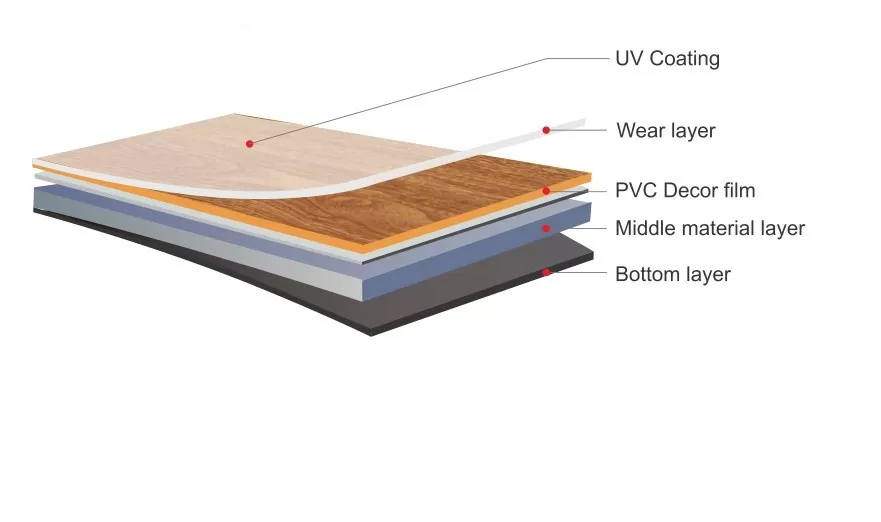
To assess the performance of luxury vinyl tile, one must examine its multi-layered composition. Unlike homogeneous vinyl, which features a single continuous layer, modern LVT relies on a heterogeneous construction. Each layer is designed to perform a specific mechanical function, contributing to the overall stability, wear resistance, and acoustic properties of the system.
The Polyurethane (PU) Top Coat: This microscopic layer provides the initial defense against scuffing, staining, and micro-scratches. It often incorporates cross-linked polymers or ceramic bead additives to increase surface tension and reduce maintenance requirements.
The Wear Layer: Composed of pure, non-recycled PVC, the thickness of this layer determines the classification of the flooring. High-traffic commercial applications generally require a wear layer of 0.55mm (20 mil) or 0.70mm (28 mil) to withstand constant foot traffic and rolling loads.
The Print Film: High-definition rotogravure or digital print layers replicate the natural visual textures of hardwood, stone, or concrete with precise pattern repeats and realistic color depths.
The Core Layer: Providing structural weight and impact resistance, the core is formulated from vinyl resins blended with plasticizers, stabilizers, and calcium carbonate. The ratio of these materials dictates whether the product functions as a flexible, semi-rigid, or rigid flooring material.
The Backing System: The bottom layer secures a firm bond with the subfloor adhesive or provides the foundation for click-lock installations. It prevents moisture intrusion from the subfloor and balances the tension of the upper wear layers to keep the tile flat.
The interaction between these layers is governed by the lamination process. During manufacture, these components are fused under extreme heat and pressure using a hot-pressing method. This thermal bonding prevents delamination over years of commercial use, ensuring the tile acts as a single cohesive unit.
Dimensional Stability and Thermal Expansion Dynamics
One of the persistent challenges in resilient flooring installation is dimensional stability. Polyvinyl chloride is inherently sensitive to temperature fluctuations. When exposed to direct sunlight, underfloor heating, or seasonal climate shifts, luxury vinyl tile undergoes physical expansion and contraction, which can lead to gapping, buckling, or joint failures if not properly controlled.
To address this challenge, manufacturers integrate fiberglass stabilization sheets between the core layers. The high tensile strength of the fiberglass network resists lateral forces, maintaining the shape of the tile even during significant temperature shifts. In rigid core variations, such as Stone Plastic Composite (SPC) or Wood Plastic Composite (WPC), the inclusion of dense calcium carbonate or wood fiber blends reduces the coefficient of thermal expansion to negligible levels.
The plasticizer content within the core also affects its structural stability. Plasticizers are chemical agents added to PVC to grant flexibility. However, poor-quality plasticizers can migrate to the surface over time, leading to embrittlement of the core and adhesive failure. Reputable manufacturing partners, such as TAB Flooring, use non-phthalate plasticizers to ensure chemical stability, maintaining flexibility without compromising internal cohesion or indoor air quality.
Acoustic Dampening and Underlayment Technologies
In multi-family housing, corporate offices, and hospitality settings, acoustic control is a key design metric. Sound transmission in these environments occurs as airborne sound or impact sound, such as footsteps or dropped objects. Because luxury vinyl tile is a relatively thin material, its natural acoustic absorption properties must be augmented through integrated underlayments.
Modern specifications frequently include pre-attached backings constructed from Cross-Linked Polyethylene (IXPE) or Ethylene-Vinyl Acetate (EVA). These materials utilize closed-cell structures to absorb impact energy, reducing noise transmission between floors. This acoustic performance is quantified through Impact Insulation Class (IIC) and Sound Transmission Class (STC) ratings. Incorporating a high-performance acoustic backing allows luxury vinyl tile installations to meet strict local building codes without the need for separate, labor-intensive underlayment applications.
Evaluating Installation Methods for Commercial Projects
The selection of an installation method directly impacts both the initial labor cost and the long-term performance of the floor. Each method presents unique advantages depending on subfloor conditions, projected foot traffic, and environmental humidity.
Dryback (Glue-Down) Systems
For high-traffic commercial environments, the traditional glue-down method remains the standard. By securing the luxury vinyl tile directly to the concrete slab using a pressure-sensitive or wet-set adhesive, lateral movement is virtually eliminated. This method is highly resistant to heavy rolling loads, such as hospital beds, retail carts, and office chairs. Subfloor preparation must be meticulous, as any imperfections in the concrete can telegraph through the thin vinyl tile over time.
Click-Lock Floating Systems
Utilizing milled tongue-and-groove profiles, click-lock systems allow for rapid adhesive-free installation. This method is highly effective for projects with tight timelines or over subfloors that contain minor imperfections or residual moisture. The integrity of a click-lock system relies on the shear strength of the locking joint. Precision profiling during manufacturing is required to ensure the joints do not shear under localized pressure.
Loose Lay Alternatives
Loose lay flooring relies on a high-friction backing and the weight of the material to remain in place, often supplemented by adhesive only around the perimeter of the room. This system is highly valued in environments requiring frequent access to underfloor utilities, such as modern office buildings with raised access flooring. Individual tiles can be replaced quickly without damaging the subfloor, reducing maintenance downtime.
Addressing Sourcing Challenges and Quality Assurance
For global B2B buyers, sourcing luxury vinyl tile involves navigating variables in manufacturing standards, certification compliance, and supply chain logistics. Inconsistent production runs can result in color variation (measured as Delta E), microscopic thickness discrepancies, or off-gassing issues that can stall large commercial projects.
To mitigate these challenges, procurement specialists must partner with manufacturers that enforce rigorous quality control protocols. These protocols should include the following performance tests:
The Castor Chair Test: Simulating years of office wear by subjecting the flooring sample to thousands of rotations under a weighted castor wheel assembly to verify wear layer adhesion.
The Peel Strength Test: Measuring the force required to separate the laminated layers, ensuring the integrity of the hot-press process.
VOC Emission Testing: Certifying that the product meets low-emission standards such as FloorScore or Eurofins Indoor Air Comfort Gold, verifying the absence of harmful volatile organic compounds.
The Heat Stability Test: Exposing tiles to elevated temperatures (typically 80°C) for several hours and measuring dimensional changes to guarantee stability in real-world conditions.
As an established manufacturer, TAB Flooring addresses these technical requirements by using computerized extrusion lines, continuous monitoring of wear layer application, and strict raw material verification to deliver consistent, dependable shipments.
Customization and Tailored Product Engineering
Large-scale architectural projects rarely accept off-the-shelf solutions. Specific environments require targeted adaptations to standard flooring products. A healthcare facility may require an enhanced anti-bacterial PU coating, while a high-end retail brand might demand a custom embossing texture that matches a specific wood-grain pattern.
Custom manufacturing allows clients to specify distinct parameters, including:
Custom Dimensions: Creating oversized planks or non-standard tile shapes to support unique architectural layouts.
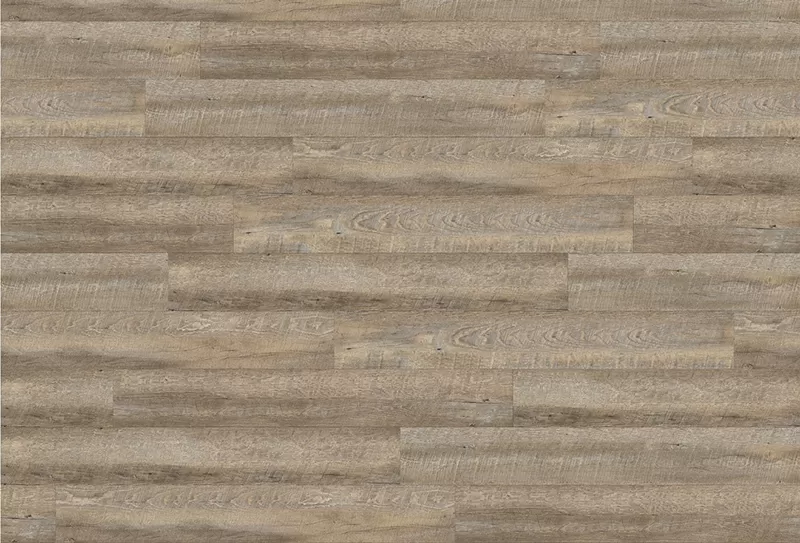
Embossing in Register (EIR): Aligning the physical texture of the surface directly with the underlying print film image, creating a highly realistic wood or stone texture.
Calibrated Wear Layers: Engineering specific wear layer thicknesses to match the budget and traffic demands of different areas within a single facility.
Working directly with a manufacturing partner like TAB Flooring allows distributors and developers to specify these exact metrics, ensuring the finished product performs reliably under its intended conditions.
Frequently Asked Questions
Q1: What is the main cause of gapping in luxury vinyl tile installations, and how can it be prevented?
A1: Gapping is caused by dimensional movement due to temperature fluctuations or improper acclimation before installation. Preventing this requires using fiberglass stabilization layers within the vinyl core and ensuring the flooring acclimates to the controlled environment of the installation site for at least 48 hours prior to installation.
Q2: How does wear layer thickness relate to the overall warranty of commercial vinyl flooring?
A2: Wear layer thickness directly dictates the commercial classification of the floor. A 0.55mm (20 mil) wear layer is typically rated for heavy commercial use and carries a longer warranty, whereas thinner wear layers (e.g., 0.3mm) are restricted to light commercial or residential use, as they wear through much faster under heavy foot traffic.
Q3: Can luxury vinyl tile be installed over existing ceramic tile subfloors?
A3: Yes, but the grout lines of the ceramic tile must be filled and leveled using a patch compound. For thin glue-down installations, any subfloor texture can telegraph through to the surface. Alternatively, a rigid core click-lock system can bridge minor grout lines without the need for extensive subfloor self-leveling.
Q4: Why is phthalate-free formulation important for commercial building certifications?
A4: Phthalates are plasticizers linked to indoor air pollution and health concerns. Commercial projects seeking green building certifications like LEED require materials with low VOC emissions and clean material ingredient reporting. Specifying phthalate-free luxury vinyl tile ensures compliance with these environmental and health regulations.
Q5: What is the difference between EIR (Embossing in Register) and standard textures?
A5: Standard textures apply a generic wood or stone pattern across the surface regardless of the print film layout. EIR uses precision-aligned press plates to press textures directly into the grain pattern shown on the print film, creating a realistic depth and tactile feel that mimics natural materials.
Secure Your Project Sourcing with Expert Manufacturing
Selecting the right luxury vinyl tile for commercial distribution or large-scale development requires attention to material formulation, wear layer testing, and supply chain reliability. TAB Flooring works alongside commercial clients to manufacture high-performance, customized resilient flooring that meets exact project specifications.
To request technical datasheets, order custom-engineered samples, or discuss your next bulk procurement requirement, contact our technical sales team today. Let us help you engineer a durable, compliant, and cost-effective flooring solution for your next project.