In commercial real estate, multi-family housing, and hospitality procurement, flooring represents a significant capital expenditure. Yet, many project managers find that specified floors begin to cup, gap, or delaminate within the first 18 months of installation.
These failures rarely stem from poor installation alone. Instead, they typically trace back to a fundamental mismatch between the technical specifications of the selected floor and the environmental realities of the installation site.
For B2B buyers and importers, sourcing luxury vinyl tile plank flooring requires looking beyond the aesthetic film. It demands a granular understanding of polymer chemistry, extrusion mechanics, and structural engineering.
The Counter-Intuitive Reality of Plank Thickness
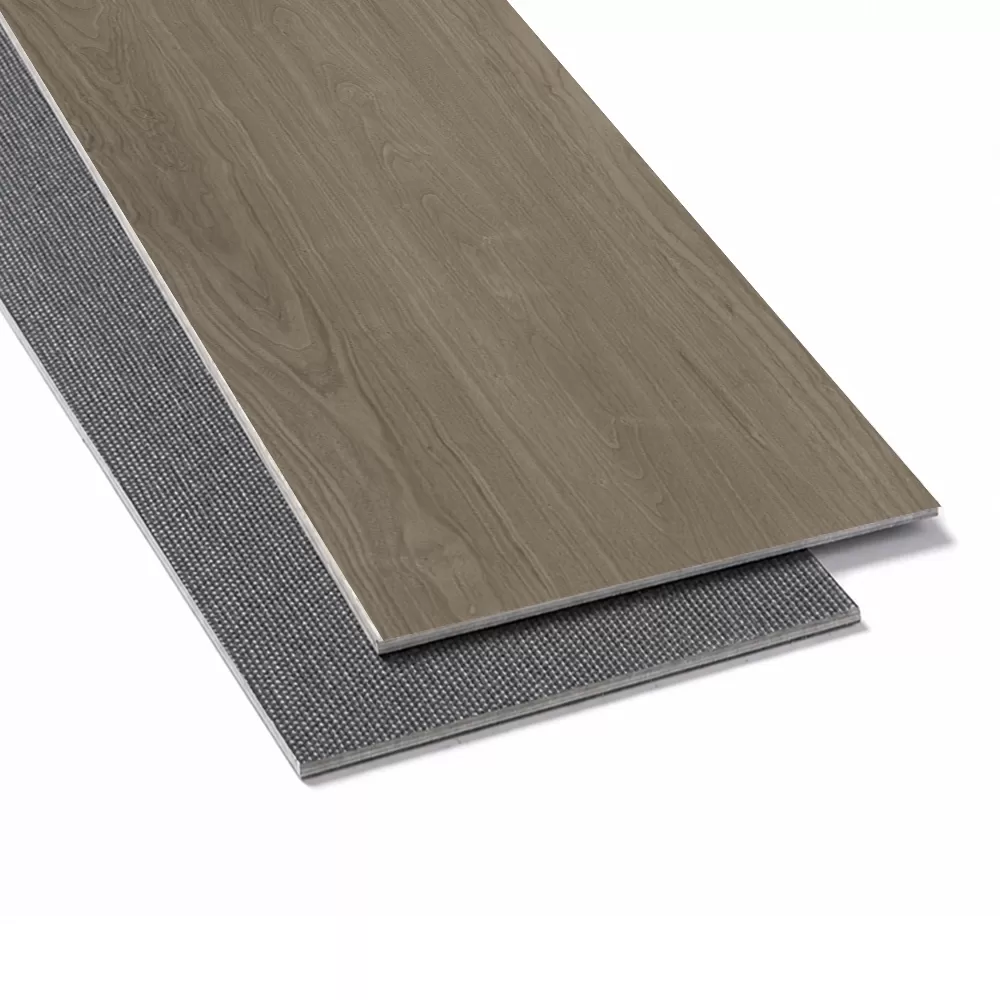
A common misconception in the B2B flooring market is that thicker planks are inherently more durable. Specifiers frequently assume that an 8mm plank will outperform a 5mm plank under heavy foot traffic. However, raw thickness is a poor indicator of structural performance.
Dimensional stability depends primarily on the core formulation and the balance between polymers and mineral fillers. A thick plank with a low-density core will warp far more quickly under thermal stress than a thinner, highly engineered core.
At TAB Flooring, engineering trials show that the ratio of calcium carbonate to polyvinyl chloride (PVC) dictates the expansion and contraction rates. Adding bulk without optimizing this ratio simply increases shipping costs while yielding a floor prone to dimensional failure.
When evaluating luxury vinyl tile plank flooring, the focus must shift from overall thickness to core density, measured in kilograms per cubic meter (kg/m³), and the chemistry of the protective wear layer.
Deep Dive: The Four Pillars of LVT Performance
1. Core Density and Formulation Chemistry
The core of luxury vinyl tile plank flooring determines its resistance to indentation and temperature swings. Traditional flexible LVT relies on plasticized PVC, which offers flexibility but is susceptible to telegraphing subfloor imperfections.
Rigid core variants, such as Stone Plastic Composite (SPC), utilize a high loading of calcium carbonate (limestone) paired with PVC stabilizers. This combination creates a dense, heat-resistant core that minimizes movement. B2B buyers should request technical data sheets showing density levels of at least 1900–2000 kg/m³ for high-traffic commercial projects.
Furthermore, the manufacturing process must include an annealing stage. Annealing subjects the extruded sheets to controlled heating and cooling cycles, relieving the internal stresses locked into the polymer matrix during extrusion. Without proper annealing, planks retain a memory of tension, leading to curling over time.
2. Wear Layer Chemistry and Micro-Scratch Resistance
The wear layer thickness—typically specified in mils (e.g., 12 mil, 20 mil, 28 mil) or millimeters (0.3mm to 0.7mm)—is only part of the durability equation. The composition of the top polyurethane coating holds equal importance.
Standard UV-cured polyurethane coatings offer moderate protection against scuffs. However, advanced specifications call for polyurethane infused with ceramic beads or aluminum oxide micro-particles. These additives create a micro-textured barrier that disperses the energy of abrasive contact, reducing visible scratching.
When sourcing luxury vinyl tile plank flooring for commercial environments, specify a cross-linked polyurethane coating with a minimum wear layer of 20 mil (0.55mm). This ensures compliance with EN ISO 24340 or ASTM F1700 Class III standards for commercial traffic classification.
The following table summarizes the key performance differences between standard and high-performance commercial specifications:
| Performance Metric | Standard LVT Specification | High-Performance Commercial Spec |
|---|---|---|
| Core Density | 1600 - 1800 kg/m³ | 1900 - 2100 kg/m³ |
| Wear Layer Additives | Standard UV Coating | Ceramic Bead / Aluminum Oxide Infused |
| Dimensional Stability (EN 434) | ≤ 0.25% expansion | ≤ 0.10% expansion |
| Indentation Resistance (ASTM F970) | Residual indentation ≤ 0.005 in. | Exceeds 1500 PSI under load |
3. Click Profile Integrity and Locking Shear Strength
For glueless floating installations, the profile design is the single point of failure. The tongue-and-groove joint must withstand vertical shear stresses caused by heavy rolling loads, such as hospital beds, luggage carts, or retail displays.
Licensed locking systems, such as Uniclic or Välinge, are engineered with precise tolerances. Non-licensed, generic profiles often suffer from micro-variations during high-speed profiling. These variations lead to loose joints that allow water penetration and eventual edge chipping.
TAB Flooring utilizes precision profiling equipment to maintain tolerances within 0.02mm. This tight lock prevents gapping and ensures the vertical tension is distributed evenly across the floor plane, preserving joint integrity under heavy traffic.
The CWB (Core-Wear-Balance) Integration Framework
To help B2B specifiers evaluate flooring quality systematically, we developed the Core-Wear-Balance (CWB) Integration Framework. This model serves as a three-point check for assessing the structural viability of any luxury vinyl tile plank flooring specification.
Core Density Ratio (CDR): The ratio of mineral filler to polymer resin must fall within a 3:1 to 4.5:1 range. This range balances impact resistance with flexibility, preventing the core from becoming too brittle or too soft.
Wear-Layer Chemistry (WLC): The coating must match the expected traffic pattern. High-traffic areas require a cured polyurethane with cross-linked polymer chains and mineral additives to resist micro-abrasions.
Backing Balance Coefficient (BBC): The tension exerted by the top layers (wear layer and film) must be perfectly balanced by the backing layer. If the backing material has a different thermal expansion rate than the top layer, the plank will bow or cup.
When these three elements are aligned, the floor remains flat, stable, and aesthetically intact throughout its targeted service life.
B2B Specification and Quality Assurance Checklist
Before issuing a Purchase Order (PO) to a manufacturer, use this technical checklist to verify the specifications of your luxury vinyl tile plank flooring shipment:
[ ] Wear Layer Specification: Verify the actual thickness via ASTM F410. Ensure the spec sheet details the type of topcoat (e.g., "Ceramic Bead Infused UV Acrylic").
[ ] Raw Material Origin: Confirm the use of 100% virgin PVC resin. Recycled PVC often contains heavy metals, phthalates, and inconsistent plasticizer ratios that compromise stability.
[ ] VOC Emission Certifications: Request third-party certifications such as FloorScore, GreenGuard Gold, or Eurofins Indoor Air Comfort Gold.
[ ] Peel Strength (EN 24345): Ensure the peel strength between the wear layer, film, and core exceeds 50 N/50mm to prevent future delamination.
[ ] Locking Strength (ISO 24334): The click profile must exhibit a joint tensile strength of at least 1.5 kN/m along the short side and 2.0 kN/m along the long side.
Addressing Key Specifier Concerns
Why do some LVT floors cup near south-facing glass walls?
Direct sunlight causes rapid surface temperature increases, sometimes reaching 60°C (140°F). If the core has high plasticizer content, the top layer expands faster than the shaded bottom layer, causing the plank to cup upwards. Using a highly stable SPC core or installing dry-back LVT with a high-temperature transition-resistant adhesive mitigates this issue.
Is SPC always superior to flexible LVT for commercial high-traffic areas?
Not necessarily. While SPC offers superior indentation resistance and dimensional stability, flexible LVT is often preferred in environments requiring acoustic dampening or underfoot comfort, such as healthcare facilities or design-focused corporate offices. The choice should depend on the specific performance requirements of the space.
How do raw material fluctuations affect the consistency of LVT shipments?
Fluctuations in the price of PVC resin and calcium carbonate can tempt some manufacturers to adjust their formulation ratios between production batches. This practice leads to variations in color, locking strength, and thermal expansion. Working with an audited manufacturer like TAB Flooring, which maintains strict formulation controls and incoming raw material inspections, protects against batch-to-batch variation.
Engineering Solutions for Demanding Projects
Successful commercial installations depend on selecting a product designed for the specific environment. Specifying luxury vinyl tile plank flooring requires balancing aesthetic demands with structural realities, from chemical compositions to manufacturing processes.
At TAB Flooring, we work alongside architects, developers, and distributors to engineer flooring solutions that meet rigorous international performance standards. Whether you are sourcing for a high-traffic retail environment or a multi-family residential development, our technical team is available to assist you in refining your project specifications.
Contact our technical consulting team today to request material samples, architectural folders, or a custom formulation analysis for your next project.