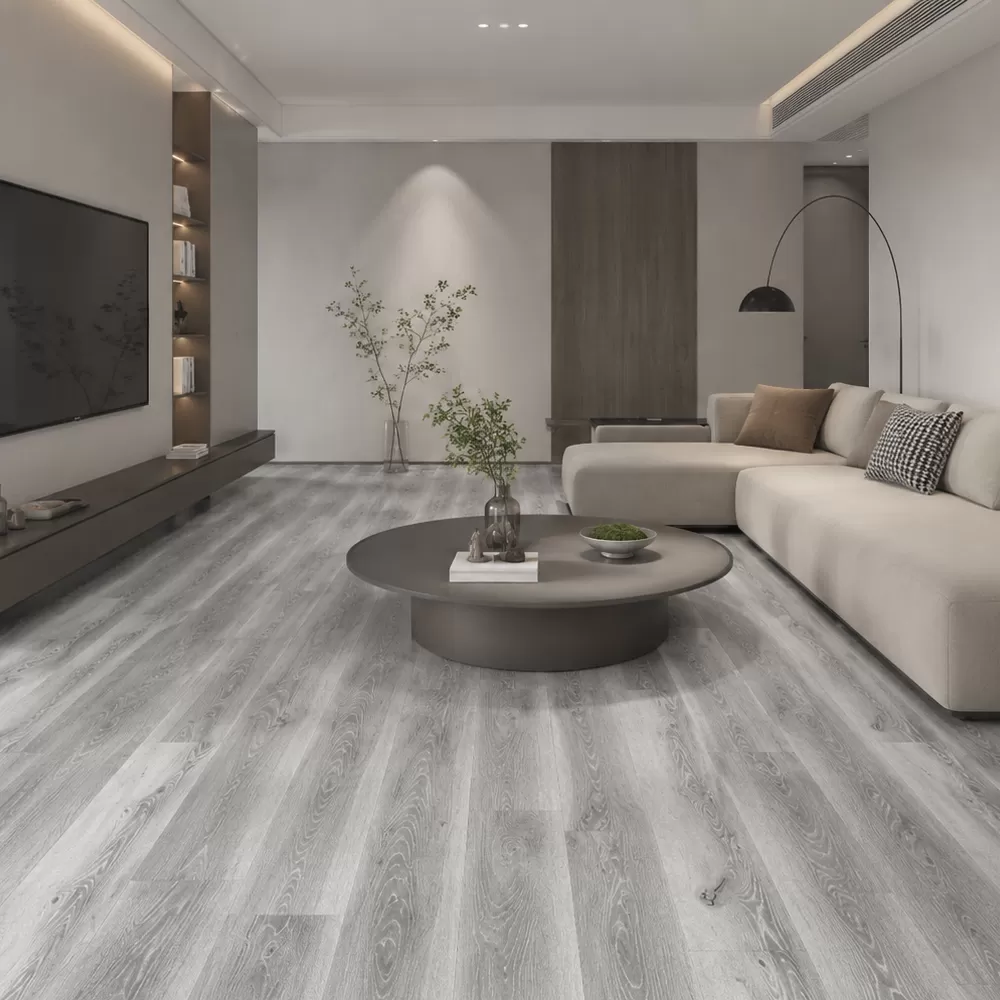
In commercial construction and interior design, selecting durable surface materials is a primary focus for architects, developers, and flooring importers. Resilient floor coverings must meet demanding physical requirements while maintaining visual consistency across large-scale installations. Among modern options, luxury vinyl wood plank flooring is a prominent choice because it combines the natural appearance of hardwood with the durability of polymer composites. For procurement managers, choosing a reliable supplier involves assessing material formulations, engineering tolerances, and compliance with international standards. Partnering with a specialized manufacturer like TAB Flooring allows businesses to obtain customized flooring solutions tailored to specific commercial projects.
Structural Anatomy and Material Formulation
The performance of resilient flooring is directly linked to its multi-layer construction. Each layer is engineered to address specific physical stresses, ensuring that the complete assembly remains stable over years of use.
Polyurethane Lacquer and Wear Layer: The top layer is the primary defense against abrasive forces, such as pedestrian foot traffic and rolling loads. In commercial applications, a wear layer thickness of 0.55mm (22 mil) or 0.70mm (28 mil) is standard. This layer typically consists of a high-density, clear PVC film treated with a UV-cured polyurethane coating. To increase scratch resistance, some manufacturers incorporate microscopic ceramic particles or aluminum oxide into the coating. This treatment creates a microscopic barrier that prevents scuffing, reduces dirt retention, and simplifies maintenance routines.
High-Definition Print Film: Beneath the wear layer is the high-definition print film, which determines the aesthetic value of the floor. Rotogravure and digital printing methods replicate natural timber patterns, such as oak, walnut, and pine, with high clarity. To prevent repetitive patterns across large commercial spaces, manufacturers use plates with wide repeat patterns. Many premium configurations use Embossed in Register (EIR) processes, where the physical texture of the wear layer is aligned with the printed wood grain pattern, providing a realistic wood-like texture.
Core Composition: The core layer determines the physical properties of luxury vinyl wood plank flooring. Flexible LVT uses a plasticized PVC compound, which offers flexibility and underfoot comfort, making it suitable for areas where sound dampening and cushion are preferred. In contrast, rigid Stone Plastic Composite (SPC) flooring uses a mixture of calcium carbonate (limestone) and virgin PVC resin, typically at a ratio of 3:1 to 4:1. This formulation provides high dimensional stability and superior indentation resistance, preventing the floor from shifting or warping under heavy loads or fluctuating temperatures.
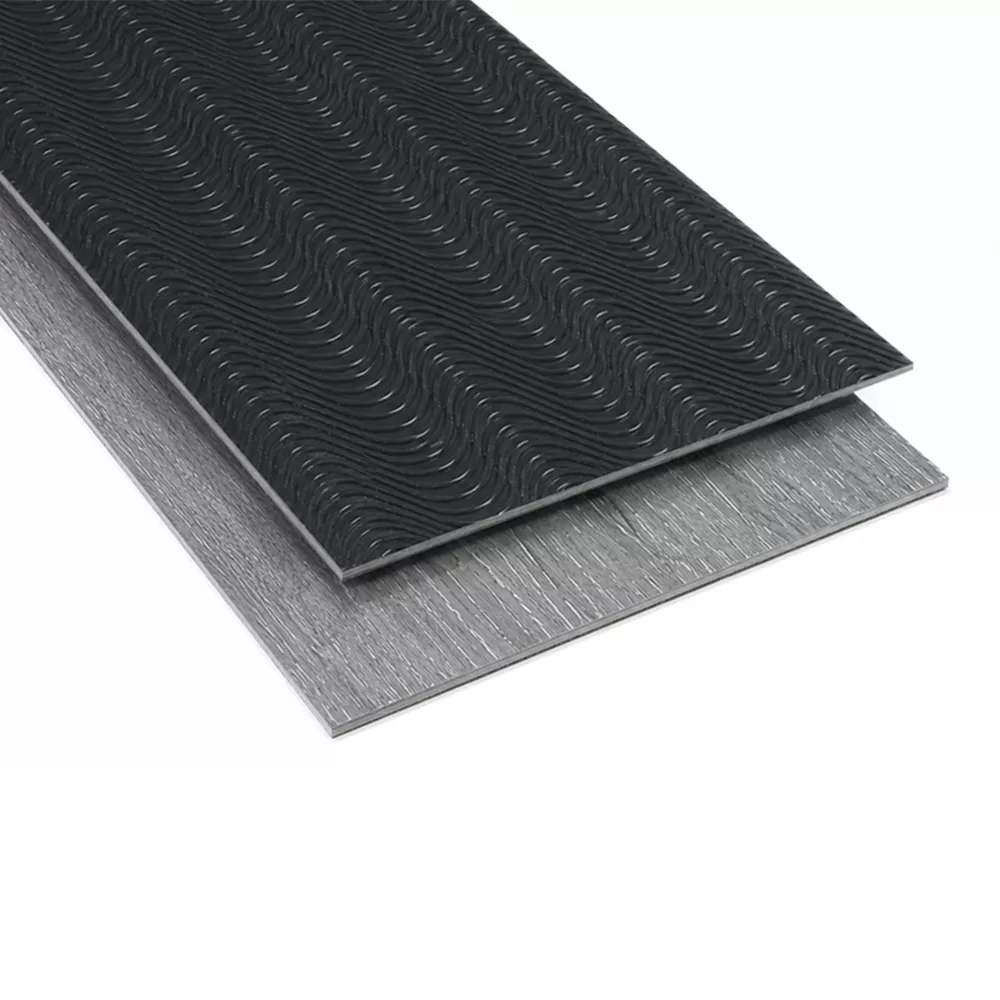
Backing Layer or Underlayment: The backing layer forms the base of the plank. It is often composed of Irradiated Cross-Linked Polyethylene (IXPE) or Ethylene-Vinyl Acetate (EVA). This integrated backing helps minor subfloor leveling, provides thermal insulation, and dampens structure-borne sound, such as footstep impact.
Comparison of LVT and SPC Core Formulations
To assist in material specification, the table below highlights the structural differences between flexible LVT cores and rigid SPC cores:
| Property | Flexible LVT Core | Rigid SPC Core |
|---|---|---|
| Primary Raw Materials | PVC Resin, Plasticizers, Calcium Carbonate | Calcium Carbonate, Virgin PVC Resin |
| Density Range | Approx. 1,200 to 1,400 kg/m³ | Approx. 1,900 to 2,100 kg/m³ |
| Dimensional Stability | Moderate (requires stable temperatures) | High (minimal expansion/contraction) |
| Indentation Resistance | Standard (may compress under heavy static loads) | Excellent (high resistance to heavy fixtures) |
| Acoustic Performance | Inherent sound dampening due to flexibility | Requires integrated acoustic underlayment |
Procurement Challenges and Manufacturing Solutions
Importers, distributors, and sourcing managers frequently face structural issues when procuring large shipments of resilient flooring. Understanding these issues helps in selecting the correct material specifications.
Dimensional Instability and Deformation
One common concern is dimensional instability, which can lead to cupping, curling, or gapping after installation. This problem is often caused by thermal expansion or poor raw material formulations. If the ratio of plasticizers, PVC resin, and mineral fillers is unbalanced, the planks can expand or contract excessively when exposed to sunlight or temperature changes. To avoid this, quality-controlled manufacturing lines maintain balanced tension between the top wear layer and the backing layer during the hot-pressing process.
Adhesion and Delamination Risks
Another risk is delamination, where the wear layer, print film, and core separate over time. This separation is usually the result of insufficient heating, poor pressure distribution, or low-quality adhesive films during the lamination process. High-pressure hot lamination bonds the layers into a single, cohesive unit, ensuring they remain intact under continuous shear stress.
Subfloor Telegraphing
Thin, flexible flooring can also suffer from telegraphing, a condition where imperfections in the subfloor, such as trowel ridges, concrete cracks, or debris, show through to the finished surface. Specifying rigid core luxury vinyl wood plank flooring resolves this issue, as the stiff limestone-composite core bridges minor subfloor imperfections, ensuring a flat and smooth surface.
Selecting a manufacturing partner that implements systematic quality checks helps prevent these common issues. By working with TAB Flooring, procurement professionals can ensure that material formulations are adapted to the environmental conditions and physical demands of their specific market.
Sector-Specific Performance Requirements
Different commercial sectors present distinct mechanical and environmental challenges. Sourcing the right specifications requires a detailed evaluation of each environment.
Healthcare and Senior Living Facilities
In healthcare environments, sanitation and chemical resistance are primary concerns. The flooring must withstand constant cleaning with aggressive disinfectants, sanitizers, and medical chemicals like iodine or betadine without staining or degrading. The surface should be seamless and non-porous to prevent bacterial growth. Additionally, the flooring must be phthalate-free to protect indoor air quality for patients and staff.
Hospitality and Multi-Family Residential Developments
In hospitality and multi-family residential developments, acoustic insulation is key. High-density buildings require flooring systems that reduce sound transmission between levels. Specifying luxury vinyl wood plank flooring with an integrated IXPE or acoustic backing helps meet building codes. Sound attenuation is measured using Impact Insulation Class (IIC) and Sound Transmission Class (STC) ratings. Incorporating a high-quality underlayment helps achieve IIC ratings over 50 dB, reducing noise transmission between floors.
Corporate Offices and Retail Spaces
Corporate offices and retail spaces experience continuous pedestrian traffic and heavy static loads from furniture and display racks. In these areas, the flooring must resist permanent indentation. Standard tests, such as ASTM F970, measure the material's recovery after being subjected to a concentrated load. Sourcing a rigid core product with a high static load limit ensures the surface remains flat under heavy fixtures. Slip resistance is another key safety standard, typically measured using the DIN 51130 ramp test, where a rating of R9 or R10 is recommended for most commercial zones.
Testing Standards and Global Compliance
To ensure consistent performance, global procurement managers rely on standardized testing protocols to verify the quality of each production run.
Dimensional Stability (ASTM F2199 / EN 434): This test measures the change in length and width of the material after exposure to elevated temperatures (80°C for 6 hours). Premium products must maintain a linear change of less than 0.15% to prevent warping or gapping over time.
Castor Chair Test (ISO 4918 / EN 425): This protocol simulates long-term office wear. In this test, a heavy apparatus fitted with three swivel castors runs over the flooring surface for 25,000 cycles. High-quality flooring must show no signs of delamination, wear-through, or damage to the locking profile.
Indentation Resistance (ASTM F1914 / ISO 24343-1): These tests determine the residual indentation left after a localized load is applied and removed. Rigid SPC options show minimal residual indentation—often below 0.1mm—making them suitable for spaces with heavy furniture and heavy rolling loads.
Indoor Air Quality (FloorScore / GreenGuard Gold): These tests ensure the product does not release harmful chemicals into the air, which is a key requirement for projects seeking LEED or BREEAM environmental certifications.
As an experienced supplier, TAB Flooring ensures its production processes align with these standards, providing certified luxury vinyl wood plank flooring that meets rigorous environmental and physical requirements.
Installation Systems and Subfloor Preparation
The long-term performance of resilient flooring is closely tied to subfloor preparation and the selection of the correct installation method.
Click-Lock Profiling
For floating installations, click-lock profiling is the standard choice. Licensed locking systems, such as Unilin or Valinge, use high-precision profiling to ensure tight, gap-free joints. These systems require precise manufacturing tolerances (within 0.05mm) to maintain a secure lock that prevents water penetration and withstands vertical and horizontal stress.
Glue-Down Method
For areas with heavy rolling loads, large temperature shifts, or direct sunlight, the direct glue-down method is often preferred. This method utilizes wet-set acrylic or pressure-sensitive adhesives to bond the planks directly to the subfloor, preventing shifting or movement.
Subfloor Preparation Requirements
Proper subfloor preparation is necessary before installation begins. In accordance with ASTM F710, the concrete slab must be clean, flat (typically within 3/16 inch over a 10-foot span), and dry. Moisture vapor emission rates must be tested using relative humidity probes in accordance with ASTM F2170, ensuring levels do not exceed the limits specified by the adhesive and flooring manufacturer.
Sustainable Manufacturing and Circular Economy
Environmental compliance is a key focus in modern construction. Manufacturers are adopting sustainable practices to meet regulatory demands and reduce carbon footprints.
Using virgin PVC resin instead of recycled scrap of unknown origin is key to maintaining product consistency and preventing heavy metal contamination. Formulations must also be free of harmful plasticizers, such as ortho-phthalates, to comply with global chemical regulations like REACH. Many modern factories also integrate post-industrial waste back into the production cycle, utilizing recycled PVC in the backing layers to support circular economy initiatives while maintaining the physical properties of the wear and core layers.
Direct B2B Inquiry and Project Consultation
Selecting the appropriate specifications for commercial projects requires close collaboration between the developer, importer, and manufacturer. We invite sourcing managers, architects, and wholesale distributors to submit their detailed project requirements, custom thickness needs, and design preferences. Our engineering team is ready to assist with custom test reports, physical sample kits, and volume-based quotations. Please contact us to submit your inquiry and begin your product consultation.
Frequently Asked Questions
Q1: What wear layer thickness is recommended for heavy commercial traffic?
A1: For heavy commercial applications, a wear layer thickness of at least 0.55mm (22 mil) is recommended. For high-traffic public spaces, healthcare facilities, or busy retail centers, a 0.70mm (28 mil) wear layer provides extra protection against abrasive wear and extends the service life of the floor.
Q2: How does SPC differ from flexible LVT in dimensional stability?
A2: SPC (Stone Plastic Composite) contains a high ratio of calcium carbonate, which provides high rigidity and a low coefficient of thermal expansion. This allows it to remain stable across a wide temperature range, making it less prone to expansion or contraction compared to traditional flexible LVT, which contains higher plasticizer content.
Q3: Can these flooring products be installed over underfloor heating systems?
A3: Yes, both flexible LVT and SPC variants can be installed over embedded hydronic radiant heating systems. The maximum operating temperature of the subfloor surface must not exceed 27°C (80°F), and the heating system must be run at a gradual ramp-up rate during commissioning to prevent thermal shock to the adhesive or locking joints.
Q4: What is the significance of the FloorScore certification for B2B projects?
A4: FloorScore certification verifies that the hard surface flooring product complies with strict indoor air quality emissions standards for volatile organic compounds (VOCs). This certification is often required by architects and developers to secure green building credits under programs such as LEED and BREEAM.
Q5: How do integrated underlayment backings affect sound attenuation?
A5: Integrated underlayments, such as IXPE or EVA backings, act as an acoustic barrier that dampens impact sound, such as footsteps or dropped objects. This helps the flooring assembly achieve high Impact Insulation Class (IIC) and Sound Transmission Class (STC) ratings, which are necessary for meeting multi-family and commercial acoustic building codes.