In modern commercial architecture and large-scale property development, selecting the correct surfacing material requires a balance of aesthetic appeal, long-term durability, and structural resilience. Among the various options available, waterproof vinyl plank flooring has emerged as a preferred solution for architects, specifiers, and procurement managers. This material addresses the historic vulnerability of traditional wood-based products to moisture damage while maintaining a high-fidelity visual representation of natural wood species.
For B2B buyers, distributors, and general contractors, understanding the material science behind these floorcoverings is necessary to avoid premature product failures. Flooring in high-traffic commercial environments faces unique stresses, including heavy rolling loads, frequent wet cleaning, and variable indoor climate conditions. Selecting the right product requires looking beyond surface-level aesthetics and analyzing the core chemistry, wear layer performance, and profiling tolerances of the manufacturer.
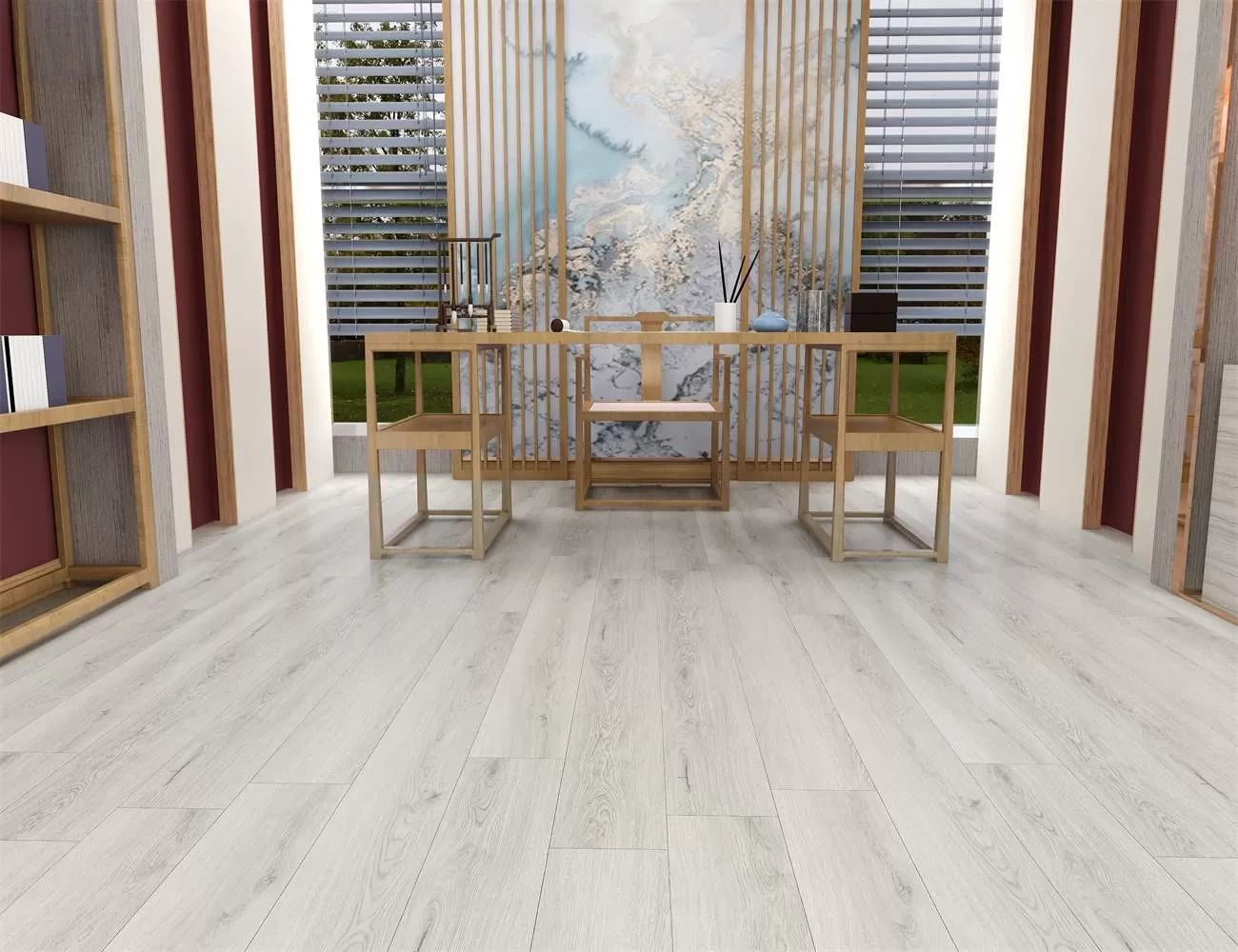
The Material Anatomy of Waterproof Vinyl Plank Flooring
To evaluate waterproof vinyl plank flooring objectively, one must examine its multi-layered composition. The performance of the floor is a direct result of how these layers are engineered, formulated, and fused together during the extrusion and lamination phases. Understanding these layers allows importers and project specifiers to compare products based on actual material performance rather than marketing terminology.
Rigid Core (SPC) Construction
Stone Plastic Composite, or SPC, represents a significant development in the rigid core category. The core is composed of approximately 60% to 70% natural limestone (calcium carbonate) combined with polyvinyl chloride (PVC) resin and specific chemical stabilizers. This blend is extruded under high heat and pressure, resulting in a dense, solid board. Because the core contains no wood fibers, it is completely immune to swelling, warping, or rotting when exposed to standing water.
The high density of SPC—typically ranging from 1,900 to 2,100 kg/m³—provides exceptional resistance to impact and static indentation. This makes it highly suitable for commercial environments where heavy furniture, hospital beds, or display fixtures are regularly moved or positioned. The absence of plasticizers in the core formula ensures that the planks remain rigid, minimizing the risk of telegraphing subfloor imperfections through the surface.
Flexible LVT Multi-layer Composition
Traditional Luxury Vinyl Tile, or flexible LVT, utilizes a different structural formulation. Rather than a rigid stone-composite core, LVT features a core composed of PVC resin mixed with plasticizers, fillers, and stabilizers. This formulation yields a more pliable, flexible plank with a density of approximately 1,300 to 1,400 kg/m³.
While flexible LVT provides superior sound damping and a softer feel underfoot, its dimensional stability is more sensitive to temperature fluctuations. Under direct sunlight or extreme heat, flexible LVT can expand and soften, which may lead to joint separation if not installed with a high-quality wet-set adhesive. Understanding this distinction is vital for project specifiers who must match the flooring formulation to the specific environmental controls of the installation site.
Dimensional Stability and Moisture Resistance
The primary advantage of waterproof vinyl plank flooring is its performance in high-moisture environments. However, water resistance is not merely about the material surviving exposure to liquid; it is also about the floor maintaining its shape and locking mechanism integrity under wet conditions.
Wood-plastic composites and laminate floors often suffer from thickness swelling when water penetrates the tongue-and-groove joints, causing the edges to peak. Rigid core waterproof vinyl plank flooring exhibits near-zero thickness swelling when tested under ASTM D1037 standards. This structural stability is achieved because the polymer chains within the SPC and LVT cores do not absorb water molecules, preventing dimensional changes even when fully submerged.
The locking profile itself plays a key role in preventing moisture from migrating to the subfloor. High-precision click-lock systems, such as Uniclic or Valinge profiles, are milled with tight tolerances to create a sealed joint. When properly installed, these locking joints prevent surface spills from seeping between the planks. This protects the subfloor from moisture accumulation, which could otherwise promote mold growth or weaken adhesive bonds underneath the flooring.
Addressing B2B Procurement Pain Points
Commercial buyers face distinct challenges when sourcing flooring materials for large-scale multi-family, hospitality, or institutional projects. Addressing these pain points early in the specification stage prevents costly replacement claims, installation delays, and post-occupancy disputes.
Wear Layer Performance and Abrasion Resistance: The durability of the printed visual layer depends entirely on the thickness and composition of the wear layer. Standard residential products feature a 12mil (0.3mm) wear layer, whereas commercial projects require a minimum of 20mil (0.5mm) or 28mil (0.7mm). Additionally, the application of a UV-cured polyurethane coating reinforced with ceramic beads or aluminum oxide particles is necessary to resist micro-scratches from foot traffic and grit.
Plasticizer Migration and Indoor Air Quality: Low-quality vinyl products often utilize cheap, orthophthalate plasticizers to achieve flexibility. Over time, these chemicals can migrate to the surface or volatilize into the air, compromising indoor air quality and causing the floor to become brittle. Sourcing products certified by FloorScore or Greenguard Gold ensures that the flooring meets strict low-VOC emission limits, which is vital for healthcare, education, and government contracts.
Subfloor Preparation Requirements: Traditional flexible vinyl tiles are notorious for "telegraphing," where every minor bump, crack, or trowel mark in the concrete slab eventually shows through the surface. Utilizing a rigid SPC core product mitigates this issue, as the stiffness of the plank bridges small subfloor irregularities. This reduces the labor and material costs associated with self-leveling underlayment applications prior to installation.
Application Scenarios in Commercial Architecture
The adaptability of waterproof vinyl plank flooring makes it a viable material for a wide range of commercial sectors, provided the specifications match the environmental demands of each application.
Hospitality and Food Service Venues
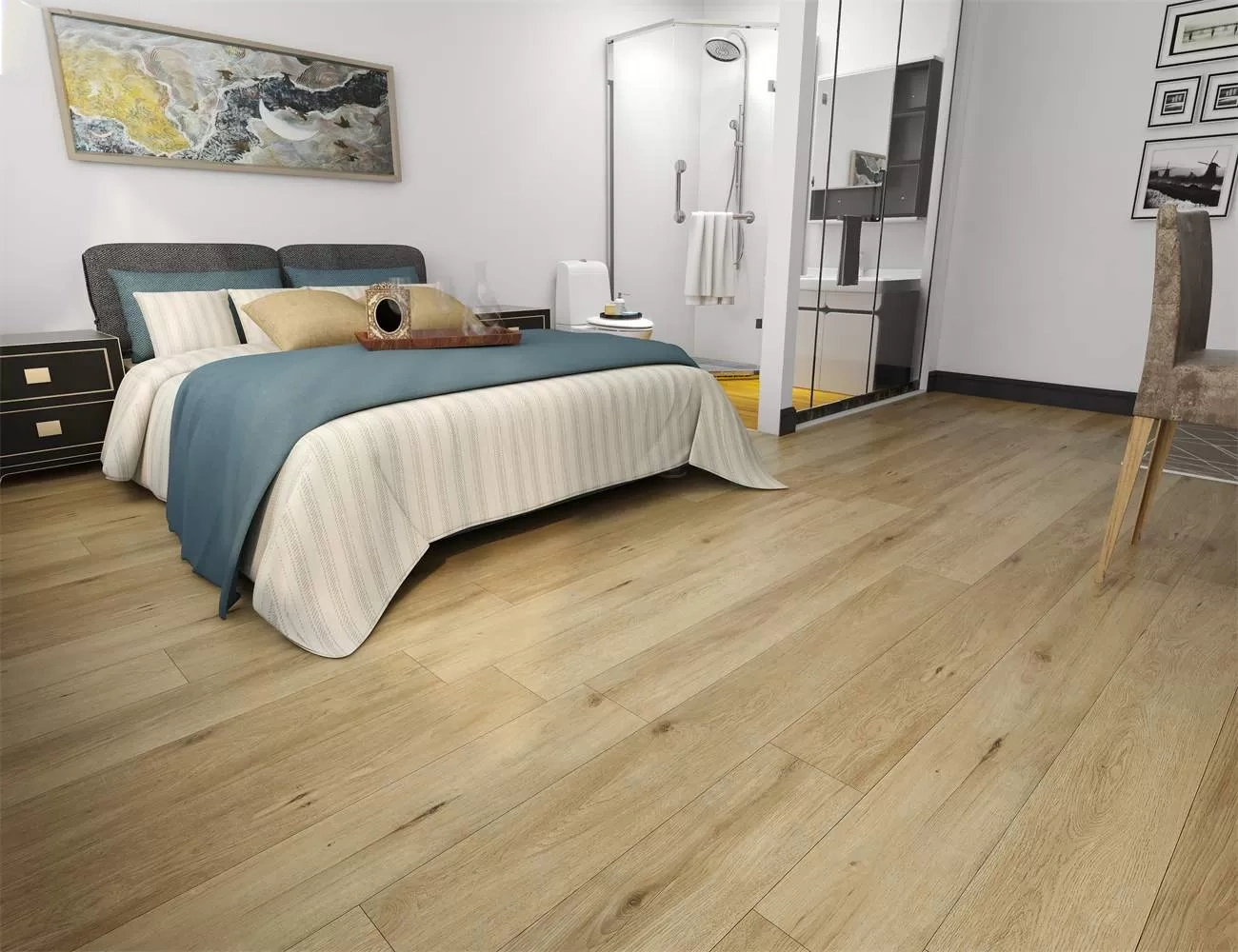
In hotels, restaurants, and cafes, flooring must withstand frequent liquid spills, food stains, and heavy foot traffic while maintaining an upscale appearance. In guest rooms, SPC flooring offers the aesthetic warmth of hardwood with the water resistance needed to survive spills from wet luggage or bathroom entryways. In dining areas, the stain resistance of the polyurethane wear layer ensures that wine, grease, and acidic food spills do not discolor the surface, allowing for fast cleanup and sanitary maintenance.
Healthcare and Senior Living Facilities
Healthcare environments demand strict hygienic standards, ease of rolling load mobility, and slip resistance. Waterproof vinyl plank flooring with a commercial-grade wear layer can withstand the heavy rolling loads of hospital beds, wheelchairs, and diagnostic equipment without indentation. Because the material is non-porous and can be installed with welded seams or tight click joints, it does not harbor bacteria, dust mites, or allergens. This simplifies disinfection protocols using commercial-grade cleaning agents.
High-Traffic Retail Spaces
Retail stores require flooring that can handle heavy pedestrian traffic, point-load stress from display shelving, and grit tracked in from outdoors. An SPC vinyl plank with a 28mil wear layer provides the necessary scratch and scuff resistance. The dimensional stability of the rigid core prevents gapping or buckling near large glass storefronts that are subjected to significant solar heat gain and temperature swings throughout the day.
Manufacturing Quality Standards at TAB Flooring
The overall performance of any waterproof vinyl plank flooring is determined during the manufacturing process. At TAB Flooring, we control every step of production, from raw material sourcing to final profile milling, to ensure consistent quality across all production batches.
Our manufacturing facilities utilize advanced twin-screw extruders to achieve a homogeneous blend of calcium carbonate and PVC resin. This precise mixing prevents weak spots or air pockets within the core, resulting in superior impact resistance and peel strength. We enforce strict quality control standards, measuring plank thickness, squareness, and locking profile tolerances at regular intervals during production.
We also pay close attention to the lamination process. Under controlled heat and pressure, the wear layer, print film, and core are fused into a single cohesive structure. This eliminates the risk of delamination, even when the floor is exposed to high traffic and wet cleaning. Our click-lock profiles are milled using high-speed, diamond-tipped cutting heads to guarantee tight, consistent joints that lock together easily on the job site, reducing installation times for flooring contractors.
Specification Guidance for Project Managers and Distributors
When selecting waterproof vinyl plank flooring for your next commercial project or inventory order, it is helpful to establish a clear specification matrix. This matrix should align the technical properties of the floor with the physical demands of the installation environment.
First, evaluate the wear layer thickness. For light commercial spaces such as multi-family common areas or offices, a 20mil wear layer is generally sufficient. For heavy-traffic spaces such as school corridors, hospital lobbies, or retail centers, a 28mil wear layer is recommended to extend the useful life of the floor.
Second, consider the acoustic performance. Many multi-family housing codes require a minimum Impact Insulation Class (IIC) rating of 50 or higher. Choosing a waterproof vinyl plank with an attached underlayment, such as an integrated IXPE (irradiated cross-linked polyethylene) foam backing, can significantly improve acoustic ratings. The IXPE backing also provides a slight cushioning effect, reducing installer fatigue and saving the cost of purchasing and laying a separate underlayment.
Third, verify the chemical resistance of the product. If the floor is destined for a laboratory, hair salon, or automotive showroom, request testing data corresponding to ASTM F925. This standard measures the resistance of the flooring to common chemical reagents, ensuring that disinfectants, dyes, and oils will not dull or dissolve the wear layer over time.
Inquiries and Customization Capabilities
Managing large-scale commercial builds or maintaining wholesale distribution networks requires a reliable manufacturing partner capable of delivering consistent volume and custom specifications. TAB Flooring offers comprehensive OEM and ODM services, allowing B2B clients to customize plank dimensions, wear layer thicknesses, acoustic backings, and embossing textures to meet specific project budgets and performance requirements.
Our team provides full technical documentation, including ASTM test reports, VOC emission certifications, and detailed installation guidelines, to support your procurement process. Whether you need to match a specific architectural design concept or require a custom rigid core formulation for specialized environmental conditions, we can develop a solution that fits your exact parameters.
We invite distributors, developers, and commercial contractors to contact our technical sales division to request product samples, architectural folders, or direct wholesale pricing. Let us assist you with material selection, estimation support, and logistics coordination for your next development project. Please contact our commercial sales office directly to submit your specifications and receive a comprehensive project quotation.
Frequently Asked Questions (FAQ)
Q1: Does waterproof vinyl plank flooring require an expansion gap during installation?
A1: Yes. While the material itself does not absorb moisture, the surrounding walls and structural elements of a building do move and shift. Additionally, temperature fluctuations can still cause minor dimensional changes in large flooring spans. An expansion gap, typically 1/4 inch to 5/16 inch (6mm to 8mm), must be maintained around the perimeter of the room and all vertical obstructions to allow for this natural movement without buckling.
Q2: Can this flooring be installed over existing ceramic tile or concrete with minor cracks?
A2: Rigid core SPC waterproof vinyl plank flooring can be installed over existing ceramic tile, provided the grout joints are less than 1/4 inch (6mm) wide and 1/8 inch (3mm) deep. Wider or deeper grout lines should be filled with a patch compound. Minor concrete cracks do not require extensive repair, but the subfloor must still meet standard flatness requirements—typically 3/16 inch over a 10-foot radius—to ensure the locking joints do not experience excessive stress under load.
Q3: How does subfloor moisture affect a waterproof floor?
A3: While water will not damage the waterproof vinyl plank flooring itself, high concrete moisture vapor emission rates (MVER) can still cause problems underneath the floor. Excess moisture can promote mold and mildew growth in the subfloor or degrade the performance of any attached underlayment or adhesive. If the concrete slab exceeds the manufacturer's recommended moisture limits (tested via ASTM F2170), a 6-mil polyethylene vapor barrier must be laid down before installing the flooring.
Q4: What is the difference between embossed-in-register (EIR) and standard embossing?
A4: Standard embossing applies a generic textured pattern across the surface of the plank to reduce glare and mimic a wood-like texture. Embossed-in-register (EIR) is a more advanced manufacturing technique where the physical texture on the wear layer is aligned precisely with the grain pattern of the underlying high-definition printed image. This alignment creates a highly realistic wood visual that closely mimics the depth and feel of natural wire-brushed timber.
Q5: Can waterproof vinyl planks be used in areas with underfloor heating systems?
A5: Yes, most SPC and LVT waterproof vinyl plank flooring options are compatible with hydronic or electric radiant heating systems. However, the heating system must be cast into the concrete subfloor or covered with a self-leveling underlayment. The surface temperature of the subfloor must not exceed 85°F (29.4°C) to prevent the vinyl layers from softening or experiencing thermal expansion issues, and the heating system should be turned on gradually after installation.