When flooring distributors, building material wholesalers, contractors, or project buyers compare different vinyl flooring products, two categories are often discussed together: SPC flooring and LVT flooring.
Both products are widely used in modern interior projects, but they are not selected for exactly the same reasons. SPC flooring is usually chosen when buyers need rigid core stability, water resistance, and click installation performance. LVT flooring is often selected when buyers want design flexibility, installation variety, and a practical solution for residential or commercial interiors.
For overseas buyers, the key question is not simply “Which product is better?” A more useful question is: which product is better for the project, market, installation method, and customer expectation?
This article compares SPC and LVT flooring from a practical B2B purchasing perspective, helping distributors and project buyers make clearer product decisions.
What Is SPC Flooring?
SPC flooring, also known as Stone Plastic Composite flooring, is a rigid core vinyl flooring product. Its core layer is designed to provide stronger dimensional stability than traditional flexible vinyl flooring.
In many markets, SPC flooring is popular for apartments, offices, hotels, retail spaces, and renovation projects where buyers want a stable floor with practical installation performance. It is commonly supplied with a click-lock system, making it suitable for floating installation when site conditions are appropriate.
SPC flooring is often considered when buyers need:
Rigid core structure
Good dimensional stability
Water-resistant flooring performance
Practical click installation
Stable product specification for repeat orders
A flooring solution suitable for residential and commercial interiors
For distributors, SPC flooring can also be useful as a core product line because it is easy to explain to downstream customers. The message is usually clear: stable structure, practical installation, and broad indoor application.
What Is LVT Flooring?
LVT flooring, or Luxury Vinyl Tile flooring, is a flexible vinyl flooring category known for design variety, surface realism, and multiple installation systems.
Compared with SPC flooring, LVT flooring often gives buyers more flexibility in installation method. Depending on the project requirement, LVT can be supplied as dry back LVT, loose lay LVT, peel and stick LVT, or click LVT.
This makes LVT flooring especially useful for distributors who serve different customer groups. Some markets may prefer glue-down installation for commercial areas. Some buyers may prefer loose lay products for easier replacement. Some renovation channels may prefer peel and stick flooring for quick installation.
LVT flooring is often considered when buyers need:
Flexible vinyl flooring options
Wood, stone, or modern decorative designs
Different installation systems
Practical maintenance
Suitable products for apartments, offices, retail areas, and hospitality spaces
A product range that can support different budget levels and sales channels
For distributors, LVT flooring can help create a broader product portfolio because different LVT structures and installation methods can serve different markets.
SPC vs LVT Flooring: The Main Difference
The main difference between SPC and LVT flooring is the product structure.
SPC flooring has a rigid core. This gives the product stronger structural stability and makes it suitable for buyers who care about dimensional performance, click installation, and renovation convenience.
LVT flooring is generally more flexible. Its advantage is not only appearance, but also installation variety. Dry back LVT, loose lay LVT, peel and stick LVT, and click LVT can be selected according to the project type and installation habit.
For B2B buyers, the comparison should not stop at structure. It should also include project environment, traffic level, subfloor condition, installation team experience, replacement needs, and target price level.
A simple way to understand the difference is:
SPC flooring is often selected when stability and click installation are the priority.
LVT flooring is often selected when installation flexibility, design variety, or specific commercial application needs are the priority.
When SPC Flooring May Be the Better Choice
SPC flooring is often a strong option for projects that require a stable rigid core product. For example, distributors may recommend SPC flooring for apartments, offices, hotels, retail stores, and renovation projects where buyers want a product that is easy to understand and practical to install.
SPC flooring may be suitable for:
Residential apartments
Rental housing renovation
Office spaces
Retail stores
Hotels and hospitality interiors
Projects requiring click installation
Buyers who want a rigid core flooring product
Distributors building a repeat-order flooring program
SPC flooring may also be considered in areas where dimensional stability is a key concern. However, project conditions such as sunlight exposure, subfloor quality, temperature change, and installation method should still be evaluated before final selection.
For overseas distributors, SPC flooring is especially useful when the local market wants a product that can be promoted around stability, waterproof performance, and easy installation.
When LVT Flooring May Be the Better Choice
LVT flooring is often a better choice when the project requires more installation choices or when the buyer wants flexible product options for different customer segments.
For example, dry back LVT can be considered for commercial spaces where professional glue-down installation is available. In some commercial environments, glue-down flooring can be practical because individual pieces may be easier to replace when damaged.
Loose lay LVT can be useful in projects where faster replacement and easier maintenance are important. Peel and stick LVT can support quick renovation channels where simple installation is a key selling point. Click LVT can serve buyers who prefer floating installation but still want an LVT product structure.
LVT flooring may be suitable for:
Apartments and residential interiors
Offices and retail spaces
Property management projects
Renovation channels
Commercial spaces with professional installation
Buyers who need dry back, loose lay, peel and stick, or click options
Distributors who want more product choices under one category
For distributors, LVT flooring can be positioned as a flexible product family rather than a single product. This helps sales teams recommend different LVT types according to project demand.
How to Choose Flooring for Commercial Spaces
Commercial flooring selection should consider more than appearance. Buyers need to think about traffic level, rolling load, cleaning frequency, replacement convenience, and installation risk.
In commercial spaces such as offices, shops, corridors, hotels, and public areas, both SPC and LVT may be used, but the final choice depends on the project condition.
SPC flooring can be considered when the buyer wants a rigid core floor with click installation and stable performance for daily use.
Dry back LVT can be considered when professional installation is available and the project requires a glued-down solution. In some commercial environments, glue-down LVT can help with replacement and maintenance because specific sections can be repaired more easily.
Before making a decision, buyers should confirm:
Expected foot traffic
Whether rolling chairs, carts, or equipment will be used
Subfloor flatness and condition
Moisture conditions
Installation method
Maintenance plan
Replacement requirements
Local installer experience
For project buyers, the best choice is usually not based on the product name alone. It should be based on how the flooring will perform after installation.
How to Choose Flooring for Residential and Apartment Projects
For residential and apartment projects, buyers often care about design, comfort, installation speed, waterproof performance, and daily maintenance.
SPC flooring can be a practical option for apartments and residential renovation when the buyer needs rigid core flooring with click installation. It is also easy for distributors to present because the product structure and installation method are clear.
LVT flooring can be a good option when buyers want more decorative choices or when the local market has a strong preference for a specific installation method. For example, some renovation markets may prefer peel and stick LVT for quick updates, while some professional installation channels may prefer dry back LVT.
In residential projects, color, texture, surface appearance, and overall interior matching are also important. Many buyers will make the final decision after checking samples in real lighting conditions.
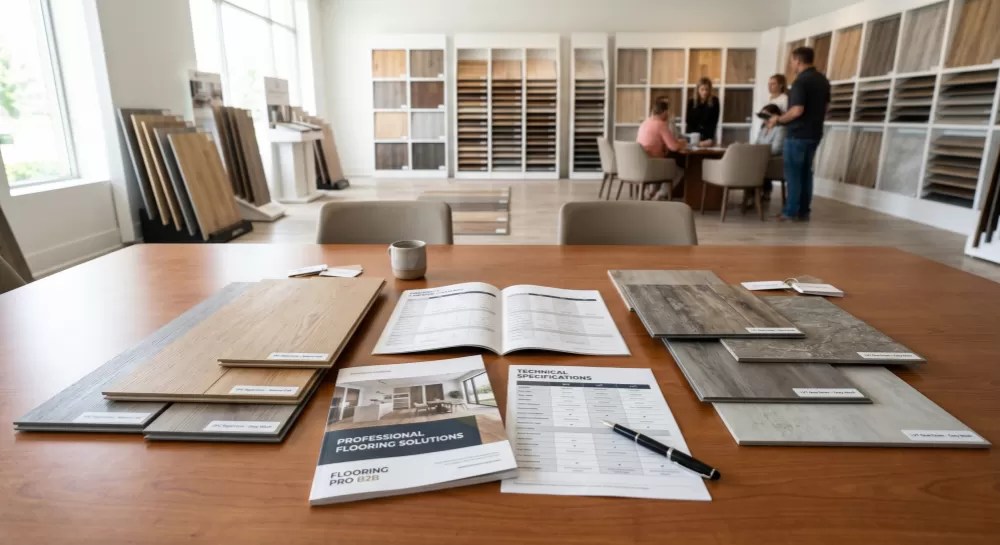
For distributors, this means sample boards, color cards, and product catalogs are important sales tools. The easier the customer can compare SPC and LVT flooring, the easier it becomes to make a purchasing decision.
What Flooring Distributors Should Consider Before Ordering
For flooring distributors and building material wholesalers, the product decision should be connected to the local market strategy.
Before placing orders, buyers should consider:
Which flooring category is easier to sell in the local market
Whether customers prefer click, glue-down, loose lay, or self-adhesive installation
Which colors and textures are popular
Whether the product is for residential, commercial, or mixed-use projects
Whether matching flooring accessories are needed
Whether samples and catalogs are required for sales teams
Whether the supplier can support stable specifications for repeat orders
Whether private label or customized packaging is needed
A distributor does not always need to choose only one product category. In many cases, a stronger product portfolio includes both SPC and LVT flooring.
SPC flooring can serve as a stable rigid core category, while LVT flooring can provide additional installation choices and design options. Together, they help distributors respond to different buyer needs more effectively.
Practical Selection Summary
SPC flooring may be more suitable when the buyer needs rigid core stability, click installation, and a product that is easy to position for residential and commercial interiors.
LVT flooring may be more suitable when the buyer needs flexible installation choices, design variety, and product options for different renovation or commercial requirements.
For commercial spaces, traffic level, rolling load, subfloor condition, and installation method should be evaluated before choosing between SPC and LVT.
For residential and apartment projects, design preference, comfort, installation speed, and sample comparison often play a stronger role in the final decision.
For distributors, the best solution is usually not to treat SPC and LVT as competing products. A more practical approach is to build a flooring product system that includes both categories and recommends each product according to application, installation method, and buyer expectation.
Conclusion
SPC flooring and LVT flooring both have strong value in today’s flooring market. SPC flooring is commonly selected for rigid core stability, waterproof performance, and practical click installation. LVT flooring is valued for design flexibility and multiple installation systems.
For overseas flooring distributors, wholesalers, and project buyers, the right choice depends on the market, project environment, installation method, and customer expectations.
If you are comparing SPC flooring and LVT flooring for your local market, a clear product plan, confirmed specifications, and practical sample support can make the selection process easier and reduce purchasing risk.