Introduction to Modern Resilient Flooring Materials
Commercial interior architecture requires a careful balance between functional durability, maintenance overhead, and aesthetic performance. Traditional surface materials, such as natural stone, ceramic tiles, and hardwood, often present challenges regarding installation speed, acoustic transmission, and lifecycle maintenance costs. As project managers and specifiers seek more balanced alternatives, high-performance resilient surfaces have emerged as a primary solution. Among these, lvt tile flooring represents a highly versatile product category capable of meeting demanding commercial performance requirements while maintaining visual fidelity to natural elements.
In high-traffic environments—ranging from healthcare facilities and educational institutions to hospitality and retail spaces—the selected flooring must withstand consistent mechanical loads, chemical cleaning agents, and heavy foot traffic. Manufacturers like TAB Flooring focus on engineering these multi-layered vinyl structures to provide predictable performance over extended operational lifespans. Understanding the structural composition, physical characteristics, and installation protocols of these materials is necessary for ensuring long-term project success and preventing premature material failure.
The Structural Layers of LVT Tile Flooring
To evaluate the suitability of lvt tile flooring for specific architectural projects, it is helpful to analyze its physical composition. Unlike homogeneous vinyl sheets, luxury vinyl tiles are heterogeneous products composed of multiple distinct layers, each engineered to perform a specific mechanical or aesthetic function. These layers are fused together under heat and pressure to create a dimensionally stable plank or tile.
1. The Polyurethane (PU) Treatment and Wear Layer
The topmost layer of the tile consists of a clear, high-density wear layer, usually treated with a UV-cured polyurethane coating. This coating often incorporates additives such as microscopic ceramic beads or aluminum oxide particles to improve scratch resistance and reduce micro-abrasions. The underlying wear layer, typically manufactured from pure polyvinyl chloride (PVC), determines the commercial classification of the product. For light commercial environments, a wear layer thickness of 12 mil (0.3mm) is common, whereas heavy commercial and industrial spaces require a minimum of 20 mil (0.55mm) or 28 mil (0.7mm) to withstand abrasive wear from wheeled traffic and heavy footwear.
2. The High-Definition Print Film
Positioned directly beneath the wear layer is the decorative design print layer. Advanced gravure printing and digital imaging technologies allow for high-resolution replication of natural wood grains, natural stone textures, concrete, and abstract patterns. This layer allows designers to achieve the precise visual character required for a space without the weight, thickness, or maintenance challenges associated with natural stone or hardwood flooring.
3. The Core Layers and Dimensional Stability Sheets
The core of the tile provides structural mass, impact resistance, and dimensional stability. In standard flexible configurations, this core consists of compounded PVC resins, plasticizers, and calcium carbonate fillers. To prevent expansion and contraction caused by temperature fluctuations, high-quality manufacturers integrate fiberglass reinforcement sheets within this core. This construction method limits dimensional changes, ensuring that the joints between the tiles remain tight and impervious to dirt infiltration over years of service.
4. The Backing Layer
The bottom layer serves as the foundation for the tile, providing balanced tension to prevent curling. This layer is designed to bond effectively with commercial adhesives or to provide slip-resistant friction in loose-lay applications. Some configurations feature pre-attached acoustic underlayments, such as closed-cell polyethylene (PE) or irradiated cross-linked polyethylene (IXPE) foam, which improve the foot comfort and acoustic performance of the assembly.
Mechanical Performance and Standard Testing Metrics
Specifying materials for commercial use requires objective proof of performance through standardized testing. Before selecting an lvt tile flooring product for a project, specifiers should review the manufacturer's datasheets for several key metrics:
Dimensional Stability (EN ISO 23999 / ASTM F2199): Measures the percentage of shrinkage or expansion after exposure to elevated temperatures. High-grade options typically exhibit dimensional changes of less than 0.10%, preventing joint separation.
Abrasion Resistance (EN 660-2): Classifies the material loss under abrasive wheel testing. Products achieving Group T (highest wear resistance) are preferred for high-traffic corridors and common areas.
Residual Indentation (ASTM F1914 / EN ISO 24343-1): Measures the material's ability to recover from static loads, such as heavy furniture legs. Look for values below 0.10 mm to ensure the surface resists permanent denting.
Slip Resistance (DIN 51130 / ASTM D2047): Determines the dynamic coefficient of friction. For standard commercial environments, a ramp test value of R9 or R10, or a dry static coefficient of friction above 0.6, is recommended to minimize slip-and-fall incidents.
Acoustic Performance (ASTM E492 / ASTM E989): Evaluates the Impact Insulation Class (IIC) rating. When combined with appropriate underlayments, these floors can achieve IIC ratings above 50, reducing impact sound transmission between building levels.
Aesthetic Customization and Surface Realism
Beyond its mechanical characteristics, the design flexibility of lvt tile flooring makes it highly adaptable to modern commercial interiors. Manufacturers utilize advanced physical processing techniques to ensure that the tactile experience matches the visual representation.
Embossed in Register (EIR) Technology
Standard embossing applies a generic texture across the surface of the tile, which can sometimes diminish the visual realism of stone or wood designs. Embossed in Register (EIR) technology aligns the physical surface texture of the wear layer precisely with the underlying print film design. When the print film displays a natural stone fissure, wood grain knot, or concrete pore, the physical indentation on the surface matches that feature precisely. This level of detail provides an authentic texture underfoot and improves the light-reflective properties of the surface.
Modular Formats and Design Layouts
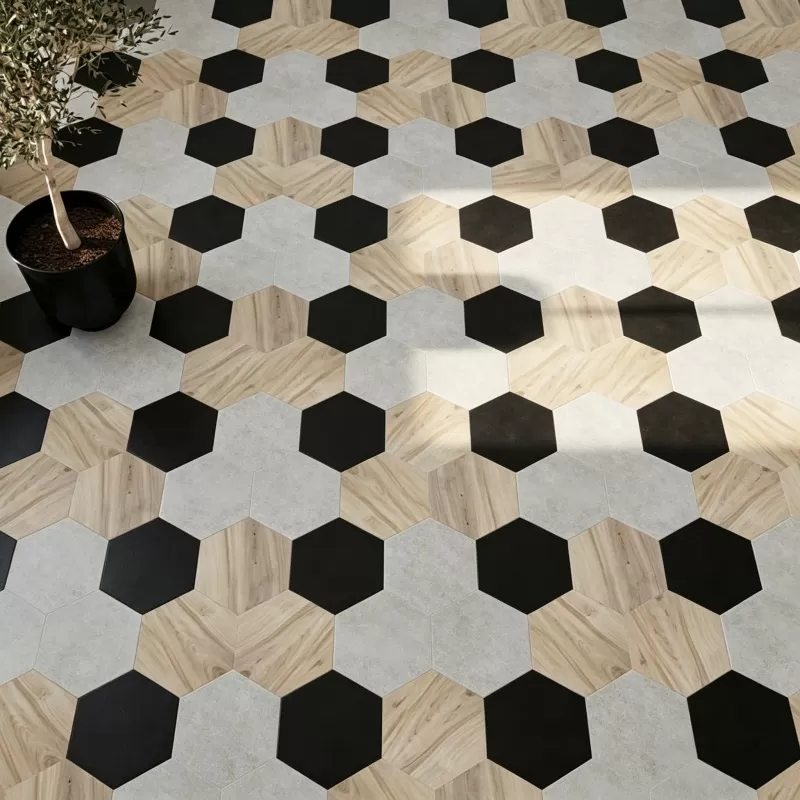
Because these materials are manufactured in modular tile and plank formats, they allow for diverse design patterns. Large-format square tiles (such as 600mm x 600mm or 457mm x 457mm) are frequently used to mimic expensive stone or polished concrete in lobbies and corporate offices. Rectangular formats can be configured in herringbone, chevron, or basketweave patterns, giving designers the freedom to define specific functional zones within open-plan environments without requiring physical transitions or thresholds.
Installation Methodologies in B2B Environments
Selecting the correct installation system is just as important as choosing the material itself. The ideal method depends on the subfloor condition, the expected traffic levels, the available installation time, and the long-term maintenance strategy of the facility.
| Installation Method | Primary Application Areas | Key Advantages | Main Operational Considerations |
|---|---|---|---|
| Glue-Down (Dry Back) | Heavy-traffic commercial corridors, retail storefronts, healthcare facilities. | High stability, lowest material cost, easy replacement of single damaged tiles. | Requires meticulous subfloor preparation and extended adhesive curing time. |
| Loose Lay | Temporary retail installations, offices with raised access floors, rapid renovations. | Extremely fast installation, easy access to underfloor utilities, minimal adhesive required. | Requires a highly stable perimeter and flat subfloor; not suitable for heavy sloped areas. |
| Click-Lock (Floating) | Hospitality suites, multi-family residential, light commercial offices. | No adhesive required, hides minor subfloor imperfections, excellent acoustic isolation. | Higher initial material cost, expansion gaps required around the perimeter of the room. |
For most demanding commercial projects, the glue-down method remains the standard due to its ability to lock the tiles in place under heavy rolling loads, such as hospital beds, supply carts, or retail display shelving. TAB Flooring supplies engineered versions for each of these installation systems, allowing project specifiers to select the exact system required for their specific construction schedule and physical subfloor environment.
Subfloor Preparation and Environmental Control
The performance of any finished resilient floor is directly dependent on the quality of the subfloor underneath. Imperfections in the concrete slab—such as ridges, trowel marks, cracks, or high spots—can telegraph through the flexible vinyl tile over time, appearing on the surface and causing premature wear. This telegraphing effect can degrade both the visual appearance and structural integrity of the installation.
Before installing lvt tile flooring, installers must verify that the concrete substrate is clean, dry, flat, and structurally sound. Subfloor flatness should meet standard specifications, typically requiring a deviation of no more than 3/16 inch over a 10-foot radius. Any depressions must be addressed using high-performance, cementitious self-leveling underlayments, while high spots must be ground flat.
Moisture control is another vital factor during installation. High levels of moisture vapor emission from concrete slabs can degrade floor adhesives, leading to adhesive failure, bubbling, or joint lifting. It is standard practice to perform quantitative testing, such as the Relative Humidity (RH) probe test (ASTM F2170) or the Calcium Chloride test (ASTM F1869). If the RH readings exceed the adhesive manufacturer's thresholds (typically 80% to 90% RH), a suitable moisture vapor barrier or epoxy mitigation system must be applied before laying the floor tiles.
During the installation process, environmental conditions must be carefully controlled. The building's HVAC system should be operational, maintaining a constant temperature between 65°F and 85°F (18°C to 29°C) and a relative humidity level between 35% and 65% for at least 48 hours before, during, and after installation. This acclimation period allows the vinyl tiles to stabilize dimensionally, reducing the risk of joint opening or buckling post-installation.
Lifecycle Maintenance and Sustainability
From an operational standpoint, the long-term value of a commercial floor is determined by its maintenance requirements. Traditional materials like vinyl composition tile (VCT) require periodic stripping, waxing, and polishing to preserve their appearance and wear resistance. This process is labor-intensive, requires costly chemical inputs, and leads to facility downtime.
In contrast, modern lvt tile flooring featuring a high-quality factory-applied polyurethane coating eliminates the need for polishing or waxing throughout its operational life. Daily maintenance is generally limited to sweeping, vacuuming, and damp mopping with a neutral pH cleaner. This low-maintenance profile significantly reduces facility operating costs and minimizes the introduction of harsh cleaning chemicals into the local wastewater system.
From an environmental standpoint, specifiers should prioritize products that contribute to healthy indoor air quality. Low-VOC materials certified under standards such as FloorScore or indoor air comfort gold certifications ensure that the flooring does not emit harmful levels of phthalates or formaldehyde. When sourcing from manufacturers like TAB Flooring, B2B buyers can request detailed environmental product declarations (EPDs) and health product declarations (HPDs) to verify compliance with green building standards like LEED or BREEAM.
Navigating the B2B Supply Chain with TAB Flooring
Sourcing commercial flooring at scale requires clear communication regarding product testing, lead times, customization capabilities, and shipping logistics. Because commercial projects operate on strict timelines with fixed budgets, a reliable manufacturing partner is valuable for avoiding costly delays.
TAB Flooring acts as an experienced manufacturing partner for distributors, commercial contractors, and design professionals globally. The brand focuses on delivering consistent product quality by maintaining strict control over raw material selection, extrusion processes, and quality testing. Whether a project requires customized wear layer thicknesses, unique aesthetic embossing, or specific acoustic backing configurations, the production processes at TAB Flooring are designed to accommodate customized requirements at competitive production volumes. Partnering directly with a dedicated manufacturer helps B2B buyers simplify their supply chain, ensure predictable product performance, and receive comprehensive technical support from specification to final installation.
Frequently Asked Questions
Q1: What are the primary differences between dry back and click-lock lvt tile flooring in high-traffic commercial environments?
A1: Dry back (glue-down) options are secured directly to the subfloor with wet-set or pressure-sensitive adhesives. This provides maximum stability under heavy rolling loads and allows for the easy replacement of individual damaged tiles. Click-lock options are floating systems that join mechanically. They install quickly and can accommodate minor subfloor imperfections, but they are generally more suited for light-to-medium traffic areas rather than heavy commercial or industrial environments where rolling loads are frequent.
Q2: How does wear layer thickness relate to the expected operational lifespan of the floor?
A2: The wear layer thickness directly influences the durability and lifespan of the floor surface. A 12 mil (0.3mm) wear layer is suitable for light commercial spaces (like offices or hotel rooms) and can last 5 to 10 years depending on use. A 20 mil (0.55mm) or 28 mil (0.70mm) wear layer is engineered for heavy commercial and retail applications, providing superior resistance to deep scratches, scuffs, and indentation, often extending the operational lifespan of the floor to 15 years or more under a proper maintenance program.
Q3: Can lvt tile flooring be safely installed over hydronic radiant heating systems?
A3: Yes, most high-quality tiles are compatible with radiant heating systems, provided the heating elements are embedded within the subfloor slab. The surface temperature of the subfloor must not exceed 85°F (29°C) to prevent adhesive degradation or dimensional changes in the vinyl. The heating system must be turned off or lowered during the installation process, and then brought back up to operational temperature gradually.
Q4: What certifications should B2B buyers look for to verify low VOC emissions and indoor air quality?
A4: B2B buyers should look for recognized industry certifications such as FloorScore, Greenguard Gold, or Eurofins Indoor Air Comfort Gold. These certifications verify that the flooring products have undergone rigorous laboratory testing and comply with strict emission limits for volatile organic compounds (VOCs), helping to ensure a safe and healthy indoor environment.
Q5: How does the presence of fiberglass reinforcement affect the physical behavior of luxury vinyl tiles?
A5: Fiberglass reinforcement sheets are embedded between the core layers of the tile during manufacturing. This sheet acts as a stabilizing element that limits the expansion and contraction of the PVC core when exposed to temperature changes or direct sunlight. This mechanical stability prevents common issues like cupping, curling, and gapping, ensuring a durable and flat installation over time.
Initiate Your Next Commercial Project Spec
Selecting the right flooring product requires careful consideration of material properties, testing standards, and site-specific conditions. The technical sales and engineering support teams at TAB Flooring are available to assist you with material selection, detailed product specifications, customization options, and volume pricing. Contact our specification team today to discuss your project requirements, request physical samples, or receive a formal commercial quotation.